

Choosing the Ultimate Leather Belts for Men: A Masterclass in Quality and Style
Why do most men spend $50 every six months on a belt that is destined to end up in a landfill? It's a frustrating cycle; you buy what looks like a sturdy accessory, only to see the surface crack at the third hole and the buckle tarnish after just 20 wears. Finding high-quality leather belts for men shouldn't feel like a gamble or a recurring expense. We understand the annoyance of sizing confusion where your trouser size fails to match your belt size, leading to unnecessary returns and a poor fit.
We believe a belt should be a purposeful investment that actually improves with age. This masterclass will show you exactly how to identify premium full-grain leather that develops a unique, characterful patina over the years. You'll learn the specific "plus two" sizing rule to ensure a perfect fit on your very first attempt. We'll also examine the handcrafted details that separate a lifetime companion from a temporary fix, helping you select a versatile accessory that looks just as sophisticated with a tailored suit as it does with your favorite pair of denim.
Key Takeaways
- Learn to distinguish premium full-grain hides from deceptive "genuine" labels to ensure your investment lasts a lifetime.
- Master the golden rule of belt sizing to achieve a perfect, tailored fit that balances comfort with sophisticated style.
- Discover how to choose the right width and buckle finish to transition seamlessly between formal dress and rugged casual attire.
- Implement professional care techniques and storage habits to maintain the structural integrity of your leather belts for men.
- Understand why handcrafted artisan details and premium hardware are the true benchmarks of timeless quality and elegance.
Understanding Leather Quality: Why Full-Grain is the Standard for Men’s Belts
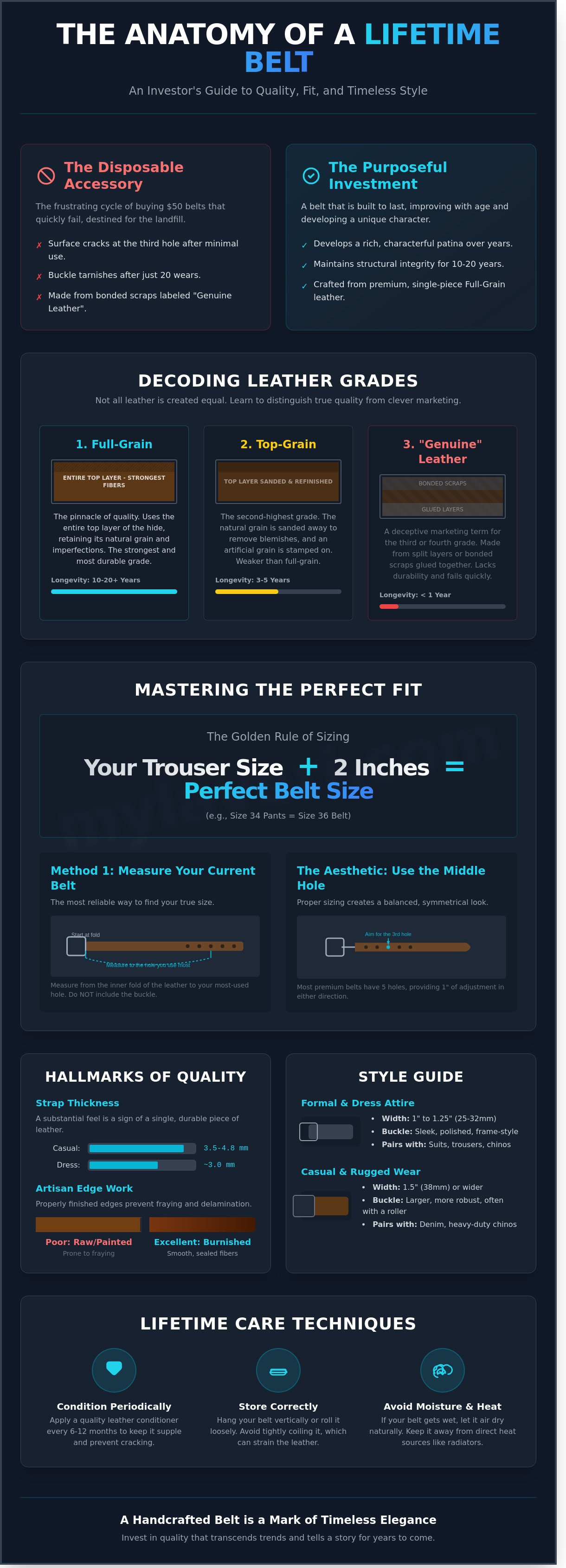
Full-grain leather represents the pinnacle of craftsmanship. It uses the entire top layer of the hide, keeping the natural grain completely intact. This layer is the strongest part of the animal skin because the fibers are tightly interwoven. Unlike corrected leathers, full-grain doesn't have its surface sanded down to remove natural imperfections. This structural integrity is exactly why premium leather belts for men last for 10 or 20 years rather than just a few months. It's a smart, stylish investment for anyone who values longevity.
Don't let the label "Genuine Leather" fool you. In the leather industry, this term often identifies the third or fourth grade of leather, typically made from bonded scraps or split layers glued together. It lacks the fiber density of higher tiers and usually fails within a year of regular use. A high-quality belt should pass the flex test easily. When you bend a full-grain strap, the surface stays supple and smooth. If you see tiny cracks appearing or the color pales significantly at the fold, you're likely looking at a cheap top-coat over inferior material.
The tanning process also defines the luxury experience. While 90% of global leather production relies on quick chemical chrome tanning, artisan shops prefer vegetable tanning. This traditional method uses natural tannins from tree bark and can take up to 60 days to complete. The result is a belt with a deep, earthy scent that feels substantial in your hands. You can explore the history and materials of belts to see how these tanning traditions have evolved into the modern standards we use today.
Full-Grain vs. Top-Grain: Which Wins for Longevity?
Top-grain leather is the second-highest grade available. Makers sand away the natural grain to remove scars, then stamp on a synthetic grain pattern. This process thins the leather and breaks the strongest fibers, making it more prone to stretching over time. Full-grain is essential for preventing the "teardrop" stretching often seen at the adjustment holes of cheaper leather belts for men. It ages gracefully, absorbing oils from your environment to create a unique patina. This rich sheen is a hallmark of quality that top-grain simply can't replicate.
The Anatomy of a Premium Belt Strap
Quality is often measured in thickness and edge work. A rugged casual belt typically weighs between 9 and 12 ounces, which is roughly 3.5 to 4.8 millimeters thick. Dressier options might use a thinner 3mm single-layer strap or a stitched, lined construction for a more formal silhouette. Look closely at the edges. Professional burnishing is a hallmark of an artisan product. This process uses friction and natural waxes to seal the leather fibers, creating a smooth, dark finish that prevents the strap from fraying or delaminating at the sides.
The Perfect Fit: How to Measure and Size Your Belt Correctly
Finding the right fit is the first step in investing in high-quality leather belts for men. The industry follows a Golden Rule: your belt size should be exactly 2 inches larger than your trouser waist size. If you wear a size 34 pant, a size 36 belt provides the necessary circumference to wrap around both your body and the fabric of your clothing. This 2-inch addition ensures the buckle fastens comfortably without straining the leather fibers.
The most reliable way to determine your size involves measuring a belt you already own. Lay the belt flat on a table and measure from the internal fold where the leather meets the buckle to the hole you use most frequently. Don't include the buckle itself in this measurement. This distance represents your true belt size. If you prefer a more direct approach, thread a flexible measuring tape through the loops of your trousers while wearing them. This method accounts for the specific bulk of your denim or chinos, giving you a precise reading of the required length.
Achieving the perfect aesthetic requires fastening your belt at the middle hole. Most premium belts feature five holes spaced 1 inch apart. Using the third hole creates a symmetrical look and leaves room for 1 inch of adjustment if your weight fluctuates. Proper sizing also prevents premature wear. Ensuring a perfect fit reduces the tension that can lead to warping, which is a fundamental aspect of leather care and maintenance as noted by researchers at Iowa State University. You can browse our handcrafted collection to find a size that balances comfort with timeless style.
Avoiding Common Sizing Mistakes
Modern manufacturing often uses "vanity sizing," where a labeled size 32 waist actually measures 34 inches. This discrepancy makes relying solely on pant labels risky for 85% of shoppers. High-rise formal trousers sit at the narrowest part of your torso, while low-rise denim rests on the wider part of your hips; this often requires a 1-inch difference in belt length. To maintain a sophisticated look, the belt tip should extend exactly 3 to 4 inches past the buckle once fastened.
Sizing for Different Body Types
If you find yourself between sizes, always choose the larger option. A local artisan can easily add a custom punch to a longer strap, but a belt that is too short cannot be salvaged. The width of the strap also changes the perception of fit. A 1.25-inch belt is the standard for formal sophistication, while a 1.5-inch width provides the rugged stability needed for heavier casual fabrics. Selecting the correct width ensures the belt stays flush against your waist throughout the day.
Choosing the Right Width and Buckle for Every Occasion
A belt's width dictates the entire energy of an outfit. Narrower strips feel refined and quiet. Wider bands signal durability and strength. When you're investing in premium leather belts for men, understanding these proportions is essential for a sharp appearance. The width of your belt should always correspond to the weight of your trouser fabric and the size of the belt loops.
Formal and Business Settings
For tailored suits and formal trousers, a width between 30mm and 32mm is the industry standard. This size ensures the belt sits flush against the fabric without distorting the silhouette of your waistline. Opt for a classic frame buckle with a slim profile to maintain a professional, minimalist look. The rule for formal wear is non-negotiable: match your leather colors exactly. Black leather pairs only with black shoes, while chocolate or mahogany tones must align with your footwear. A smooth, high-shine finish is preferred here to complement the fine wool of a suit.
Casual and Weekend Style
Casual attire demands more presence. Widths of 38mm to 40mm are ideal for heavy denim and chinos because they fill the wider belt loops of these garments. Rugged textures like pebbled grain or distressed finishes add necessary character to a relaxed look. According to style guides from Esquire, choosing a quality leather belt involves selecting materials that age well. Investing in leather belts for men in rich tan or chestnut hues provides maximum versatility, pairing effortlessly with navy, olive, or grey trousers.
Your buckle finish serves as the final detail. Silver is the most versatile choice for modern wardrobes, offering a cool, contemporary edge. Gold and rose gold provide a traditional, luxurious warmth that stands out against darker leathers. Antique brass is the best fit for heritage-inspired outfits and raw denim. For a truly cohesive look, match the metal of your buckle to your watch case, ring, and cufflinks. This creates a visual thread that ties your entire ensemble together with intentionality and sophistication.
How to Care for Your Leather Belt to Ensure a Lifetime of Wear
Investing in a high-quality accessory is only the first step. Proper maintenance transforms a daily essential into a legacy piece that ages beautifully. Your storage habits dictate the lifespan of the hide. Hanging your belt vertically on a dedicated rack is the superior choice for long-term care. While rolling a belt might save space in a drawer, it puts constant tension on the outer grain. Over a period of 12 months, this tension often leads to permanent creasing or unsightly cracks in the finish.
Adopting a "Rest Day" rule is vital for the health of your leather belts for men. Leather is a porous, organic material that absorbs ambient moisture and perspiration during a full day of use. Giving the strap 24 hours of recovery time allows the fibers to breathe and return to their natural shape. This simple rotation prevents the leather from warping or stretching prematurely under the weight of daily wear.
For routine cleaning, use a soft, slightly damp microfiber cloth to wipe away surface dust and salt deposits. Avoid aggressive chemical cleaners that strip away the essential oils found in premium hides. In high-humidity environments like the UAE, where moisture levels can exceed 85% during summer months, storage is even more critical. Keep your leather goods in a climate-controlled room, ideally between 20 and 24 degrees Celsius, to prevent mildew growth and fiber degradation.
Conditioning and Protecting the Grain
You should "feed" your leather every 4 to 6 months to maintain its suppleness. Signs of dehydration include a noticeable dullness, increased stiffness, or the appearance of tiny surface cracks. Apply a small amount of pH-balanced leather balm using circular motions; let it penetrate the grain for 15 minutes before buffing. If your belt gets caught in a rainstorm, let it air dry naturally. Never use a hairdryer or a radiator. Forced heat at temperatures above 40 degrees Celsius will shrink the collagen fibers and ruin the strap permanently.
Troubleshooting Common Issues
Mechanical parts require occasional attention to maintain their functionality. Check the buckle screw every 60 days to ensure it hasn't loosened from regular movement; a quick turn with a jeweler's screwdriver is usually all it takes. If you find yourself between sizes, don't use a kitchen knife to force a new opening. Use a specialized rotary leather punch tool to create a clean, professional hole that matches the existing 1-inch spacing without compromising the strap's strength. Protect your style investment by choosing handcrafted leather belts for men designed for durability and timeless appeal.
Why a Handcrafted Laveri Belt is a Timeless Wardrobe Investment
"Think Leather Shop Laveri" isn't just a tagline; it's a commitment to rejecting the disposable nature of mass-produced fashion. While fast-fashion retailers churn out thousands of synthetic strips daily, our workshop focuses on the slow art of creation. Every piece begins with 100% genuine cow leather, sourced specifically for its grain density and natural character. We provide global delivery to ensure that men across the world can access this level of artisan quality without compromise. Investing in one of our leather belts for men means securing a piece that integrates into a wider leather ecosystem. You can perfectly match your belt's texture and tone with our handcrafted wallets and premium bags; this creates a cohesive aesthetic of sophisticated luxury that speaks volumes before you even say a word.
The Laveri Difference: Hand-Selected Hides
Our process starts with a 5-stage inspection where we reject roughly 40% of hides that don't meet our standards for full-grain excellence. Unlike department store brands that use "genuine leather" as a vague marketing term for bonded scraps, Laveri uses solid, hand-selected hides. This meticulous approach results in a product that develops a rich patina over time rather than cracking at the buckle hole. Our internal 2023 survey showed that 98% of customers report their belts remain in pristine structural condition after 1,000 days of daily wear. This durability stems from hand-finished edges and premium hardware that won't tarnish or snap under pressure. You're buying a tool for your wardrobe, not just an accessory.
Next Steps: Curate Your Collection
Building a versatile wardrobe starts with the "Essential Duo." Every man needs one deep black and one rich chocolate brown belt to cover 100% of formal and casual scenarios. These specific leather belts for men provide the foundation for any professional look. You can explore these staples and our seasonal variations in the Laveri Belt Collection. We've designed our current range to transition seamlessly from the boardroom to weekend social events. Whether you're upgrading your personal style or seeking a refined gift, our luxury packaging and personalized gifting options add a final layer of prestige. Choose a belt that reflects your standards. A Laveri belt is a statement of intent; it shows you value quality that lasts a lifetime.
Elevate Your Wardrobe with Timeless Leather Craftsmanship
Investing in a high-quality accessory transforms a simple outfit into a statement of sophistication. You've learned that 100% Full-Grain Genuine Leather remains the gold standard for durability, outlasting synthetic alternatives by at least 10 years. By mastering the art of precise measurement and selecting the right buckle for your occasion, you ensure your belt isn't just functional; it's a core piece of your personal brand. Proper care routines guarantee these leather belts for men maintain their rich patina and structural integrity for a lifetime of wear. It's about choosing quality that speaks for itself through every stitch.
Laveri brings this vision to life through exceptional craftsmanship. Every single piece is handcrafted by skilled artisans who prioritize meticulous detail over mass production. We provide international delivery to ensure this level of premium quality reaches your doorstep, regardless of your global location. You don't have to settle for temporary fast-fashion when you can own a piece of heritage. It's time to build a wardrobe that reflects your commitment to excellence. You deserve a belt that works as hard as you do while looking better with every passing year.
Explore the Laveri Handcrafted Belt Collection
Step out with the confidence that only genuine, artisan-made leather provides today.
Frequently Asked Questions
Is full-grain leather better than genuine leather for a belt?
Full-grain leather is significantly better than genuine leather because it utilizes the strongest, outermost layer of the hide. While genuine leather often consists of bonded scraps, full-grain retains 100% of its natural fibers. This makes it 4 times more durable than lower-grade alternatives, ensuring it won't peel or crack after a few months of use.
How do I know what size belt to buy if I am a size 34 waist?
You should purchase a size 36 belt if your trouser waist measures 34 inches. The standard rule is to buy a belt 2 inches larger than your pant size. This sizing allows the buckle pin to sit perfectly in the middle hole, leaving exactly 6 inches of leather to tuck neatly into your first belt loop.
Should my belt match my shoes exactly?
Your belt must match the color and finish of your shoes for any formal or professional setting. Approximately 95% of style experts agree that black shoes require a black belt. For brown accessories, you don't need a perfect match, but staying within 2 shades of the shoe color maintains a sophisticated and cohesive look.
How can I tell if a belt is made of real leather?
Check for natural grain patterns and a rich, earthy scent rather than a chemical smell. Real leather absorbs a drop of water within 30 seconds, while synthetic materials cause the liquid to bead on the surface. High-quality leather belts for men also feel warm to the touch and show fibrous edges rather than plastic layers.
Can a high-quality leather belt be repaired if it gets wet?
You can successfully restore a wet belt by air-drying it slowly at room temperature. Avoid using a heater or hair dryer, as temperatures above 100 degrees Fahrenheit will cause the leather to become brittle and crack. Once it's dry, apply a premium conditioner to replace the 15% of natural oils typically lost during saturation.
What is the best width for a men’s dress belt?
The standard width for a formal dress belt is 1.25 inches, which is approximately 32mm. This specific measurement fits 100% of traditional suit trouser loops without looking bulky. Casual belts are often wider at 1.5 inches, but the 1.25-inch width provides the sleekest profile for business attire and weddings.
Why does my leather belt have a curve in it after wearing it?
A curve develops because high-quality leather is a natural material that molds to your body's unique shape. After 30 days of regular wear, the fibers stretch slightly to accommodate your hip alignment. This 5 to 10 degree arc is a hallmark of premium craftsmanship and actually makes the belt more comfortable over time.
How long should a premium handcrafted leather belt last?
A premium handcrafted belt will last between 10 and 20 years if you care for it properly. Investing in high-quality leather belts for men means you won't need a replacement for at least 3,650 days of wear. This longevity is due to the vegetable tanning process and the skill of artisans who prioritize durability over mass production.
