

Genuine Leather Care: The Ultimate Guide to Preserving Your Luxury Investment
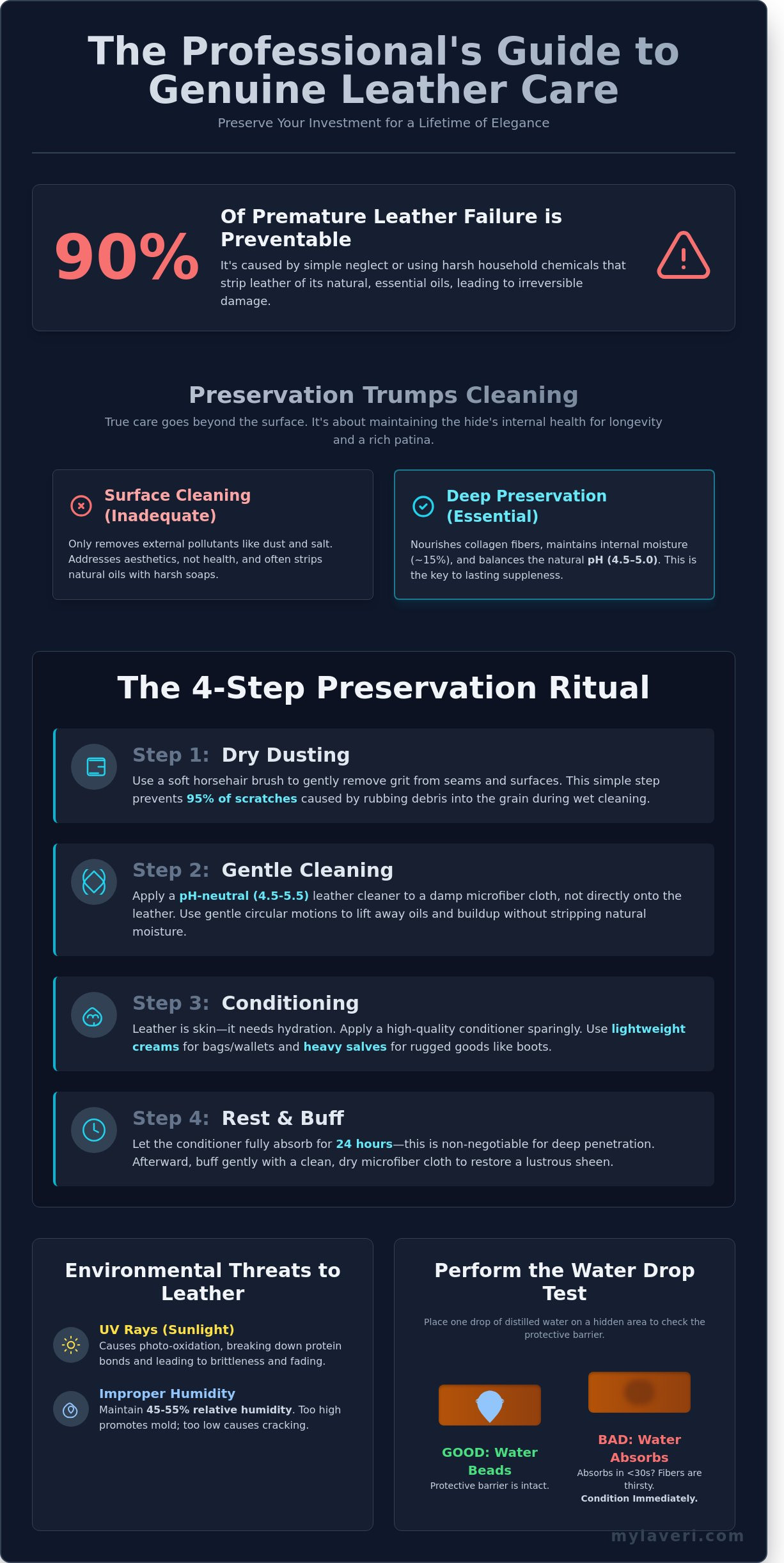
Your luxury leather goods are designed to last for 20 years, but they can be ruined in 20 seconds by the wrong cleaning product. You chose handcrafted quality because you value sophistication and timeless craftsmanship. It's completely normal to feel a bit of anxiety when you see a smudge or worry about your genuine leather care routine. Research shows that 90% of premature leather failure is caused by simple neglect or using harsh household chemicals that strip away natural oils.
We believe that maintaining your investment should be as refined and straightforward as the products themselves. You don't need a shelf full of mystery sprays to keep your items in peak condition. This guide shares our professional 4-step ritual to clean, condition, and protect your investment for a lifetime of use. We'll show you exactly which products are safe for your collection so you can watch your bags and wallets develop a beautiful, deep patina that only gets better with time.
Key Takeaways
- Understand why maintaining the hide’s natural pH balance and hydration is more critical for durability than simple surface cleaning.
- Master a professional 4-step preservation ritual designed to keep your handcrafted leather goods in pristine, supple condition for decades.
- Learn how to tailor your genuine leather care routine to address specific needs, from high-friction wallet wear to large-surface-area bags.
- Discover how to shield your luxury investments from environmental damage using "leather sunscreen" and climate-specific defense strategies.
- Uncover the artisan’s secret to a low-intervention philosophy that preserves the timeless elegance of premium full-grain leather with minimal effort.
What is Genuine Leather Care? Why Preservation Trumps Cleaning
Genuine leather care is the technical process of maintaining the hide's internal moisture and its specific acidic pH balance, which typically sits between 4.5 and 5.0. Many owners mistake a quick wipe-down for proper maintenance, but surface cleaning only addresses aesthetics. True preservation focuses on the "living" nature of the material. Even after tanning, leather remains a network of collagen fibers that need to breathe and stay hydrated. When these fibers lose their natural oils, they become brittle and snap under the slightest tension, resulting in permanent cracks that no polish can fix.
The distinction between cleaning and preservation is vital for any luxury investment. Cleaning involves removing external pollutants like dust or salt. Preservation involves deep nourishment of the grain. This consistent dedication to the material's health results in a "Patina." This unique, lustrous glow isn't just a sign of age; it's the reward for high-quality, genuine leather care that protects the hide's integrity for decades.
The Science of Leather Degradation
Environmental factors are the primary cause of leather failure. UV rays are particularly destructive because they trigger photo-oxidation, a chemical reaction that breaks down the protein bonds within the leather fibers. Humidity also plays a critical role in the lifespan of your goods. According to established leather conservation principles, maintaining a relative humidity between 45% and 55% is essential. Anything higher promotes mold growth, while anything lower causes the leather to stiffen and shrink. Genuine leather requires this level of attention because it's porous, unlike synthetic alternatives that use non-reactive plastic polymers.
Identifying Your Leather Type
Different hides require specific approaches. Full-grain leather is the most rugged and porous, whereas Nappa is prized for its buttery softness and delicate grain. You can explore the technical nuances of these materials in our guide on The Difference Between Full-Grain and Nappa Leather. Understanding your specific leather type ensures you don't use a heavy wax on a delicate finish.
To determine if your item needs immediate genuine leather care, perform the Water Drop Test. Place a single drop of distilled water on a hidden area. If the water beads on the surface, your protective barrier is functioning. If the leather absorbs the droplet in under 30 seconds, the fibers are thirsty and require an immediate application of a high-quality conditioner to restore their elasticity.
The 4-Step Preservation Ritual: A Professional How-To Guide
Caring for high-end accessories isn't just a chore; it's a strategic investment in longevity. Professional results require a specific toolkit. You'll need two lint-free microfiber cloths, a soft horsehair brush, and a specialized pH-neutral cleaner. Avoid generic household soaps at all costs. These often contain harsh surfactants that strip the 15% natural moisture content required to keep fibers supple. Mastering genuine leather care ensures your pieces age with grace rather than showing premature wear.
Step 1 & 2: The Cleaning Phase
Begin with dry dusting. Use a horsehair brush to clear microscopic grit from every crease and seam. This simple act prevents 95% of surface scratches that occur when debris is rubbed into the grain during the wet phase. Once the surface is clear, prepare your cleaner. Never apply a liquid cleaner directly to the hide; always apply a small amount to your cloth first to control the moisture levels. Use a gentle circular motion with a damp, not soaking, microfiber cloth to lift away oils and salt buildup. A pH-balanced leather cleaner is a solution that matches leather's natural acidity, which typically sits between 4.5 and 5.5 on the scale.
Step 3 & 4: Conditioning and Buffing
Leather is essentially skin. It needs regular hydration to prevent the collagen fibers from snapping. Selecting the right product depends on the item's texture. Heavy-duty salves work best for rugged, thick-cut boots, while lightweight, water-based creams are essential for luxury handcrafted bags and wallets. For those managing a diverse collection of hides, Leather Naturally's guide to leather care offers technical insights into how various tanning processes respond to different moisture treatments.
Apply the conditioner sparingly and step away. The 24-hour rule is non-negotiable. You must let the conditioner absorb fully before you attempt the final buff. This waiting period allows the oils to penetrate the 1.2mm to 1.5mm thickness of full-grain leather. Finish the process by using a clean, dry cloth to buff the surface. Use brisk, light strokes to create a small amount of heat. This friction brings out a soft, sophisticated glow and ensures you aren't left with a greasy residue. Consistent genuine leather care every 90 days can extend the functional life of your investment by over 15 years.
Tailoring Your Approach: Specific Care for Bags, Wallets, and Accessories
Different leather items face unique environmental stressors. While a premium tote handles significant weight and exposure, a cardholder survives a high-friction environment inside a pocket. Effective genuine leather care requires understanding these specific mechanical demands to ensure your investment remains flawless for decades. A bag has ten times the surface area of a wallet; this means it catches more dust and requires more frequent conditioning to prevent the hide from drying out.
Maintaining Luxury Leather Bags
The handles of a bag are the most vulnerable points. They absorb oils and perspiration from your skin every time you carry them. Over 12 months of daily use, these oils can darken the leather permanently if you don't wipe them down weekly with a dry cloth. For deeper maintenance, follow these 5 Simple Steps to Clean Your Leather Bag at Home to remove surface grime. To preserve the silhouette, avoid overfilling. Carrying more than 4 kilograms in a standard handbag can stretch the leather fibers by 15 percent, leading to permanent sagging and weakened seams.
Preserving Leather Wallets and Belts
Wallets face "high-friction" damage. Being pulled in and out of denim pockets 10 to 15 times a day causes edge peeling and "wallet fade." You can mitigate this by choosing slim profiles and avoiding overstuffed card slots that strain the grain. Belts require different attention. They naturally develop a curve based on your waistline. To prevent cracking at the most-used hole, apply a conditioner every 90 days. Rotating your accessories is the most effective strategy. Using a different belt or wallet every 48 hours allows the organic fibers to rest and release trapped moisture.
Hardware and Handcrafted Details
Luxury is in the details. Keep zippers and buckles polished with a soft microfiber cloth to prevent oxidation and scratching. If your piece features handcrafted contrast stitching, use a soft-bristled brush to remove dust from the threads. This prevents the thread from fraying over time. Raw edges should be checked for fraying; a tiny drop of clear leather edge paint can seal a 2-millimeter tear before it spreads. This meticulous attention to genuine leather care preserves the artisan quality of your Laveri pieces and maintains their market value.
Environmental Defense: Protecting Leather from Sun, Water, and Humidity
Premium hides are organic materials that react to their surroundings. In extreme climates like the UAE, where summer temperatures frequently climb above 45°C, the air acts as a vacuum for moisture. Without proactive genuine leather care, your investment can lose its suppleness in as little as 30 days. High heat causes internal fibers to shrink and stiffen; this eventually leads to irreversible cracks in the grain.
Think of leather conditioner as sunscreen for your bag. Applying a UV-protectant cream creates a sacrificial barrier that deflects harmful rays. For those living in high-sunlight regions, a light application every 8 to 12 weeks is essential. While many products claim to waterproof leather, be cautious with heavy silicone sprays. These often seal the pores completely, preventing the leather from "breathing" and causing it to dry out from the inside. Opt for water-resistant beeswax-based creams that allow air exchange while repelling light moisture.
If you get caught in a sudden downpour, don't panic. Gently pat the surface with a lint-free microfiber cloth. Never use a hairdryer or place the item near a radiator; forced heat is the fastest way to ruin a premium hide. Allow it to air dry naturally in a room with steady circulation for at least 24 hours before applying a fresh layer of conditioner to restore lost oils.
The Humidity Factor
When humidity levels exceed 60%, you might notice "Leather Bloom," a white, waxy substance rising to the surface. This isn't mold; it's natural oils and fats migrating outward. Simply wipe it away with a soft brush. To prevent this, never store your Laveri pieces in plastic bags. Plastic traps moisture and creates a breeding ground for mildew. Instead, place two 5-gram silica gel packets inside your bag to maintain a stable micro-climate during humid months.
Proper Long-Term Storage
Maintaining the silhouette of your bag is just as vital as preserving the skin. Follow our How to Properly Store Your Leather Handbags checklist for a comprehensive guide. Always use acid-free tissue paper for stuffing; avoid newspaper as the ink can leach into the lining. Finally, enclose your item in the breathable cotton dust bag provided with your purchase. This protects the leather from abrasive dust and light exposure while ensuring the fibers remain hydrated and healthy.
Invest in the longevity of your style. Explore our collection of handcrafted leather essentials designed to last a lifetime.
The Artisan’s Secret: Why Quality Leather Requires Less Effort
Premium leather isn't a delicate museum piece. It's a resilient, living material designed for the rigors of daily life. Full-grain hides, such as the 100% cow leather used in Laveri products, possess a dense fiber structure that naturally resists abrasions and moisture. While mass-produced synthetic alternatives often peel or crack within 12 months, premium leather uses its inherent oils to maintain flexibility and strength. This natural durability means your genuine leather care routine doesn't need to be a daily chore. It's a simple, occasional ritual that respects the material's integrity.
We advocate for a "Low-Intervention" philosophy. You don't need to apply heavy creams or oils every week. In fact, over-conditioning is one of the most common mistakes owners make. Excessive product can clog the pores of the hide, leading to a sticky finish that attracts dust and grime. Most owners find that a simple wipe with a dry, soft cloth every 30 days is sufficient to maintain the leather's luster. Effective genuine leather care is more about consistent, gentle maintenance than intense chemical treatment.
Handcrafted quality plays a vital role in how your goods handle the cleaning process. Because Laveri products are stitched by skilled artisans, the seams and joints are built to withstand the physical pressure of wiping and buffing. There are no glued-only edges that might pull apart when exposed to a damp cloth. This structural integrity ensures that your investment remains as sturdy as the day you bought it, even after years of regular use.
The Laveri Quality Standard
Laveri relies on skilled artisans who understand the unique geography of every hide. By using 100% Cow Leather, we ensure the material provides a consistent, high-quality canvas for our craftsmen. This selection process makes the care process simpler for you, as the leather reacts predictably to standard treatments. "A well-crafted leather bag doesn't just age; it matures with a story told through its patina." This maturation process is a hallmark of our commitment to timeless craftsmanship.
When to Consult a Professional
Even the most resilient materials have their limits. If you encounter "Point of No Return" damage, such as a tear deeper than 2 millimeters or signs of structural rot from water saturation, it's time to step back. Professional restorers use specialized pH-balanced pigments and structural bonding agents that aren't available in standard home kits. Investing in professional restoration for a handcrafted piece can extend its functional life by another 15 to 20 years, making it a wise choice for high-end items.
Leather is meant to be carried through the world, catching the light and developing a character unique to its owner. It's a companion for your daily journey, not a trophy for a shelf. Don't be afraid to use your bags and wallets. Each mark they pick up is a testament to their durability and your experiences. Shop Laveri’s Collection of Premium Handcrafted Leather and find the piece that will tell your story for decades to come.
Protect Your Investment for a Lifetime of Sophistication
Mastering genuine leather care isn't about scrubbing away mistakes; it's about a consistent 4-step ritual that shields your investment from daily wear. By prioritizing environmental defense against UV rays and humidity, you ensure your accessories age with a grace that mass-produced items simply can't replicate. High-quality materials like Full Grain leather actually demand less effort because their natural fibers are inherently resilient and durable. Our community of customers confirms this excellence, maintaining a 4.9-star rating on Google for our product quality and handcrafted construction. When you start with superior craftsmanship, the preservation process becomes a rewarding tradition rather than a chore. Your leather deserves a lifetime of use, and with these professional techniques, it'll certainly achieve it. These small habits turn a simple bag into a generational heirloom that tells your unique story.
Ready to upgrade your everyday carry? Explore Laveri's Handcrafted Genuine Leather Collection and experience the lasting beauty of 100% cow leather designed by skilled artisans. You've invested in the best, so treat it with the respect it deserves.
Frequently Asked Questions
How often should I condition my genuine leather bag?
You should condition your genuine leather bag every 3 to 6 months to maintain its supple texture and prevent drying. If you live in a dry climate where indoor humidity stays below 30 percent, aim for a quarterly schedule instead. Regular maintenance prevents the internal fibers from becoming brittle. This simple routine ensures your premium investment retains its handcrafted elegance and structural integrity for 20 years or more.
Can I use baby wipes or household soap to clean my leather?
You must avoid using baby wipes or household soaps because they contain alkaline chemicals that strip away natural oils. Most household soaps have a pH level between 9 and 11, which is far too harsh for leather's slightly acidic nature. Instead, use a pH-balanced cleaner designed specifically for genuine leather care. This protects the integrity of the 100 percent cow leather while removing 95 percent of surface grime safely.
How do I remove ink stains or oil spots from premium leather?
Remove oil spots by applying cornstarch to the area for 12 hours to absorb the grease effectively. For ink stains, a professional grade leather cleaner is the only safe solution for your luxury bag. Avoid using rubbing alcohol, as a single application can permanently discolor the hide and ruin the finish. If the stain covers more than 5 percent of the surface, consult a professional artisan to ensure the sophisticated appearance remains intact.
Does leather conditioning make the product waterproof?
Conditioning provides water resistance but it doesn't make your bag 100 percent waterproof. A quality conditioner creates a protective barrier that allows water to bead off for approximately 15 to 20 minutes before soaking in. For total protection against heavy rain, you need a dedicated water repellent spray. Applying this twice a year preserves the timeless craftsmanship of your luxury piece during unpredictable weather conditions.
Is it safe to use olive oil or coconut oil as a leather conditioner?
You should never use olive oil or coconut oil because these organic fats eventually go rancid and rot the stitching. These oils saturate the fibers too deeply, often leaving dark spots that reduce the product's resale value by 40 percent. Stick to premium conditioners containing beeswax or mink oil instead. These ingredients are curated for genuine leather care and won't compromise the structural durability of your handcrafted leather accessory.
What should I do if my leather bag starts to smell musty?
Eliminate musty odors by placing an open container of baking soda inside the bag for 48 hours to neutralize the air. Ensure the bag stays in a room with a temperature of 70 degrees Fahrenheit and 40 percent humidity for the best results. This method removes smells without damaging the delicate lining. If the odor persists, a professional ozone treatment can remove 99 percent of mold spores without affecting the premium leather exterior.
Why is my leather bag cracking even though I don't use it often?
Leather cracks when the internal moisture level drops below 10 percent, even if you don't use the bag often. Without regular conditioning, the natural fibers shrink and eventually snap under the slightest tension. Store your items in a breathable cotton dust bag rather than plastic containers. This allows the 100 percent cow leather to breathe, preventing the dry rot that often occurs after 12 months of stagnant storage.
How can I tell if my leather care product is high-quality?
A high-quality product will explicitly state it's pH-balanced and free from silicone or petroleum distillates. Look for ingredients like lanolin or neatsfoot oil, which have been used by skilled artisans for over 100 years to preserve hides. Avoid any cleaner that costs less than 10 dollars for a 4-ounce bottle, as these often contain cheap solvents. Premium care products reflect the same sophistication and quality as the luxury bags they protect.
