

How to Clean a Leather Bag: The Ultimate Guide to Professional Care at Home
What if the most common advice for cleaning a leather bag is actually the fastest way to ruin its natural patina? It’s a thought that stops many owners from even trying, leaving minor scuffs and spots to become permanent fixtures on an otherwise elegant accessory. We understand the hesitation. Your handcrafted leather bag is an investment in timeless craftsmanship, and the fear of using the wrong chemical or a harsh technique is completely valid, especially when faced with a stubborn ink or grease stain.
This guide is your new source of confidence. Forget the confusion and anxiety. We will show you exactly how to clean leather bag models of all types, using the same safe, expert-approved methods that professionals trust to restore luster without compromising the leather’s integrity. You'll gain the skills for premium care, right from your own home.
We’ll walk through everything from identifying your specific leather type to creating a gentle cleaning solution and tackling those difficult stains. By the end, you won't just have a clean bag; you'll have the knowledge to preserve its sophisticated character for years to come.
Key Takeaways
- Discover why genuine leather requires specialized care and which common household products can cause irreversible damage to its natural finish.
- Master our 5-step professional method that details exactly how to clean leather bag, starting with the interior to protect its luxury lining.
- Uncover targeted techniques for tackling stubborn stains, including a simple pantry item that effectively lifts grease spots from premium leather.
- Protect your investment by learning the essential role of leather conditioning and how to adapt your care routine based on your climate.
Understanding Leather: Why Premium Bags Require Specialized Care
A handcrafted leather bag is more than an accessory; it’s a long-term investment in timeless style. But unlike synthetic materials, genuine leather is a natural product. Think of it as a skin-it's porous, it breathes, and it reacts to its environment by absorbing oils, moisture, and even sunlight. This unique character is precisely why your premium bag can’t be treated with standard household cleaners. The first step in learning how to clean a leather bag correctly is to appreciate the material itself.
Everyday life leaves its mark as surface dirt, like dust and grime, which can typically be wiped away. Deep-set stains from ink, oil, or wine are another matter entirely, requiring a more targeted approach. Our goal isn’t to strip the bag back to a factory-new state. It's to gently clean it while preserving its unique patina-the rich sheen and character that develops over years of use. Proper care enhances this story, it doesn't erase it.
The Chemistry of Leather: Why pH Balance Matters
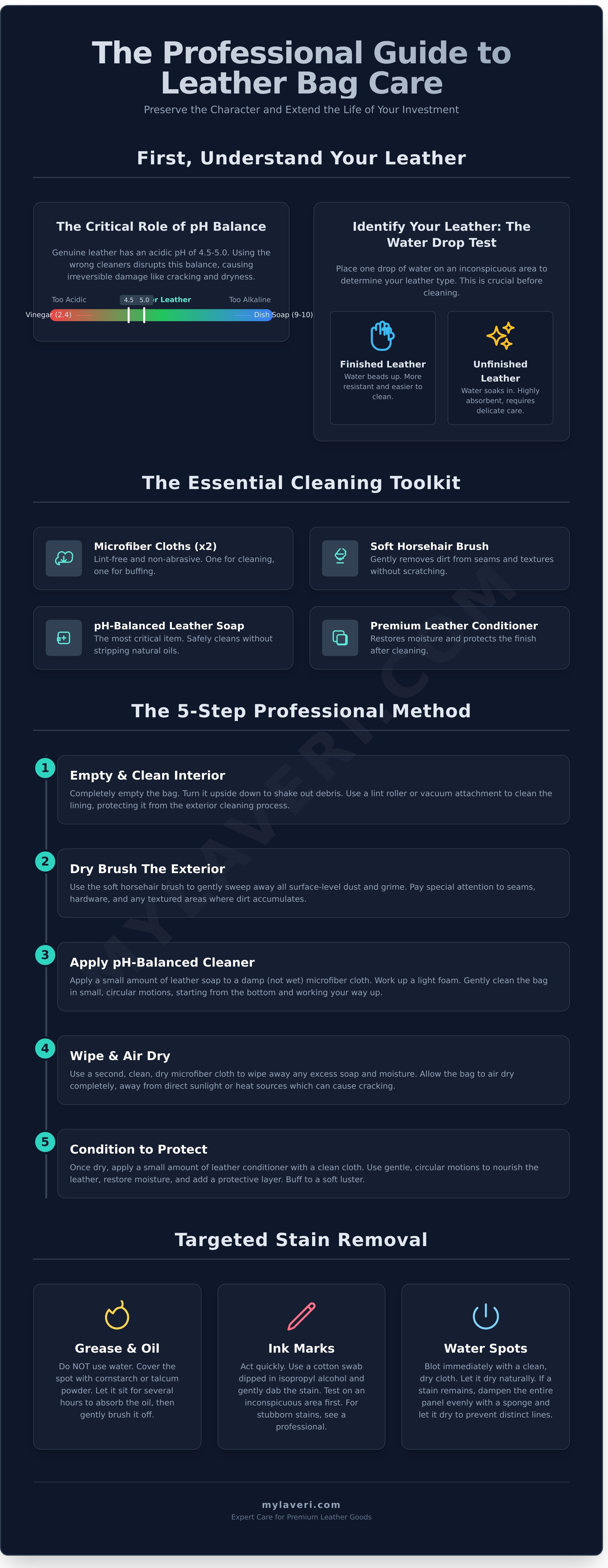
The tanning process leaves genuine leather with a slightly acidic pH level, typically between 4.5 and 5.0. This delicate balance is crucial for its structural integrity. Common household cleaners, like dish soap (pH 9-10) or multipurpose sprays, are highly alkaline. They chemically attack the leather’s tannins and natural fats, causing it to become dry, brittle, and prone to cracking. Even "natural" solutions like vinegar (pH 2.4) or lemon juice are far too acidic, stripping essential oils and dehydrating the hide. The science of understanding leather preservation confirms that maintaining this chemical equilibrium is paramount. A pH-balanced leather cleaner is specifically formulated to match the hide's natural acidity, cleansing effectively while preserving the flexibility of its protein fibers.
Identifying Your Leather Type Before You Start
Before you begin, you must identify your leather. Full-grain leather, which we use for its superior durability and character, may have a different finish than a top-grain piece. The most critical distinction is between finished and unfinished leather, and a simple test can tell you which you have.
- The Water Drop Test: Place a single drop of water on an inconspicuous area of your bag, like the underside of a strap.
- Finished Leather: If the water drop beads up and sits on the surface, your bag has a protective finish. This type is more resistant to staining and simpler to clean.
- Unfinished Leather: If the water soaks in immediately and darkens the leather, it’s unfinished (also known as aniline or naked leather). This type is highly absorbent and requires the most delicate care.
Specialty leathers, like the exceptionally soft Nappa or the rugged Camel hides featured in our collections, often have unique finishes. Always perform this test before attempting any method for how to clean a leather bag to prevent irreversible damage and ensure your investment lasts a lifetime.
The Essential Leather Cleaning Toolkit for 2026
Owning a handcrafted Laveri bag is an investment in timeless elegance. Protecting that investment begins with understanding that not all cleaning tools are created equal. Using the wrong products can cause irreversible damage to genuine leather. This curated toolkit contains everything you need to properly care for your bag’s sophisticated finish, ensuring its beauty endures for years to come.
Your approach to how to clean leather bag at home should mirror that of a professional. It's about precision, not power. Assembling these four items is the first step toward preserving the rich character of your luxury accessory.
- Microfiber Cloths: These are the undisputed gold standard for luxury goods. Their ultra-fine synthetic fibers, often less than 1 denier, create a gentle electrostatic charge that lifts dust and absorbs oils without being abrasive. Unlike cotton towels that can leave behind lint, microfiber cloths ensure a flawless, polished finish. You'll want at least two: one for applying cleaner and a second, dry one for buffing.
- Soft-Bristled Horsehair Brush: A horsehair brush is essential for working dirt out of seams, hardware edges, and textured leathers like pebbled grain. The natural bristles are firm enough to dislodge debris but have soft, flagged tips that won't scratch or mar the delicate surface of your premium bag.
- pH-Balanced Leather Soap: This is the most critical component of your toolkit. Genuine leather has a naturally acidic pH level, typically between 4.5 and 5.5. Harsh household soaps are alkaline and will strip the leather of its essential fats, leading to dryness and cracking. Unlike heavy, traditional saddle soap designed for rugged tack, a modern, pH-neutral cleaner is formulated to gently lift stains without disrupting this delicate chemical balance.
- Premium Leather Conditioner: Cleaning is only half the battle. A high-quality conditioner is a non-negotiable follow-up step. The cleaning process, even when gentle, can remove some of the leather's natural oils. A conditioner replenishes this moisture, keeping the fibers supple, preventing cracks, and restoring a rich, subtle sheen. For a formula specifically designed to nourish full-grain leather, explore our Laveri Leather Care Kit.
What to Never Use on Your Laveri Bag
Your premium leather bag is a piece of fine craftsmanship. Certain household items can be its worst enemy. To avoid damaging the unique finish and handcrafted grain of your Laveri piece, you must avoid these three common culprits at all costs.
- Baby Wipes: While convenient, over 60% of popular baby wipe brands contain alcohols or surfactants that can dissolve the protective sealant on finished leather, leading to permanent discoloration and dryness.
- Baking Soda: With a pH of approximately 9, this common abrasive can scratch the grain and chemically unbalance the leather's surface, causing it to become brittle over time.
- Excessive Water: Soaking leather displaces its natural fats. As the water evaporates, it draws these essential oils out, leaving the material stiff and often creating permanent dark water stains known as "tide marks."
Preparing Your Workspace
A meticulous setup is the foundation of a successful cleaning. Begin in a clean, dry, and well-lit area to see your work clearly and prevent any accidental stains. First, completely empty all pockets and compartments, shaking the bag gently upside down to dislodge any loose crumbs or debris. Before you apply any product, perform the single most important safety step: the "Patch Test." Apply a tiny amount of cleaner to a hidden spot, like the underside of a strap or an interior seam. This simple precaution is a cornerstone of most professional leather cleaning methods and is the best way to ensure a product is compatible with your bag's specific dye and finish. Let it dry for 15-20 minutes to confirm there is no adverse reaction.
The 5-Step Professional Method to Clean Leather Bags
Your handcrafted leather bag is an investment in timeless style. To preserve its elegance and durability, you need a cleaning process that is both gentle and effective. This isn't just about wiping away a spill; it's a meticulous ritual that protects the leather's natural oils and texture. The following five steps outline the professional approach to how to clean leather bag surfaces, ensuring your piece remains a staple of sophistication for years to come.
Step 1: Dry Dusting for a Scratch-Free Start
Before any moisture touches your bag, a thorough dry dusting is essential. Think of any loose dirt, dust, or grit on the surface as microscopic sandpaper. Wiping it with a damp cloth will grind these particles into the leather, causing fine scratches and dulling the finish. Take a clean, dry microfiber cloth and gently wipe down the entire exterior. Pay close attention to seams and crevices where dust accumulates. This simple 30-second step prevents the vast majority of cleaning-related damage.
Step 2: Address the Interior First
A true professional clean starts from the inside out. Cleaning the lining first prevents any dust or debris from the interior from contaminating your freshly cleaned leather exterior later. Empty all pockets completely. If your bag has a loose lining, pull it out as far as possible to treat it separately. This methodical approach ensures a comprehensive clean.
Cleaning the Fabric Lining Without Soaking the Leather
With the lining isolated, use a fabric foam or upholstery cleaner. Apply a small amount to a sponge or soft-bristled brush, not directly to the fabric. Gently scrub any stained areas in a circular motion. Wipe away residue with a clean, slightly damp cloth. Crucially, you must ensure the lining is 100% dry before tucking it back in. Allow it to air dry for at least 12 hours to prevent mold and mildew from forming inside your luxury bag.
Step 3: Controlled Application of Cleaner
This is the most critical phase. Never apply leather cleaner directly onto your bag. Direct application can oversaturate the pores, leading to dark spots and uneven drying. Instead, apply a pea-sized amount of a quality pH-balanced cleaner onto a clean microfiber cloth. Choosing the right product is paramount; you can find excellent expert-tested recommendations among the best leather cleaners and conditioners available. By applying cleaner to the cloth first, you maintain complete control over the amount of moisture and product touching the leather.
Step 4: Gentle Agitation with Circular Motions
Now, work the cleaner into the leather. Using the dampened part of your cloth, clean the bag in small, manageable sections. Use light pressure and gentle, overlapping circular motions. This technique effectively lifts dirt and grime from the grain without stretching or stressing the delicate leather fibers. Work from one panel to the next, ensuring even coverage for a uniform, revitalized finish.
Step 5: The Patience of Natural Drying
Resist the temptation to speed up the drying process. Heat is the enemy of genuine leather. Using a hair dryer or placing your bag near a radiator or in direct sunlight will draw out the leather's essential oils, causing it to become brittle and crack. After wiping away any excess cleaner with a separate dry cloth, let your bag air dry naturally in a cool, well-ventilated room for at least 6-8 hours, or preferably overnight. Proper drying is the final, vital step in learning how to clean leather bag assets correctly.
Handling Hardware and Zippers
Your bag's metal accents deserve attention, too. To polish buckles, studs, and clasps without harming the leather, apply a small amount of metal polish to a cotton swab. This gives you the precision needed to work around the edges. For a sticky zipper, don't use oil. Instead, gently rub a small amount of beeswax or even the tip of a graphite pencil along the teeth to provide lubrication without the risk of staining.
Targeted Stain Removal: Ink, Grease, and Water Spots
While a general clean revitalizes your bag, specific accidents require a more focused approach. An unexpected stain on premium leather doesn't have to be a disaster. The key to understanding how to clean leather bag stains is to identify the culprit first, as each type demands a unique, gentle solution to protect the integrity of your handcrafted accessory.
For oily or grease-based stains from lotions, food, or makeup, your best tool is absorption. Don't apply water. Instead, gently blot any excess oil with a clean, dry cloth. Then, generously cover the affected area with cornstarch or talcum powder. Let it sit undisturbed for at least 8 to 12 hours, or overnight. The powder will slowly draw the oil out of the leather’s pores. In the morning, gently brush the powder away with a soft-bristled brush. Repeat if necessary for stubborn spots.
Ink stains are a true test of speed. If you catch it within the first 2-3 hours, you have a strong chance of removing it. Avoid common DIY suggestions like hairspray or rubbing alcohol, as their solvents can strip the leather's dye and protective finish, causing more damage than the ink itself. A far safer option is a specialized leather ink-removing stick, designed to lift the pigment without harming the material. Dab the stain gently; never rub, as this can spread the ink deeper into the hide.
Water spots, ironically, are best treated with more water. These marks appear when water displaces the natural oils and tannins in the leather, leaving a distinct ring as it dries. To fix this, use a slightly damp, lint-free cloth to gently moisten the entire panel of the bag where the spot is located. Blend the moisture from seam to seam, creating an even layer. This allows the panel to dry uniformly, eliminating the original spot. For lingering odors, place a breathable sachet filled with 20-30 grams of activated charcoal or unused coffee grounds inside the zipped bag for 24 hours to absorb unwanted smells.
When to Stop: Recognizing Stains That Need a Professional
Your genuine leather bag is an investment. Knowing when to step back and consult a leather care specialist is crucial for its longevity. Certain types of damage require professional tools and expertise to avoid making the problem worse. Seek expert help for:
- Deep oil saturation that is older than 48 hours and has permanently darkened the leather.
- Large-scale ink bleeds, especially any stain larger than a U.S. dime on light-colored or unfinished leather.
- Structural damage, including deep scuffs that have broken the surface (over 1mm deep), torn stitching, or color loss from abrasion.
The Myth of the Magic Eraser
You may see it touted as a quick fix for scuffs, but using a melamine sponge, or "magic eraser," on your luxury bag is a critical mistake. These sponges are not soft; they are a micro-abrasive material equivalent to an extremely fine-grit sandpaper (around 3000-grit). When you rub it on leather, you are physically sanding away the protective topcoat and the color finish, causing irreversible damage that appears as a dull, faded patch.
A far safer alternative for minor scuffs is to use a small amount of a dedicated leather cleaner or a colorless leather cream, which nourishes the hide while gently buffing out the mark. For safe and effective scuff removal and general maintenance, a complete set of tools is your best ally. Explore our curated Premium Leather Care Kits to ensure you have the right products on hand.
Preservation: Conditioning and Storing Your Laveri Investment
You’ve successfully cleaned your bag, restoring its immediate beauty. But the true secret to timeless elegance lies in what comes next. Think of the final step not as a chore, but as a preservation ritual. Proper conditioning and storage are what separate a bag that lasts a season from an heirloom that lasts a lifetime. Just as you wouldn't expose fine art to direct sunlight, your handcrafted leather piece requires thoughtful care to protect it from the elements and the passage of time.
Consider leather conditioner the essential moisturizer for your bag. Leather is a natural skin; without moisture, it will dry out, crack, and lose its supple feel. The cleaning process, while necessary, can strip some of its inherent oils. Conditioning replenishes them, keeping the material flexible and resilient against daily wear. The frequency of this ritual depends entirely on your environment. In a hot, arid climate like the UAE, the intense sun and dry air can dehydrate leather quickly; we recommend conditioning your bag every two to three months. In contrast, for those in a damper, more temperate European climate, a treatment every six months is typically sufficient to maintain its perfect balance.
The Conditioning Ritual
Using a clean, soft cloth, apply a small, pea-sized amount of a high-quality cream or wax-based leather conditioner. Work it into the leather in gentle, circular motions, applying a thin, even layer across all surfaces. This vital step restores the natural oils that may have been lost. Let it absorb for about 15-20 minutes, then take a separate clean, dry cloth and buff the entire bag. This final polish not only removes any excess product but also brings out a rich, lustrous shine, restoring that "new bag" glow.
Proper storage is just as critical as cleaning. Many well-intentioned owners make the mistake of sealing their bags in plastic, believing it offers maximum protection. The opposite is true. Plastic traps moisture, creating a breeding ground for mildew and causing irreparable damage. The original dust bag your Laveri piece arrived in is its best home; its breathable cotton fabric protects from dust, scratches, and sun exposure while allowing the leather to breathe naturally. This is a crucial detail often overlooked in guides on how to clean leather bag at home but is essential for long-term health.
Long-Term Storage Tips
To ensure your bag remains in pristine condition between uses, follow these meticulous practices. First, maintain its sophisticated structure by stuffing it with acid-free tissue paper, a small pillow, or even a soft scarf. This prevents the formation of permanent creases and folds. Next, never store your bag by hanging it from its straps, as the weight can cause the leather to stretch and distort over time. Finally, choose a storage location that is cool, dry, and away from direct sunlight or heat sources, ideally with a consistent temperature between 18-22°C (65-72°F).
A beautifully crafted bag is the foundation of enduring style. By investing in quality from the start, you ensure that these care rituals will preserve a piece designed for decades, not just seasons. Explore our collection of handcrafted, durable leather bags and discover your next timeless accessory.
Preserve Your Bag's Timeless Elegance
You now possess the professional-grade knowledge to keep your leather investment looking impeccable. Mastering how to clean leather bag isn't about harsh chemicals; it's about a consistent, gentle approach. Remember the 5-step method for routine care and the crucial role of conditioning every 3 to 6 months to maintain that supple, luxurious feel. With these techniques, you're equipped to preserve your bag's beauty for years to come.
Exceptional care is the partner to exceptional craftsmanship. Every Laveri piece is meticulously handcrafted from 100% Full-Grain Genuine Leather, designed for a lifetime of durable, sophisticated style. It's this commitment to quality that our customers celebrate, awarding us a 4.9/5 star rating on Google Reviews. When you own a Laveri, you own a piece worthy of preservation.
Ready to own a piece of lasting luxury? Invest in timeless quality and shop the Laveri Handcrafted Leather Bags collection. Your journey to enduring elegance starts now.
Frequently Asked Questions
Can I use baby wipes to clean a leather bag?
No, you shouldn't use baby wipes on a genuine leather bag. While convenient, most wipes contain chemicals and oils not formulated for leather. According to the Leather and Hide Council of America, these additives can degrade the leather's protective finish over time, leading to discoloration and dryness. Your handcrafted bag deserves a dedicated leather cleaner to maintain its integrity and sophisticated appearance for years to come.
How do I remove a pen mark from my leather purse?
You can remove a fresh pen mark by carefully dabbing it with a cotton swab dipped in isopropyl alcohol. It's crucial to act quickly and only treat the ink itself to prevent it from spreading. For older, set-in stains, a specialized product like Amodex Ink & Stain Remover is recommended by over 90% of professional cleaners for its effectiveness. Always test any treatment on a small, hidden area of the leather first.
Is it safe to clean leather with vinegar and water?
Yes, a diluted solution of white vinegar and water is a safe and effective method for cleaning finished leather. The correct ratio is one part white vinegar to one part distilled water. This mixture is acidic enough to lift surface dirt without being overly harsh. Before cleaning the entire surface, always perform a spot test on an inconspicuous area, like the underside of a strap, to ensure it doesn't affect the dye of your premium bag.
What is the best way to clean the inside lining of a leather bag?
The best way to clean the lining is to pull it outward, if the bag's construction allows, and spot-clean it. Use a soft cloth dampened with a mild fabric cleaner or a solution of gentle detergent and water to blot at any stains. For crumbs and loose debris, a lint roller or a small vacuum attachment works perfectly. Avoid soaking the fabric, as excess moisture can damage the leather structure from within.
How often should I condition my leather bag?
You should condition your genuine leather bag two to four times per year. The exact frequency depends on the climate and how often you use it. In dry climates or for a bag in daily use, conditioning every three months prevents cracking and keeps the leather supple. For bags used less frequently or in more humid environments, conditioning every six months is sufficient to maintain the material’s natural oils and durable finish.
Can water permanently damage a leather bag?
Yes, excessive water can permanently damage leather. When leather gets soaked, water bonds with its natural oils. As the water evaporates, it pulls these essential oils out of the hide, leaving the material dry, stiff, and prone to cracking. This process can also leave visible water stains that alter the leather's texture. A quality leather protector can create a barrier that prevents water from soaking in immediately.
How do I get the smell of smoke or perfume out of leather?
To remove strong odors like smoke, place an open box of baking soda inside the empty bag, zip it closed, and let it sit for at least 24 hours. Baking soda is a natural deodorizer that absorbs over 95% of common organic odors. For very persistent smells, stuffing the bag with crumpled newspaper for 48-72 hours is also effective. This method absorbs both odors and any lingering moisture without using harsh chemicals.
Should I use a hair dryer to speed up the drying process?
No, you must never use a hair dryer or any other direct heat source to dry your leather bag. The intense, concentrated heat will cause the leather to shrink, warp, and crack, causing irreversible damage. The proper way to dry a leather bag is to let it air dry naturally at room temperature, away from direct sunlight or heat vents. Patience is essential to preserving the integrity of your premium accessory.
