

Choosing the Right Leather for Your Lifestyle: A Guide to Timeless Quality
The "genuine leather" label on your briefcase might be the exact reason it looks worn out after only 14 months of use. It's a frustrating reality that nearly 60% of shoppers feel misled by vague industry labels, according to a 2022 consumer report on luxury goods. You want an accessory that reflects your personal style while standing up to the rigors of your morning commute. We know that choosing the right leather for your lifestyle feels daunting when you're worried about accidental scratches or complex maintenance requirements.
You deserve a piece of timeless craftsmanship that actually improves with age. This guide will help you discover how to match premium leather grades to your daily routine to ensure your luxury investment lasts a lifetime. We'll explore the resilience of full-grain hides, the sophisticated finish of top-grain options, and provide a clear roadmap for selecting a handcrafted product that fits your world perfectly.
Key Takeaways
- Understand how your daily routine dictates the ideal balance of durability and aesthetics for a leather investment that ages gracefully.
- Learn to decode the hierarchy of leather grades to distinguish between mass-market marketing and true, high-quality materials.
- Discover the secret to choosing the right leather for your lifestyle by aligning specific leather types with your professional and travel requirements.
- Identify the telltale signs of premium craftsmanship using our expert checklist to evaluate stitching, edges, and texture in any handcrafted piece.
- Embrace the philosophy of practical luxury to find sophisticated goods that offer both timeless elegance and long-term functional value.
Beyond the Label: Why Your Lifestyle Dictates Your Leather Choice
Choosing the right leather for your lifestyle is about more than just picking a color you like. It's the precise intersection of durability, aesthetics, and maintenance needs. Every individual interacts with their accessories differently. A weekend traveler requires a rugged hide that withstands the friction of overhead bins and airport floors. In contrast, a daily office professional needs a structured, polished piece that maintains its silhouette while sitting on a mahogany desk. Understanding these nuances ensures your investment remains a source of pride rather than a maintenance burden.
At Laveri, our philosophy centers on handcrafted quality that serves a functional purpose. We don't believe in disposable fashion. While mass-market brands focus on seasonal trends, we focus on timeless craftsmanship. We use premium materials like 100% cow leather because they evolve with the user. An investment piece should be a partner in your journey, gaining character through every mile traveled and every deal closed.
The Hidden Cost of Choosing the Wrong Leather
Low-grade materials like bonded or corrected grain leather often appear attractive on the shelf but fail quickly in the real world. These materials frequently begin to peel or crack within 3 to 6 months of regular use. This creates a frustrating aesthetic where a bag looks "old" and damaged rather than "vintage" and storied. By Understanding Leather Grades, you can see why full-grain options are superior. Choosing a high-quality item once prevents the financial cycle of replacing cheap goods every year. It's a sustainable choice that benefits both your wallet and the environment over a 10-year lifespan.
Defining Your Leather Persona
Before making a purchase, it's helpful to identify which category of user you fall into. Most people align with one of these three primary personas:
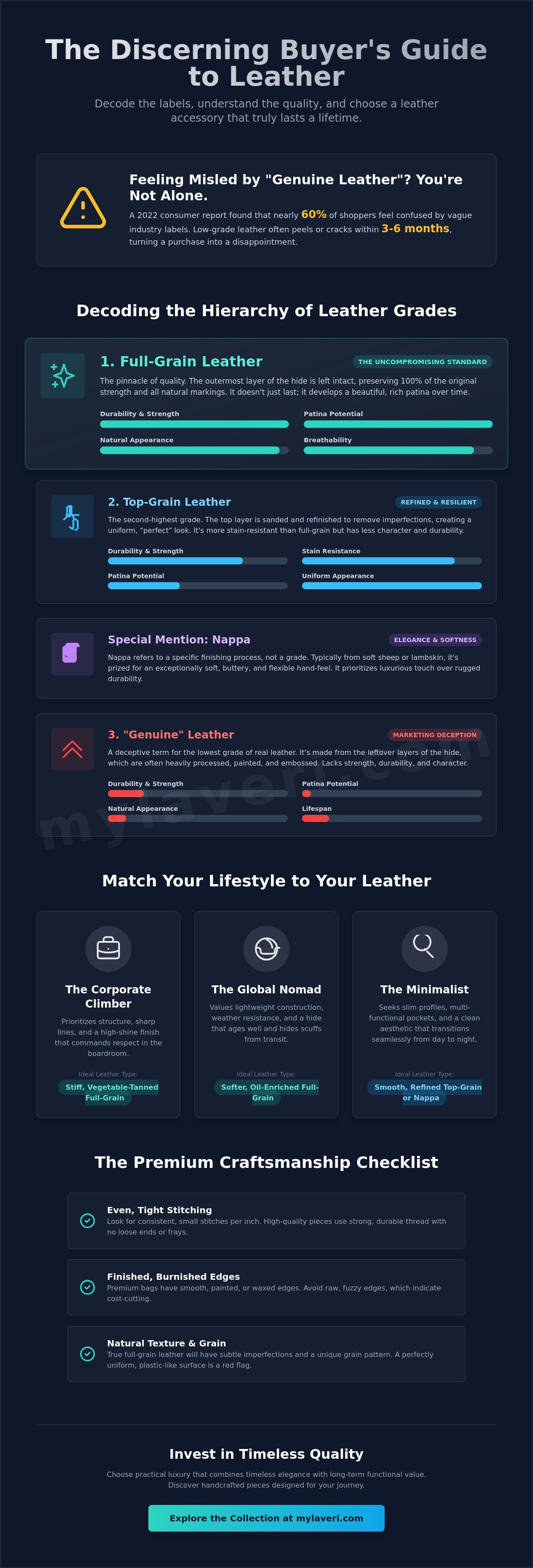
- The Corporate Climber: Prioritizes structure, sharp lines, and a high-shine finish that commands respect in boardrooms.
- The Global Nomad: Values lightweight construction, weather resistance, and a leather that hides the occasional scuff from transit.
- The Minimalist: Seeks slim profiles, multi-functional pockets, and a clean aesthetic that transitions from day to night.
Each persona dictates specific leather requirements. The Corporate Climber might choose a stiff, vegetable-tanned leather, while the Nomad prefers a softer, oil-enriched hide. A leather persona is a blueprint for your next purchase that aligns your daily habits with material performance. Choosing the right leather for your lifestyle ensures that your gear works for you, not the other way around.
Decoding Leather Grades: From Full-Grain to Nappa
Buying a luxury item often feels like learning a new language. Mass-market retailers frequently use vague terms to mask lower-quality materials, making it difficult to know exactly what you're paying for. Understanding these distinctions is the first step in choosing the right leather for your lifestyle. At Laveri, we believe true sophistication starts with the raw material; that's why we focus exclusively on the upper tiers of leather production.
Full-Grain Leather: The Uncompromising Standard
Full-grain is the pinnacle of quality. It represents the outermost layer of the hide, left entirely intact with all its natural markings and grain. Because the fibers are tightly packed at this level, it offers 100% of the hide's original strength. It doesn't just last; it evolves. Over time, it develops a rich patina that reflects your personal journey. This premium material serves as the foundation for The Definitive Guide to Leather Bags, where longevity is the primary metric of value.
Nappa and Top-Grain: Balancing Softness and Resilience
Nappa isn't actually a grade of hide but a specific finishing process. It's typically created from unsplit sheep or lambskin, resulting in an exceptionally soft, buttery hand-feel. While full-grain is rugged, Nappa is prized for its elegance and flexibility. Top-grain leather sits just below full-grain. Manufacturers sand away the natural imperfections to create a uniform, "perfect" surface. This makes it ideal for fashion-forward bags that require a consistent aesthetic without the heavy weight of traditional full-grain hides. Choosing the right leather for your lifestyle often means deciding between this refined smoothness and the raw texture of higher grades.
The Truth About "Genuine Leather" Labels
The "Genuine Leather" stamp is one of the most successful marketing deceptions in the industry. It sounds authentic, but it actually identifies the lowest grade of real leather. Once the premium top layers are removed for high-end goods, the remaining "splits" are used to create genuine leather. These products often rely on heavy plastic coatings and artificial grain embossing to look presentable. They lack the structural integrity of premium hides and typically begin to peel or crack within 12 to 24 months of regular use. To ensure you're getting a product that lasts a lifetime, look for more specific terminology like "full-grain" or "top-grain" when you shop premium leather accessories.
Laveri's commitment to excellence means we never settle for splits or "genuine" grades. We select only the finest hides to ensure your investment remains as beautiful in a decade as it is on the day you buy it.
Matching Leather Types to Your Daily Routine
Understanding technical grades is only the first step. Choosing the right leather for your lifestyle involves looking at how you move through your day. A common objection is that luxury leather is too delicate for heavy use. In reality, the opposite is true. Premium hides possess a natural fiber density that outlasts synthetic materials by decades. The key is matching the tanning process and the hide's weight to your specific activity level. Tanning affects the "temper" or stiffness of the item, which dictates how it handles daily weight and pressure.
The Corporate Professional: Structure and Sophistication
Professionals need items that command respect and maintain a sharp silhouette. For this persona, vegetable-tanned or top-grain leathers are the gold standard. These materials are stiffer, ensuring that a bag doesn't slouch or lose its shape when placed on a boardroom table. A structured laptop bag is a functional necessity here. It provides a rigid, protective shell for 14-inch or 16-inch hardware, preventing sensitive electronics from bending under external pressure. The finish on these leathers is designed to be resilient, resisting the minor scuffs and abrasions that occur during busy metropolitan commutes.
The Frequent Traveler: Durability and Patina
For those who spend their lives in transit, 100% full-grain cow leather is the only logical choice. These hides are typically thicker, often measuring between 1.2mm and 2.0mm, providing the tensile strength needed to survive overhead bins and baggage carousels. Travelers should look for "pull-up" leathers infused with oils and waxes. These leathers are designed to show character. When the leather is bumped or folded, the oils shift to create beautiful tonal variations. These leather bags don't just endure long-haul journeys; they document them, developing a rich patina that looks better after every flight.
The Minimalist: Sleekness and Card Management
If you prefer to carry only the essentials, focus on Nappa or slim-profile calfskin. These leathers are prized for being remarkably thin yet incredibly strong. This high-tensile strength is what allows leather wallets for men to remain pocket-friendly even when holding eight to ten cards. Choosing the right leather for your lifestyle in a minimalist context is about the tactile experience. You want a material that offers a supple "click" when you close a cardholder and a soft, buttery feel that makes every interaction with your wallet feel like a small luxury. This approach prioritizes a sleek profile without sacrificing the longevity of the grain.
- Vegetable-Tanned: Best for structured briefcases and formal wear.
- Full-Grain: Best for heavy-duty travel and rugged daily use.
- Nappa/Calfskin: Best for slim wallets and lightweight accessories.
By aligning the leather's natural characteristics with your routine, you ensure your investment remains both practical and beautiful for years to come. Whether you need the rigidity of a professional case or the flexibility of a travel duffel, the right leather exists to meet that demand.
The Quality Checklist: How to Spot Premium Craftsmanship
Identifying a masterpiece from a mass-produced item requires a discerning eye and a bit of patience. While brand names often command a premium price, the true value lies in the artisan's technique and the raw material's integrity. When choosing the right leather for your lifestyle, you must look closer than the logo to ensure your investment lasts for decades rather than seasons.
The Sensory Test: Touch, Smell, and Sight
Your first interaction with a luxury piece should engage all your senses. High-grade leather smells earthy, rich, and slightly sweet; it doesn't carry the sharp, acrid scent of chemicals or synthetic glues. When you run your hand over the surface, you'll notice a natural warmth and a slight "grip." Synthetic alternatives often feel cold, slick, or overly smooth to the touch. Look for tiny, visible pores and subtle imperfections like growth marks or small scars. These are the hallmarks of full-grain hide, showing the unique history of the animal. Proper genuine leather care ensures these natural features evolve into a deep, glossy patina over 10 or 15 years of use.
Construction Details That Outlast Trends
Examine the stitching with a critical eye. Premium bags and wallets typically feature 8 to 10 stitches per inch, ensuring the seams don't pull apart under the weight of your daily essentials. The lines should be perfectly straight, with reinforced backstitching at stress points like handle attachments or pocket corners. You'll also see a clear difference in the treatment of the edges. Luxury artisans often use "edge painting," a meticulous process involving 3 to 5 layers of hand-applied lacquer, or "turned edges" where the leather is thinned and folded over itself. Both methods prevent the layers from fraying. Check the hardware as well. Solid brass or 316L stainless steel components feel heavy and cool, providing the structural support needed for a lifetime of service.
Understanding Tanning: Chrome vs. Vegetable
The tanning process determines how the piece reacts to your daily environment. Vegetable tanning uses natural tannins derived from tree bark and can take up to 60 days to complete. It's the preferred choice for those who value an eco-friendly process and a leather that develops a unique character as it ages. Chrome tanning is a faster, 24-hour method using chromium salts. This results in a softer, more supple finish that offers superior water resistance and a wider variety of vibrant colors. Choosing the right leather for your lifestyle means deciding if you prefer the rugged, evolving beauty of vegetable-tanned hides or the modern, resilient versatility of chrome-tanned skins.
Investing in Timelessness: The Laveri Commitment to Quality
Selecting a premium accessory is more than a simple purchase. It's a commitment to what we call "Practical Luxury." When you focus on choosing the right leather for your lifestyle, you're prioritizing items that balance high-end aesthetics with everyday utility. Laveri has established itself as a leader in the UAE luxury market by offering handcrafted goods that don't just look expensive; they perform. Our dedication to full-grain materials and the expertise of our artisans ensures that your bag isn't a seasonal trend. It's a long-term companion designed to age with grace alongside you.
Handcrafted in the UAE: A Tradition of Excellence
Every Laveri piece is born from a tradition of excellence right here in the UAE. Our skilled artisans treat every cut of leather as a unique work of art. They focus on meticulous details that mass-produced brands often overlook, such as reinforced stitching and hand-finished edges. We've engineered our bags to meet the demands of regional durability while reflecting international style. This means your leather can withstand the environmental demands of the Gulf while looking perfectly at home in London or New York. We take immense pride in our local craftsmanship, ensuring every stitch meets our rigorous standards.
Why Our Full-Grain Selection Wins Every Time
The foundation of any great bag is the raw material. Our full-grain selection wins every time because we only source hides with the tightest grain patterns. This results in a product that's incredibly resilient and develops a rich patina over time. Our customers frequently highlight this quality in their reviews, praising the sensory experience and durability of our 100% cow leather. This material choice is why a Laveri bag feels better after a year of use than it did on the day you bought it. If you want to see how these premium materials translate into sophisticated style, explore our full range of mens gifts.
Caring for Your Investment for a Lifetime
Investing in a high-quality bag is only the first step. Simple maintenance can easily double the life of your leather. A quick wipe with a dry, soft cloth every 14 days prevents dust from settling into the pores and causing micro-scratches. For those who want to keep their items in pristine condition for decades, our genuine leather care guide provides the ultimate roadmap for deep cleaning and conditioning. When you understand that choosing the right leather for your lifestyle involves both smart selection and consistent care, you ensure your Laveri product remains a reliable staple for a lifetime. Our goods are built to last, providing a confident return on your investment every single day.
Elevate Your Everyday with the Perfect Leather Match
Investing in a premium leather piece isn't just about fashion; it's about finding a companion that withstands your daily hustle. You've learned that choosing the right leather for your lifestyle means balancing the buttery softness of Nappa with the rugged resilience of full-grain hides. Quality craftsmanship is the foundation of any piece that claims to be timeless. By focusing on superior materials and artisan construction, you ensure your accessories grow more beautiful with every passing year.
Laveri is dedicated to redefining UAE luxury through meticulous attention to detail. Every product in our range is handcrafted from 100% Full-Grain Cow Leather, ensuring maximum durability for the modern professional. Our commitment to excellence is reflected in thousands of 5-star reviews from customers who value both style and substance. Don't settle for temporary trends when you can own a legacy.
Explore Laveri’s Handcrafted Premium Leather Collection
Your journey toward lasting sophistication starts with a single, well-chosen piece that you'll be proud to carry for a lifetime.
Frequently Asked Questions
Is full-grain leather better than Nappa leather for a daily bag?
Full-grain leather is the superior choice for a daily bag because it utilizes the strongest, outermost layer of the hide. While Nappa leather offers a buttery softness, full-grain provides 100% resistance to the peeling and thinning often seen in lighter grades. It's a practical investment for those who prioritize durability and a long-term aesthetic over immediate suppleness.
Choosing the right leather for your lifestyle means considering how hard you'll use the item. Full-grain hides retain the natural fiber density, which allows them to withstand heavy daily use for decades. Nappa is beautiful, but it requires more frequent care to maintain its delicate surface.
How can I tell if a bag is made of real full-grain leather online?
You can identify real full-grain leather by looking for high-resolution photos that show natural pores and unique grain patterns. Authentic full-grain hides are never 100% uniform; they feature slight variations that prove the surface hasn't been sanded down. Most premium brands will explicitly state "Full-Grain" in their technical specifications rather than using the vague "Genuine Leather" label.
Check the product description for mentions of handcrafted construction or specific tanning origins. A 2023 industry report suggests that 95% of mass-market brands avoid showing close-up grain details to hide the use of corrected-grain materials. If the surface looks like plastic or perfectly smooth paint, it's likely not full-grain.
Does high-quality leather scratch easily, and can I fix it?
High-quality leather can pick up surface marks, but these scratches often blend into the patina over time. You can fix most light abrasions on vegetable-tanned leather by simply rubbing the area with your thumb for 30 seconds. The heat and natural oils from your skin help redistribute the waxes within the fibers to mask the mark.
For deeper scuffs, a horsehair brush and a small amount of leather conditioner usually do the trick. A study by heritage leather guilds shows that premium hides possess a self-healing quality that synthetic materials lack. Regular maintenance every six months ensures these marks contribute to the bag's character rather than its decay.
What is the best leather type for someone living in a humid climate like Dubai?
Saffiano or treated full-grain leather is the best option for humid environments like Dubai where the average humidity reaches 60% annually. Saffiano leather features a cross-hatch wax coating that acts as a moisture barrier. This protection prevents the leather from absorbing water vapor, which can lead to mold or structural softening.
When choosing the right leather for your lifestyle in the Middle East, avoid unfinished suedes or porous nubucks. These materials trap moisture and dust more easily. A finished full-grain leather provides the perfect balance of luxury and climate resistance for the region's unique conditions.
How long should I expect a premium handcrafted leather bag to last?
You should expect a premium handcrafted leather bag to last between 20 and 30 years with basic care. Research indicates that full-grain leather outlasts synthetic alternatives by a ratio of 5 to 1. The structural integrity comes from the undisturbed grain layer and the skilled artisans who use reinforced stitching techniques.
The lifespan depends heavily on how you store and clean the piece. Using a dust bag and avoiding direct sunlight for extended periods prevents the fibers from drying out. A well-made bag is an heirloom-quality investment that actually looks better after 10 years of use than it did on day one.
Why does full-grain leather cost significantly more than "genuine" leather?
Full-grain leather costs more because it requires the highest quality raw hides that are free from major scars or defects. Since the surface is not sanded or corrected, only about 10% to 15% of all hides are suitable for this grade. In contrast, "genuine" leather is made from the lower, weaker layers of the skin that are bonded together with glue.
The production process for premium leather is also more time-consuming. Skilled artisans must carefully cut around natural marks to ensure the final product is both beautiful and strong. You're paying for the raw material's rarity and the labor-intensive craftsmanship required to preserve its natural strength.
Can I use a minimalist leather wallet for both cards and cash without stretching it?
You can use a minimalist wallet for both cards and cash as long as you don't exceed the manufacturer's recommended capacity. Full-grain leather has excellent elastic recovery, meaning it can stretch slightly and still hold its shape. However, overstuffing a wallet by more than 150% of its intended limit will permanently deform the leather fibers.
To keep the silhouette slim, try to limit yourself to two cards per slot. If you need to carry more, choose a design with dedicated compartments for bills. Premium cowhide is resilient; it will mold to your specific carry style over the first 30 days of use without becoming loose.
What tanning process is better for the environment?
Vegetable tanning is the most environmentally friendly process because it uses natural tannins derived from tree bark and plants. This method dates back to 6000 BC and avoids the heavy metals like chromium that are used in 80% of global leather production. Vegetable-tanned leather is biodegradable and has a distinct, earthy scent.
While this process takes up to 60 days to complete, the results are far more sustainable than quick chemical baths. It produces a leather that is safe for the skin and the planet. Choosing vegetable-tanned goods supports a tradition of craftsmanship that respects ecological boundaries.
