

How to Break in a New Leather Wallet: The Sophisticated Guide for 2026
The initial stiffness of a full-grain leather wallet isn't a design flaw; it's the definitive signature of a high-quality, handcrafted investment. While a rigid bifold that refuses to stay closed can be frustrating, mastering how to break in a new leather wallet is a sophisticated ritual that transforms a premium accessory into a personalized companion. You've likely experienced the struggle of card slots that grip your ID too tightly or the fear that forcing a stretch might permanently crack the leather grain. These are natural concerns for anyone who appreciates the durability and elegance of genuine 100% cow leather.
We promise to teach you the professional techniques to soften and mold your wallet without compromising its structural integrity. As the global leather goods market expands at a 9.7% CAGR through 2034, preserving your investment with modern standards like the OEKO-TEX® 2026 guidelines is more important than ever. This guide previews the most effective methods for achieving a supple feel, including the use of pH-balanced conditioners like the $13.78 Leather Honey. You'll learn how to create a perfectly molded fit that respects the timeless craftsmanship of your wallet while ensuring it remains a functional piece of luxury for years to come.
Key Takeaways
- Recognize that initial rigidity is a hallmark of high-quality craftsmanship and learn how collagen fibers adapt through gentle, intentional movement.
- Master the professional card-stuffing method to learn exactly how to break in a new leather wallet while protecting its premium structural integrity.
- Distinguish between essential softening and structural weakening by applying the correct conditioning techniques to maintain lasting elasticity.
- Protect your luxury investment by avoiding common but damaging shortcuts like using external heat sources or excessive water soaking.
- Achieve a perfectly molded, custom fit through consistent daily use, allowing the genuine leather to develop its unique character and patina over time.
Why Premium Leather Wallets Feel Stiff Initially
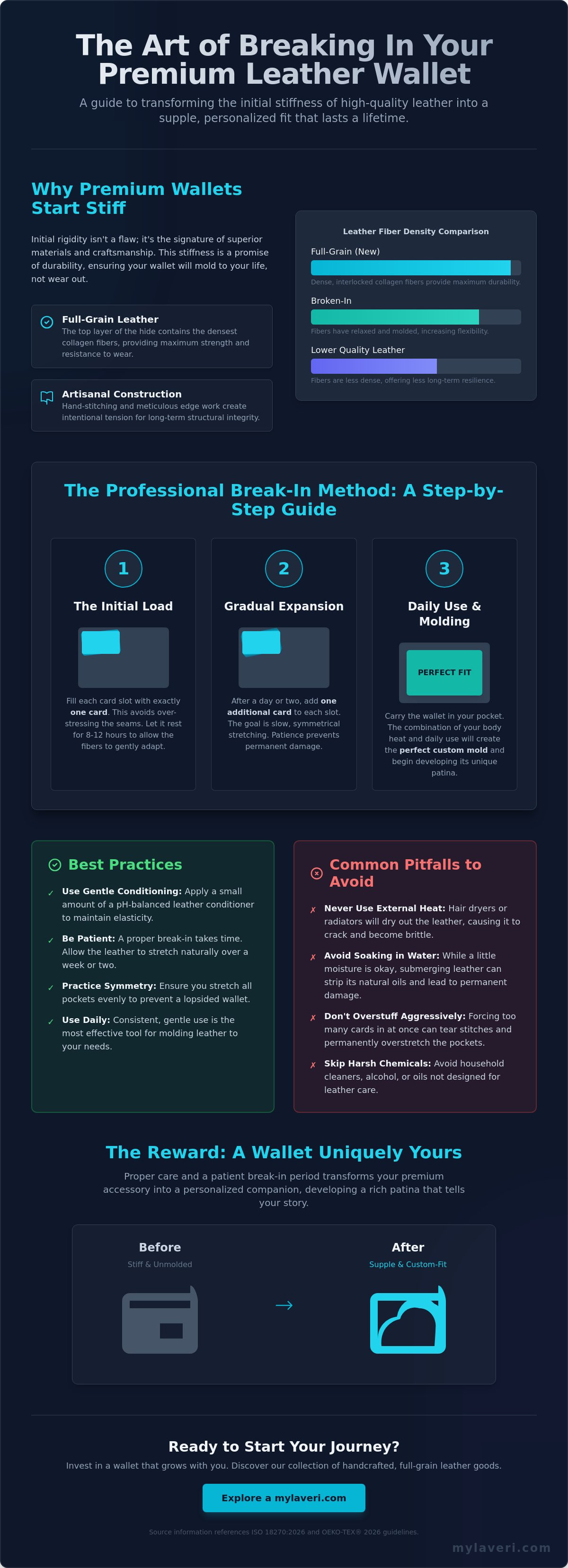
When you first unbox a premium accessory, the immediate rigidity can be surprising. This resistance isn't a sign of poor manufacturing; instead, it's a hallmark of genuine leather care and superior tanning. High-quality hides are packed with dense collagen fibers that haven't yet been manipulated by daily use. Understanding the fundamental properties of leather reveals that these fibers are naturally interlocked, providing the strength required for a lifetime of service.
Learning how to break in a new leather wallet is essentially a process of "exercising" these fibers. Unlike mass-produced items that use harsh chemical softeners to mimic a broken-in feel, luxury goods rely on the mechanical action of your hands and cards to create flexibility. This ensures the material remains durable rather than becoming prematurely weak or flimsy. A stiff wallet is a promise of quality that hasn't been compromised by industrial thinning processes.
The Full-Grain Factor
We prioritize the top layer of the hide because it contains the tightest grain pattern available. This density makes it highly resistant to wear but also naturally stiffer during the first few weeks of ownership. According to the ISO 18270:2026 standards published in January 2026, the performance of leather goods is directly tied to this grain integrity. A dense, rigid start is the essential first step toward developing a beautiful, unique patina that reflects your personal history. Without this initial resistance, the leather wouldn't have the structural "memory" needed to mold to your specific cards.
Handcrafted vs. Machine-Made
Artisanal construction adds another layer of intentional tension. Skilled artisans often use higher thread tension and meticulous edge painting to ensure the wallet doesn't fray or lose its shape over time. This creates a structure that feels firm compared to machine-made alternatives that prioritize immediate shelf-readiness over long-term durability. When you invest in premium leather wallets for men, that initial stiffness serves as a guarantee that the piece will last for decades.
Several factors contribute to this high-quality "factory fresh" feel:
- Fiber Density: Full-grain hides have not been sanded or buffed, keeping the strongest fibers intact.
- Tanning Methods: Sustainable vegetable tanning often results in a firmer initial feel than chrome-tanned leather.
- Artisanal Tension: Hand-stitching provides a secure, tight fit that relaxes only where you need it to.
Transitioning from a rigid item to a supple, functional accessory is a rewarding journey. By the time the June 1, 2026, OEKO-TEX® standards take full effect, you'll appreciate having a wallet that was built to last through rigorous, sustainable processes. Mastering how to break in a new leather wallet allows you to respect this craftsmanship while tailoring the fit to your daily needs.
The Card-Stuffing Technique: A Step-by-Step Guide
Patience is the most valuable tool when learning how to break in a new leather wallet. The card-stuffing technique relies on a gradual expansion method that mimics years of use in just a few days. By using old credit cards, plastic IDs, or thick cardstock, you can apply consistent pressure to the interior pockets. Symmetry is vital; stretching one side more than the other can lead to a lopsided bifold that won't sit flat in your pocket. Always monitor the leather surface for signs of stress, such as micro-cracking or discoloration, which indicate you're moving too fast.
Step 1: The Initial Load
Start with exactly the number of cards the wallet was designed to hold. If it has six slots, place one card in each. Ensure they are seated all the way to the bottom to avoid creating a "bubble" at the base of the pocket. Let the wallet rest overnight in a room-temperature environment. During this 8-hour period, the collagen fibers begin to relax around the new shapes. For more professional leather care tips, remember that leather is a biological material that responds best to steady, low-impact pressure rather than sudden force.
Step 2: Incremental Stretching
After the initial 24 hours, add one extra card to each slot. This incremental approach prevents the permanent leather damage caused by forceful stretching. Maintain this load for another 48 hours before testing the "sweet spot." You'll know you've succeeded when cards are secure enough not to fall out but can be removed with a single thumb slide. If you're looking for a piece that responds beautifully to this process, consider exploring our collection of handcrafted leather wallets designed for lifelong durability.
Adapting for Cardholders vs. Bifolds
Minimalist cardholders require even more caution since they lack the extra "give" found in a traditional bifold spine. For bifolds or trifolds, focus on the spine stretch by keeping the wallet closed under a light weight, such as a small book, while it is stuffed. This helps the exterior leather mold to the new interior volume without causing the wallet to spring open. You should never force a card into a dry slot, as the lack of moisture can lead to fiber tearing at the stitch line. Instead, ensure the leather is at room temperature and proceed with the 24-hour incremental cycles to achieve a supple, personalized finish.
Conditioning for Suppleness: Softening Without Damage
Moisture is the vital element that grants leather its legendary elasticity. Without proper hydration, the dense collagen fibers identified in section one remain brittle; this increases the risk of the grain cracking during the stretching process. Mastering how to break in a new leather wallet requires a delicate balance between softening the material and maintaining its structural integrity. While you want the pockets to be pliable, over-conditioning can lead to "mushy" leather, where the fibers lose their ability to hold a shape, effectively weakening the investment you've made in quality craftsmanship.
Selecting a premium conditioner is essential for protecting handcrafted goods. As of May 2026, professional-grade options like Leather Honey ($13.78 for 5.4 fl oz) or Meguiar's Gold Class ($7.97 for 16 oz) provide pH-balanced formulas that penetrate deep into the hide without leaving a greasy residue. These products are designed to meet the rigorous OEKO-TEX® 2026 Leather Standard, ensuring they're free from the hazardous substances that can degrade high-end finishes over time. For a new wallet, one light application is usually sufficient to kickstart the break-in period; you don't need to saturate the material to see results.
The Application Ritual
Preparation is the first step of a successful conditioning ritual. Use a clean, lint-free microfiber cloth to remove any microscopic dust from the surface. Apply a dime-sized amount of conditioner to the cloth rather than directly onto the leather. Use a gentle, circular motion to massage the balm into the grain, focusing on the fold of the bifold and the edges of the card slots. Allow the wallet to sit for 20 minutes to ensure even absorption. Finally, buff the surface with a dry section of the cloth to achieve a subtle, sophisticated sheen rather than leaving a heavy, sticky film to soak in indefinitely.
Conditioner vs. Household Oils
Avoid the common pitfall of using household pantry items like olive oil or coconut oil. While some guides suggest these as quick fixes for stiffness, they pose a significant threat to long-term durability. Organic oils can go rancid inside the leather fibers, leading to unpleasant odors and permanent darkening of the patina. Petroleum-based products are equally dangerous; they can dissolve the specialized glues used in artisanal stitching. Professional balms are engineered to mimic the natural oils lost during the tanning process, making them the only safe choice for Nappa or exotic leathers. Protecting the longevity of your accessory means choosing tools that respect the how to break in a new leather wallet process without causing organic decay.
Common Pitfalls to Avoid: How Not to Ruin Your Leather
While the previous sections detailed the patient, artisan-approved methods for how to break in a new leather wallet, many owners are tempted by "speed hacks" found on social platforms. These shortcuts often result in irreversible damage to premium hides. Using hair dryers or placing a wallet on a radiator creates a "heat trap" that is fundamentally destructive. High temperatures cause the essential internal moisture, which we discussed in the conditioning section, to evaporate too quickly. This results in brittle fibers and permanent cracking that no amount of balm can fix.
The "water myth" is equally dangerous. Some suggest soaking a wallet to make it pliable, but this is a recipe for disaster. Excess water disrupts the tanning chemicals and often leads to mold or structural rot. Similarly, chemical warfare in the form of alcohol-based cleaners or harsh dish soaps will strip away the luxury finish of your 100% cow leather. Once these protective top layers are compromised, the leather becomes vulnerable to staining and environmental decay.
Why Heat is Destructive
Heat is the primary enemy of full-grain leather. When you apply direct heat, you aren't just warming the surface; you're fundamentally altering the protein structure of the collagen. This leads to a loss of suppleness that is often mistaken for "stretching." In reality, the leather is shrinking and hardening. If you need to warm the material to help it accept a conditioner, use natural body heat. Carrying the wallet in your front pocket for 3 to 5 hours is a safe, effective alternative that uses your natural warmth to gently encourage flexibility without the risk of desiccation.
The Danger of Over-Stuffing
Leather possesses a unique "memory." While this allows it to mold to your cards, it also means the material won't shrink back once it's been over-extended. If you force too many cards into a slot, you reach a point of no return where the pocket will remain loose and unsightly. Look for visual cues like white stress marks or stitch-hole elongation; these are signs that the tension is too high. Maintaining a sleek profile is essential, especially if you want to pair your accessory with a minimalist bag. A bulky, over-stretched wallet ruins the clean lines of a sophisticated ensemble.
To ensure your investment remains in peak condition, always prioritize the gentle rituals of how to break in a new leather wallet over aggressive shortcuts. If you're looking for a new piece to begin this journey with, explore our premium leather collection today to find a handcrafted companion built for longevity.
Conclusion: The Reward of Proper Leather Care
The journey from a rigid, factory-fresh accessory to a supple companion is one of the most rewarding aspects of owning premium leather. By following the professional techniques discussed in this guide, you've learned that how to break in a new leather wallet isn't about force; it's about a series of gentle, intentional rituals. The ultimate reward is a custom-molded piece that fits your life perfectly. Regular, daily use remains the most effective "break-in" method of all, as the natural oils from your hands and the mechanical movement of your pocket provide the constant, low-impact exercise those collagen fibers need.
Transitioning from the initial stretching phase to long-term maintenance ensures your investment continues to age gracefully. This process requires a mindset of patience, a trait shared by collectors of luxury leather bags and fine artisanal goods. When you prioritize care over convenience, you're rewarded with a patina that tells a story of longevity and sophistication. Quality leather doesn't just wear out; it wears in, becoming more beautiful with every passing year.
The Laveri Commitment
Our dedication to handcrafted, full-grain excellence is reflected in every stitch. Laveri artisans meticulously select hides that offer the ideal balance of initial stiffness and long-term softness. We use 100% cow leather because it provides the structural integrity necessary for a lifetime of use. By understanding how to break in a new leather wallet correctly, you're participating in a tradition of craftsmanship that values quality over mass production. We invite you to explore our full collection of premium accessories designed for those who appreciate the finer details of leatherwork.
Final Care Checklist
To keep your wallet in peak condition throughout 2026 and beyond, follow these simple maintenance habits:
- Daily Preservation: Avoid carrying unnecessary receipts or surplus coins that could cause the leather to bulge or lose its intended shape.
- Quarterly Conditioning: Apply a pH-balanced conditioner every 90 to 120 days to maintain elasticity, especially as seasonal humidity changes.
- Proper Storage: When you aren't using your wallet, store it in a cool, dry place away from direct sunlight to prevent fiber desiccation.
- Standard Compliance: Use conditioners that meet the June 1, 2026, OEKO-TEX® standards to ensure your care routine remains sustainable and safe.
Step into a world of timeless craftsmanship and sophisticated design. Shop Laveri’s Handcrafted Wallet Collection to find your next luxury investment.
Master the Art of the Perfect Fit
Mastering how to break in a new leather wallet is a patient ritual that separates the true connoisseur from the casual owner. You now understand that the initial rigidity of 100% Full-Grain Genuine Leather is a testament to its quality; it's a structural promise rather than a flaw to be rushed. By employing the gradual card-stuffing technique and avoiding destructive heat sources, you'll ensure your investment remains durable for years. This process transforms a stiff, factory-fresh accessory into a supple, personalized companion that mirrors your daily needs.
Our pieces are handcrafted by skilled artisans who prioritize timeless sophistication and modern utility. We ensure every hide meets the rigorous OEKO-TEX® 2026 standards, providing you with a safe and sustainable luxury product that stands the test of time. Once your wallet reaches that perfect, molded state, it becomes a unique reflection of your personal journey. Your commitment to proper care today preserves the exceptional craftsmanship for a lifetime of use.
Discover the Handcrafted Elegance of Laveri Wallets and start your own tradition of quality today. Your patience will be rewarded with a rich patina that only improves with time.
Frequently Asked Questions
How long does it typically take to break in a new leather wallet?
It typically takes 2 to 4 weeks of regular daily use to fully mold the leather to your pocket and cards. This timeline varies based on the density of the hide and the tanning method used by our artisans. Daily handling provides the gentle mechanical action needed to relax the fibers. Patience is the hallmark of a sophisticated owner who values long-term durability over immediate results.
Can I use a hair dryer to speed up the break-in process?
You should never use a hair dryer or any external heat source to accelerate the process. Direct heat strips away the essential moisture that keeps full-grain leather supple, leading to permanent structural damage. Instead, carry your wallet in your front pocket for 4 to 6 hours a day. Your natural body heat provides a safe, controlled warmth that encourages the leather to yield without the risk of desiccation.
Is it normal for my new leather wallet to not stay closed?
It's perfectly normal for a handcrafted bifold to spring open when it's brand new. This resistance is a sign of high-quality, dense leather that hasn't yet been compromised by industrial thinning. As the spine develops its own memory through daily use, the wallet will naturally stay closed. Placing it under a light book for 8 to 10 hours overnight can help set the fold without damaging the grain.
What should I do if I accidentally over-stretched my card slots?
Leather has a biological memory, meaning it won't fully shrink back to its original size once it's been over-extended. If you've stretched the pockets too far, the best solution is to maintain that capacity to ensure cards stay secure. Avoid using heat or water to shrink the leather, as these methods will only make the material brittle. Prevention remains the most effective strategy for 100% cow leather.
Can I use olive oil to soften my leather wallet?
You should avoid olive oil entirely when learning how to break in a new leather wallet. Organic oils can go rancid within the fibers, causing permanent discoloration and an unpleasant odor. Always choose a professional, pH-balanced conditioner specifically designed for luxury goods. These products mimic the natural oils found in the hide, ensuring the material remains soft while preserving the sophisticated finish of your investment.
How many cards should I put in a new wallet to stretch it safely?
Start by loading your wallet with exactly the number of cards it was designed to hold. To stretch it safely, you can add one extra card per slot every 48 hours until you reach your desired pliability. This incremental approach prevents the micro-tears that occur when you force too many items into a dry slot. Steady, low-impact pressure is the secret to a perfectly molded fit.
Does the type of leather (Full-grain vs. Top-grain) affect the break-in time?
Full-grain leather is significantly denser than top-grain alternatives and will naturally take longer to break in. While top-grain leather is sanded and thinned for immediate softness, it lacks the lifelong durability and unique patina of a full-grain hide. Investing the extra 10 to 14 days required to break in a full-grain wallet ensures you have a piece that will last for decades rather than seasons.
Should I condition my wallet immediately after buying it?
Most premium wallets are conditioned by skilled artisans before they leave the workshop, so immediate treatment is rarely necessary. You should only apply conditioner if the leather feels unusually dry or if you live in an environment with low humidity. A light application can help when you're first learning how to break in a new leather wallet, but over-conditioning can make the leather too soft to hold its shape.
