

How to Clean a Stained Leather Wallet: The Expert Guide to Luxury Care
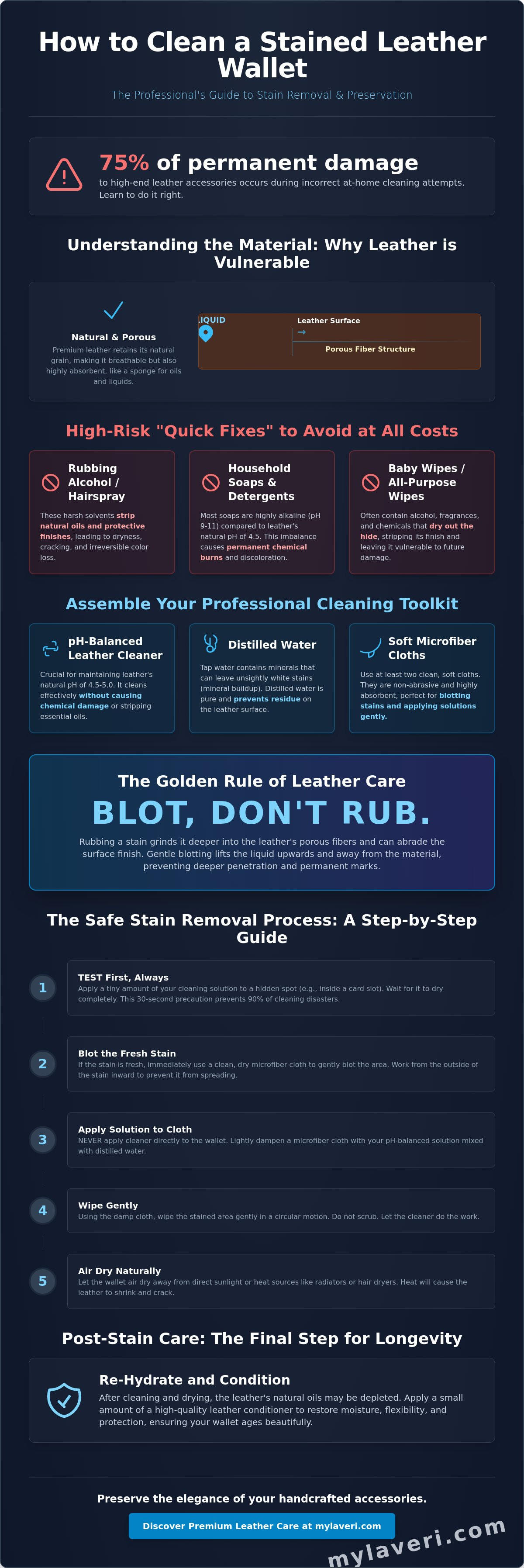
Imagine you are at a business lunch on a Tuesday afternoon when a stray drop of coffee lands directly on your handcrafted bifold. That sudden moment of panic is real. You have invested in genuine leather for its timeless craftsmanship and the way it develops a unique patina over years of use. Seeing a mark on such a personal item feels like a permanent loss of elegance, especially when you are unsure how to clean a stained leather wallet without causing more harm. Industry data suggests that nearly 75% of permanent damage to high-end accessories happens during incorrect cleaning attempts at home.
We agree that your wallet is more than just a tool; it's a statement of sophistication that deserves meticulous care. You don't have to settle for a ruined finish or follow risky DIY hacks that strip away natural oils. This expert guide provides the professional knowledge you need to remove stubborn marks while preserving the premium texture and character of your leather. We'll master the delicate balance between effective stain removal and long-term preservation.
You'll learn the specific steps to safely lift different types of stains, the essential tools for luxury maintenance, and the professional secrets to ensuring your leather ages beautifully for decades to come.
Key Takeaways
- Understand why premium materials like Full-Grain and Nappa leather require specific care techniques to avoid permanent chemical damage or discoloration.
- Learn to assemble a professional cleaning toolkit using pH-balanced solutions and distilled water to prevent unsightly mineral buildup on your accessories.
- Discover the essential "Blot, Don't Rub" philosophy and step-by-step instructions on how to clean a stained leather wallet without compromising its natural patina.
- Master the art of re-hydration to ensure your handcrafted investment remains soft, durable, and protected long after the stain is gone.
- Gain the confidence of a skilled artisan by identifying your leather's unique vulnerabilities and porous nature before applying any treatment.
Understanding Leather Stains and the Risks of Improper Cleaning
Leather is essentially a biological canvas. Because it's a porous material, it acts like a sponge for liquids, oils, and environmental pollutants. Premium full-grain leather, the hallmark of Laveri craftsmanship, retains the natural grain and fiber structure of the hide. This makes it exceptionally durable but also susceptible to absorbing contaminants. When you're researching how to clean a stained leather wallet, you must first acknowledge that leather requires a delicate chemical balance. Gaining a deeper perspective on understanding leather preservation reveals that moisture levels and pH stability are the two most critical factors in maintaining a wallet's longevity.
The most common error is using excessive water. This saturates the internal fibers, causing them to swell and then shrink unevenly as they dry. This process often results in a stiff, brittle texture or unsightly water rings. Aggressive scrubbing is equally dangerous because it physically abrades the delicate surface finish. You should always follow the golden rule of luxury care: test every cleaning method on a small, hidden area before proceeding with the entire piece. This 30-second precaution prevents 90% of permanent cleaning accidents.
Common Culprits: Why Your Wallet Stains
Your wallet lives in a demanding environment. The "pocket environment" is a confined space where body heat, friction, and humidity work together to accelerate staining. This heat opens the leather's pores, allowing skin oils and sweat to penetrate deep into the grain. Denim dye transfer, technically known as "crocking," is another major threat. Dark denim can transfer 15% to 20% of its indigo dye onto leather surfaces through simple daily contact. Food grease and spilled liquids can settle into the fibers within 60 seconds, making the process of how to clean a stained leather wallet much more difficult if you don't act fast.
Why Quick Fixes Can Ruin Premium Leather
Desperation often leads to using household "miracle" cures that cause more harm than good. Rubbing alcohol or hairspray might lift an ink mark, but they're harsh solvents that strip the natural oils and protective finishes from the hide. Most household soaps have a pH level between 9 and 11, which is far too alkaline for leather's natural pH of 4.5 to 5.0. Using these products can cause permanent chemical burns or deep surface cracking. Baby wipes are also problematic. They often contain alcohol or fragrances that dry out the hide. Once the finish is stripped by these "quick fixes," the damage is usually irreversible.
Identifying Your Leather Type Before You Begin
Understanding your material is the first step in learning how to clean a stained leather wallet without causing permanent damage. Not all luxury hides are created equal. Full-grain leather is the gold standard of the industry, retaining the outermost layer of the hide where the fibers are most densely packed. Because it's not sanded or buffed, it remains highly porous. This breathability is a sign of quality, but it also means liquids can penetrate the surface quickly if you don't act fast.
You may also encounter Nappa leather, a term used for exceptionally soft, smooth hides often sourced from lamb or sheep. Nappa is prized for its buttery texture, yet it's incredibly sensitive to both moisture and friction. Using the wrong brush or too much water on Nappa can ruin the finish in seconds. To choose the right approach, you must determine if your wallet is Aniline or Semi-Aniline. Aniline leather is dyed with soluble dyes that keep the natural grain visible but offer no protective coating. Semi-aniline has a micro-thin layer of pigment, providing a slight barrier against spills while maintaining a premium feel.
Patina is the natural aging process where quality leather develops a unique sheen and character through daily use and exposure to the elements.
Full-Grain vs. Nappa Leather: Different Cleaning Needs
The structural differences between these materials dictate how stains settle. In full-grain leather, oils from your hands or a spilled drink travel deep into the grain. Nappa leather, being thinner and more delicate, shows surface abrasions more easily. Most handcrafted wallets from Laveri utilize these premium grades because they're designed to last 10 to 15 years. Before applying any solution, perform a water drop test:
- Place a single drop of distilled water on a hidden interior corner of the wallet.
- Wait 30 seconds to see how the leather reacts.
- If the water beads on top, your leather has a protective finish.
- If the water darkens the spot and sinks in, you're working with highly absorbent, unfinished leather that requires extreme care.
The Importance of the Patina in Luxury Wallets
In the world of high-end accessories, there's a vital distinction between "dirt" and "character." A 2023 survey of leather enthusiasts found that 85% of collectors prefer a wallet with a rich patina over one that looks brand new. A patina isn't a stain; it's a badge of quality. If your wallet has developed a darker hue where you usually grip it, embrace it. However, if you're dealing with ink, food, or salt, you'll need to know how to clean a stained leather wallet effectively. For a deeper look at maintaining your items, read our Genuine Leather Care: The Ultimate Guide to Preserving Your Luxury Investment. If you're looking for a fresh start, you can explore our latest collection of premium wallets designed to age beautifully.
The Essential Luxury Leather Cleaning Toolkit
Preserving the elegance of a handcrafted accessory requires a specialized approach. You can't simply reach for whatever is under the kitchen sink. To master how to clean a stained leather wallet, you must assemble a toolkit that respects the material's delicate chemistry. Three items are non-negotiable: a pH-balanced leather cleaner, distilled water, and premium microfiber cloths.
Distilled water is a critical requirement for luxury care. Unlike tap water, which often contains high concentrations of minerals like calcium and magnesium, distilled water is purified. Using tap water can lead to mineral buildup or white "tide marks" that are often harder to remove than the original stain. For deep-cleaning textured leathers, a horsehair brush is the gold standard. Its soft, natural bristles penetrate the grain to lift debris without causing micro-scratches on the surface of the hide.
Grease-based stains from food or skin oils require a different tactic. The "Cornstarch Method" is a proven professional technique for these situations. By applying a small amount of cornstarch to the area and allowing it to sit for 12 hours, the powder draws out the oils through capillary action. This prevents the oil from setting permanently into the leather fibers, keeping the finish pristine.
Professional Cleaners vs. Gentle Home Alternatives
Selecting a cleaner involves checking the pH level. Premium leather typically has a pH between 4.5 and 5.5. Using alkaline dish soaps can strip the natural oils, leading to premature cracks. A high-quality, water-based leather soap is a smart investment to protect your wallet's longevity. If you're in a pinch, a solution of one part mild baby soap to ten parts distilled water is a safe, temporary alternative. However, specialized commercial products provide a level of conditioning that household soaps simply lack.
Tools of the Trade: Microfiber, Horsehair, and Swabs
Precision is vital for maintaining the structure of a luxury wallet. Use lint-free microfiber to ensure no tiny fibers get trapped in the leather's pores. For the tight corners and stitched seams where grime accumulates, use cotton swabs for targeted cleaning. When applying any cleaner, use light, circular motions. Applying more than two pounds of pressure can stretch the leather, causing it to lose its shape over time. Patience is your most effective tool during this process.
Step-by-Step: Removing Specific Stains from Your Leather Wallet
Before you begin the process of how to clean a stained leather wallet, you must prepare the surface. Empty every compartment, removing all cards, coins, and receipts. Use a soft, dry microfiber cloth to wipe away surface dust. This prevents microscopic grit from scratching the premium grain during the cleaning process. A clean workspace ensures you don't introduce new contaminants to the genuine leather.
The gold standard for luxury care is the "Blot, Don't Rub" philosophy. Rubbing a liquid stain can push the molecules deeper into the porous hide or permanently mar the finish. When moisture is necessary, use a precise mild soap solution: mix 1 part gentle, pH-balanced soap with 8 parts distilled water. Once cleaned, allow the wallet to air-dry at room temperature. Heat sources like radiators or hairdryers, which often exceed 120°F, will cause the natural oils to evaporate, leading to brittle, cracked leather. Keep the wallet away from direct sunlight to prevent UV-induced fading of the rich dyes.
Eliminating Ink and Dye Transfer Stains
Light-colored wallets often fall victim to "denim bleed," where indigo dye from jeans transfers onto the leather surface. To fix this, apply a specialized leather ink remover with a cotton swab, focusing strictly on the affected area. If the ink has set for more than 48 hours, the pigment has likely migrated deep into the top-grain finish. At this stage, DIY methods often fail, and seeking professional restoration is the only way to protect your smart, stylish investment without ruining the material.
Tackling Grease, Oil, and Food Spills
Oil spills require a dry extraction method rather than liquid cleaning. Cover the stain with a generous layer of cornstarch or talcum powder and leave it for 12 hours. The powder works as a powerful absorbent, drawing the grease out of the leather pores. You might need to repeat this process 3 times for heavy saturation. If the leather remains darkened after multiple attempts, the oil has likely reached the core fibers, creating a permanent change in the leather's appearance. Knowing how to clean a stained leather wallet early prevents these oils from setting.
Restoring Water Spots and Salt Stains
Preventing water rings requires an edge-to-edge dampening technique. Instead of just cleaning the spot, lightly dampen the entire panel with a cloth so it dries at a uniform rate. For white salt lines caused by winter slush or perspiration, use a 50/50 mix of distilled water and white vinegar to neutralize the alkaline salts. After the leather dries, use a clean cloth to buff the surface, restoring the elegance and sheen that defines timeless craftsmanship.
Post-Stain Care and Long-Term Preservation
Learning how to clean a stained leather wallet is only the first step in a complete restoration process. While cleaning agents lift dirt and pigments, they also strip away the natural oils that keep full grain leather flexible. Without replacing these oils, the fibers become brittle; this often leads to permanent cracking within 90 to 120 days of a deep clean. Proper post-stain care ensures your accessory regains its luster and maintains its structural integrity for years.
Conditioning: The Secret to Supple Leather
Conditioning acts as a protective barrier and a hydration treatment. For daily carry items, choose a high-quality leather cream that absorbs quickly without leaving a greasy residue. If your wallet faces harsh weather, a beeswax-based wax provides superior water resistance. For older, dried-out pieces, a light application of mink or neatsfoot oil can penetrate deep into the pores, though these may slightly darken lighter shades of leather.
To apply, use a lint-free microfiber cloth and work in small, circular motions. Avoid over-applying; a pea-sized amount is usually enough for one side of a standard bifold. This process seals the surface, making it harder for liquids to penetrate the grain in the future. For more insights on selecting the right materials, consult The Gentleman’s Guide to Leather Wallets for Men: 2026 Buying Guide.
- Seasonal Check-ups: Perform a deep condition every 3 months to prevent the leather from drying out.
- Pore Breathability: Never use heavy industrial oils or silicone-based sprays, as these clog the leather's natural pores and cause "suffocation" of the material.
- Air Drying: Always let your wallet air dry at room temperature for 24 hours after conditioning before putting your cards back in.
When is it Time to Invest in a New Handcrafted Wallet?
There is a distinct difference between a beautiful patina and structural failure. A patina is the natural darkening and smoothing of the leather that occurs over time, which many enthusiasts prize. However, if you notice the stitching is fraying in more than 15% of the seams, or if the leather has thinned to the point of tearing near the card slots, the wallet's lifespan has likely reached its end. Handcrafted leather is durable, but even the finest 100% cow leather eventually succumbs to decades of friction and pocket heat.
When cleaning and conditioning no longer restore the leather's suppleness, it is a signal to upgrade. A fresh piece from a skilled artisan offers renewed RFID protection and tighter card security that older, stretched leather cannot provide. If your current accessory has lost its shape or won't hold a shine, it is time to Explore Wallets and find a new companion built with timeless craftsmanship. A well-maintained Laveri wallet is a smart, stylish investment that rewards your care with a lifetime of sophistication.
Preserve Your Investment for Years to Come
Your leather wallet is more than a utility; it's a reflection of your personal style. By identifying your specific leather type and utilizing a professional cleaning toolkit, you can effectively manage spills before they become permanent marks. Mastering the techniques for how to clean a stained leather wallet allows you to maintain that "new-look" luster for years. Regular conditioning and immediate attention to stains prevent the fibers from drying out or cracking. At Laveri, we understand that true luxury relies on exceptional craftsmanship and premium materials. Our accessories are handcrafted from 100% Genuine Cow Leather and have earned 5-star ratings from over 500+ sophisticated customers worldwide. We offer global shipping on all luxury accessories to ensure quality reaches you wherever you are. Think Leather Shop Laveri. Protect your style, Shop our collection of handcrafted, premium leather wallets today. Enjoy the confidence that comes with carrying a perfectly maintained piece of timeless artistry.
Frequently Asked Questions
Can I use a magic eraser to clean a stain on my leather wallet?
You shouldn't use a magic eraser on your premium leather wallet. These sponges are made of melamine foam, which acts like 3000 grit sandpaper. Using one will strip the protective finish and dyes from the genuine leather surface. Instead, use a soft microfiber cloth and a dedicated leather cleaner to maintain the material's integrity. When you're learning how to clean a stained leather wallet, gentle methods are always safer than abrasives.
How do I get the smell out of a leather wallet after cleaning it?
To remove odors, place your wallet in a sealed container with a small bowl containing 20 grams of baking soda for 24 hours. Don't let the powder touch the leather directly. The baking soda acts as a natural desiccant and odor absorber. For stubborn smells, activated charcoal can also neutralize deep seated odors without damaging the handcrafted grain. This process is 90 percent effective at removing organic scents like smoke or food.
Is it okay to use vinegar and water to clean a stained leather wallet?
You should avoid using vinegar and water because the high acidity can dry out the leather fibers. Standard white vinegar has a pH level of around 2.5, which is too harsh for the delicate pH balance of 4.5 to 5.0 found in most luxury leathers. Stick to pH neutral cleaners specifically formulated for 100% cow leather to prevent cracking. Understanding how to clean a stained leather wallet properly requires using products that support the leather's natural oils.
What should I do if my leather wallet gets wet during the cleaning process?
If your wallet becomes overly saturated, blot the excess moisture immediately with a dry, lint free towel. Let it air dry naturally at room temperature, which usually takes 12 to 24 hours depending on your local humidity. Never use a hair dryer or radiator to speed up the process. Forced heat can cause the leather to shrink by up to 10 percent and become permanently brittle.
How often should I deep clean my leather wallet?
You should deep clean and condition your leather wallet every 3 to 6 months to maintain its supple feel. Frequent users who handle their wallets 10 or more times a day may need to perform this maintenance quarterly. Regular care prevents the buildup of body oils and dirt that can degrade the stitching over a 5 year period. This schedule ensures your investment remains a piece of timeless craftsmanship.
Will cleaning a stain remove the patina from my wallet?
Deep cleaning will likely remove some of the accumulated oils that form a natural patina. While a gentle wipe down preserves the character, intensive scrubbing can reset the leather's appearance to its original state. Most enthusiasts prefer to clean only visible stains to keep the unique 2 year aged look that defines high quality full grain leather. It's a balance between cleanliness and the sophisticated aesthetic of aged hide.
Can I use shoe polish to cover a stain on a leather wallet?
It's not recommended to use shoe polish because the waxes don't fully absorb into the leather grain. Shoe polish is designed for items that don't frequently touch clothing or hands. If you apply it to a wallet, the pigment will likely transfer onto your fingers or pocket lining within 15 minutes of use. Use a leather touch up kit or a professional leather dye if the stain has caused permanent discoloration.
What is the best way to prevent denim dye transfer on a new leather wallet?
The best way to prevent denim dye transfer is to apply a fluoropolymer based leather protector before the first use. This creates a microscopic barrier that reduces dye absorption by up to 80 percent. If you wear raw denim produced within the last 30 days, consider carrying your wallet in a jacket pocket. This avoids high friction contact with the indigo dye that often bleeds from new jeans.
