

How to Store Leather Bags to Prevent Damage: The Luxury Care Guide 2026
Your luxury leather bag is a living investment, but it begins to lose its soul the moment you toss it onto a dark closet floor. Most collectors assume storage is a passive act. In reality, it's a vital continuation of the conditioning process that preserves structural memory and material integrity. You've likely felt that pang of frustration when a favorite tote loses its original silhouette or develops irreversible cracks in a dry environment. Learning exactly how to store leather bags to prevent damage is the only way to ensure your collection remains a set of vibrant heirlooms rather than a series of expensive restoration costs.
We understand that you value the timeless craftsmanship of genuine leather and want to protect that investment for the long term. We'll show you how to master the art of preservation by maintaining the ideal 40% to 60% humidity level and a cool 60 to 70 degree environment. This guide covers everything from proper stuffing techniques that maintain shape to the absolute necessity of breathable fabric covers over plastic. You're about to learn how to keep your premium leather supple, vibrant, and market-ready for decades to come.
Key Takeaways
- Learn the essential pre-storage ritual of emptying and cleaning your items to prevent permanent indentations and damage from acidic skin oils.
- Discover how to store leather bags to prevent damage by maintaining the "Goldilocks Zone" of 40% to 60% humidity and avoiding direct UV light.
- Master the art of structural preservation by using acid-free stuffing materials that mimic your bag's original silhouette without risking ink transfer.
- Protect delicate hardware and interior linings by wrapping metal accents and securing zippers to maintain perfect structural alignment.
- Adopt the Laveri approach of seasonal rotation and six-month check-ups to ensure your handcrafted collection remains in pristine, investment-grade condition.
Preparing Your Bag: The Essential Pre-Storage Ritual
Preserving the integrity of a premium bag begins long before it touches the shelf. You can't simply tuck a piece of handcrafted art away and expect it to remain pristine without a dedicated ritual. Proper preparation is the foundation of how to store leather bags to prevent damage; it addresses the invisible threats of acidity and moisture that degrade fibers over time. When understanding leather material, it's vital to remember that it is a porous, organic substance. It reacts to its environment even when not in use. If you store a bag that's even slightly damp or coated in a thin layer of city grime, you're essentially trapping those elements against the hide for months.
The "Empty and Inspect" Rule
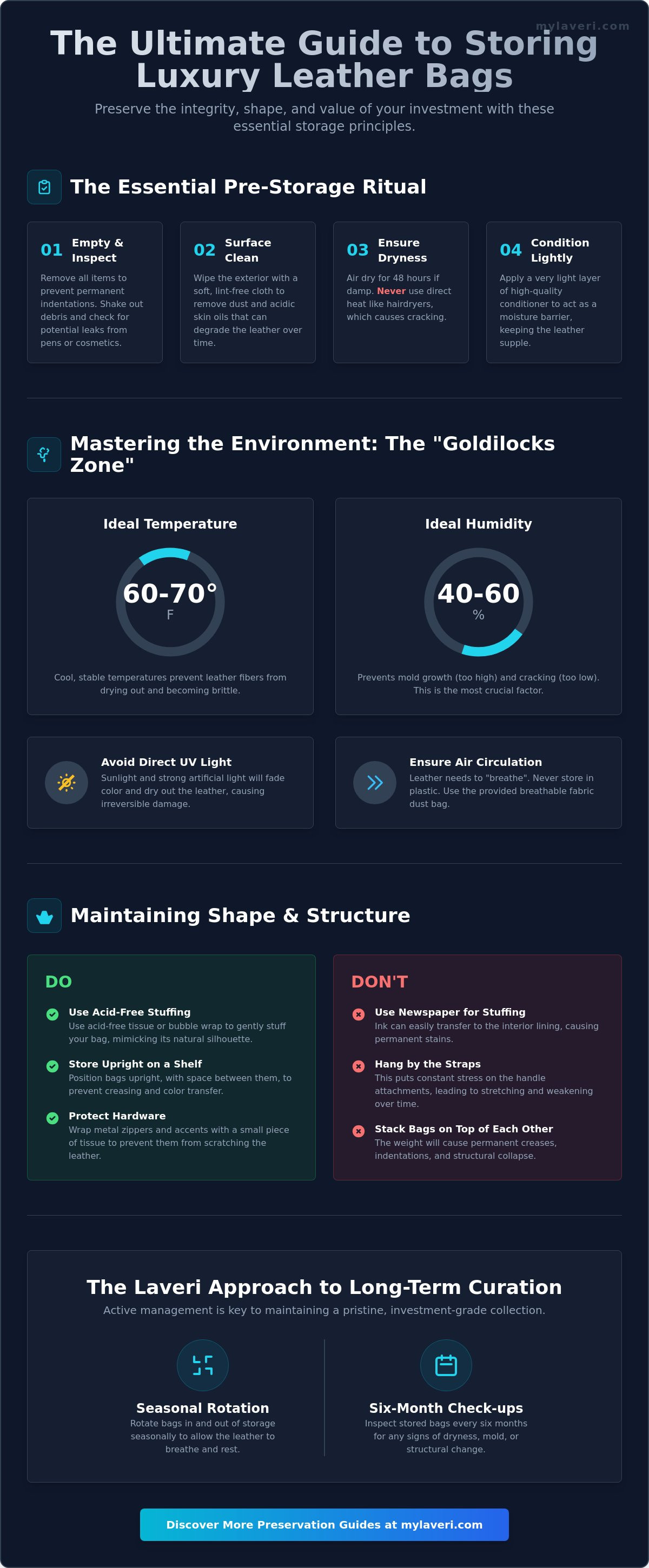
Empty every pocket. This is the first and most non-negotiable step. A single heavy keychain or a forgotten portable charger left in a side compartment can create a permanent, unsightly indentation in the supple hide within just 30 days. You should turn the lining inside out to shake out debris, lint, and hidden crumbs. These small particles can act as abrasives against the interior fabric or, worse, attract pests while the bag sits in a dark closet. Check specifically for pens, lipsticks, or hand sanitizers. These items are notorious for leaking under pressure or temperature changes, leading to stains that are often impossible to remove once they've set during long-term storage.
Surface Cleaning for Storage
Once the bag is empty, use a soft, lint-free cloth to wipe down the exterior. This removes the accumulation of dust and acidic skin oils that transfer from your hands during daily use. These oils can darken the leather or cause it to become tacky over time if left unaddressed. If you encounter stubborn spots, you'll need more detailed steps for genuine leather care to ensure the surface is neutral before it goes into its dust bag. Address any existing stains now. Storage acts as a catalyst that can set stains permanently into the grain.
Before the bag is ready for its resting place, verify that it is 100% dry. If you were caught in a rain shower earlier in the week, let the bag air dry naturally in a well-ventilated room for at least 48 hours. Never use a hairdryer or place it near a radiator, as extreme heat causes the natural oils to evaporate, leading to stiffness and cracking. Finish the ritual by applying a very light layer of high-quality conditioner. This acts as a moisture barrier, ensuring the how to store leather bags to prevent damage process keeps the leather supple and vibrant until its next seasonal rotation.
Mastering the Environment: Temperature, Humidity, and Light
Leather is an organic, "breathing" material that remains sensitive to its surroundings long after the tanning process is complete. Achieving the perfect climate is the most effective way of how to store leather bags to prevent damage. Experts generally agree on a "Goldilocks Zone" where the temperature stays between 60 and 70 degrees Fahrenheit and the relative humidity remains between 40% and 60%. Following the Canadian Conservation Institute guidelines ensures that your collection avoids the physical stress caused by environmental fluctuations. When these levels are ignored, fibers either swell from moisture or shrink from dryness, eventually leading to permanent structural failure.
The UAE Factor: Balancing AC and Humidity
In regions like the UAE, collectors face a unique environmental paradox. Outside, the sweltering heat and humidity levels that often exceed 80% can promote rapid mold growth. Inside, however, powerful air conditioning systems strip the air of moisture, often dropping indoor humidity below 25%. This bone-dry air is a silent thief. It evaporates the essential oils within the leather, causing it to become brittle and crack. Understanding these local climate quirks is a key part of how to store leather bags to prevent damage in high-heat environments. You should never store your bags directly under or near AC vents, as the direct flow of cold, dry air accelerates this dehydration. To manage residual moisture without over-drying, place silica gel packets inside your storage area. Just ensure they don't touch the leather directly, as they can cause localized dry spots. To elevate your organization, consider housing your collection in one of our handcrafted leather storage boxes, which provide an additional barrier against these environmental shifts.
Lighting and Fading Prevention
While an open-shelf display might look stunning in a dressing room, it exposes your vibrant dyed leathers to a significant risk. UV rays from both natural sunlight and certain types of indoor lighting act as a slow bleach. Over time, these rays break down the chemical bonds in the leather's dyes and finish, leading to uneven fading and a "sun-scorched" texture. Using breathable cotton dust bags is the best defense against light exposure while still allowing air to circulate. This circulation is vital; without it, even a clean bag can develop a musty odor. Plastic bags are the primary enemy of leather preservation because they trap moisture in an airtight environment, creating a breeding ground for mold and mildew.
Maintaining Shape and Structure: Positioning for Longevity
Leather is a material with structural memory. If you leave a bag collapsed in the corner of a closet for six months, those temporary folds will likely become permanent scars. Mastering how to store leather bags to prevent damage requires you to actively support the bag's original silhouette. According to the National Park Service curatorial care guide, physical stress is a primary agent of deterioration for organic materials. For luxury items, this stress often comes from the bag's own weight. Always store your pieces upright on a flat shelf. Avoid stacking them, as the weight from a bag on top can flatten the one below, leading to a total loss of structure.
The Problem with Hanging Storage
Hanging a bag by its straps is a common mistake that leads to irreversible stretching. Gravity constantly pulls on the handles, which weakens the points of attachment and distorts the leather's grain over time. For messenger bags or those with long crossbody straps, it's best to tuck the strap inside the main compartment. This prevents the metal buckles or chains from pressing against the exterior hide and leaving deep indentations. For deeper insights into how specific silhouettes react to long-term stress, you can consult the definitive guide to leather bags.
Stuffing Material Checklist
Choosing the right internal support is critical for maintaining that "boutique fresh" look. While some suggest using old linens or towels, these can harbor hidden moisture or residual scents that eventually permeate the leather. Consider these professional-grade options instead:
- Acid-free tissue paper: This is the gold standard for luxury care. It provides firm support and won't react with the leather or delicate silk linings.
- Bubble wrap: A lightweight and clean option that provides excellent volume without adding any significant weight to the base of the bag.
- Custom bag pillows: These are specifically sized inserts designed to fit the exact dimensions of premium totes and satchels.
You should never use newspaper for stuffing. The ink is highly unstable and will easily transfer to light-colored leather or interior linings, creating permanent stains that no professional can remove. This is a common gap in basic care advice that can ruin a high-value investment overnight. When stuffing, aim for "natural fullness" rather than over-stretching the seams. If the bag looks bloated, you've used too much. Finally, ensure you space your bags out on the shelf. Different leather finishes can react to one another. A dark patent bag sitting flush against a light-colored calfskin tote can cause "color migration," where the dye from one bag bleeds into the other. This simple spacing is an essential part of how to store leather bags to prevent damage during seasonal storage.
Hardware and Interior Care: Protecting the Finer Details
While the exterior hide often receives the most attention, the metal accents and interior linings are equally susceptible to degradation over time. Neglecting these components can lead to irreversible "green" tarnish or permanent indentations that diminish the bag's beauty. Mastering how to store leather bags to prevent damage means treating every buckle, chain, and seam as a priority during the storage process. Metal components, particularly those made of brass or plated steel, react to the environment and can transfer oxidation directly onto the leather grain if not properly managed.
Protecting Metal Accents
Heavy chains and oversized buckles are hallmarks of luxury design, but their weight is a liability in storage. If you leave a heavy chain resting against the leather, it will create deep, permanent dents within a few weeks. Always wrap these components in acid-free tissue paper to create a soft buffer. Before wrapping, use a dry, lint-free cloth to buff away fingerprints and microscopic salt residues. These oils from your skin are the primary cause of metal oxidation. If you notice early signs of verdigris, the specific "green" tarnish that plagues older hardware, address it with a specialized metal polish before storage. Just be certain the polish never touches the leather itself. When stowing chain straps, don't just drop them into the bag. Wrap them separately to prevent the metal from scratching the interior lining or the exterior hide during any movement.
Interior Lining Preservation
The interior of your bag requires its own specific micro-environment to stay fresh. Suede linings need more "breathing room" to maintain their soft nap, while silk or cotton linings are more sensitive to trapped moisture. Keeping zippers closed is a vital step often ignored; it maintains the bag's structural alignment and prevents the teeth from snagging the delicate lining fabric. To prevent the dreaded musty smell that can develop in dark closets, place cedar blocks or dried lavender in your storage area. Never place these items directly inside the bag, as the natural oils can stain the fabric permanently. A breathable cotton dust bag acts as a critical secondary barrier, protecting the interior from airborne pollutants while allowing the materials to breathe. This comprehensive approach is the gold standard for how to store leather bags to prevent damage across your entire collection.
Investing in the right protection today ensures your pieces remain in boutique-fresh condition for years. Explore our collection of premium leather bags to find your next heirloom-quality investment.
The Laveri Approach: Curating and Rotating Your Collection
True luxury is defined by longevity. While previous sections detailed the technical aspects of how to store leather bags to prevent damage, the final step involves adopting a curator's mindset. Leather is not a static material. It's an organic surface that requires occasional movement and airflow to maintain its structural integrity. If a handcrafted piece is left undisturbed for years, the fibers can become brittle, regardless of how perfect the environment is. We recommend a seasonal rotation every 90 days to ensure each item in your collection gets the attention it deserves.
Using your bags is actually a form of maintenance. The natural heat and oils from your hands, combined with the gentle flexing of the hide during use, help keep the leather supple. When you rotate your collection, you allow each bag to breathe and redistribute its internal moisture. This active approach prevents the deep-set creasing that often occurs when a bag sits under its own weight for too long. It's the difference between simply owning a product and actively preserving an heirloom.
The 6-Month Collection Audit
You should perform a comprehensive audit of your stored items every 6 months. During this check-up, remove each bag from its dust bag and inspect it for signs of stiffness or hardware tarnish. In high-AC environments, where humidity often drops below 30%, you may need to re-apply a light conditioner even if the bag hasn't been used. Look for "dust bag fuzz" or any white residue on the seams, which could indicate the early stages of mold or wax bloom. If you discover deep cracking or structural loss that home care can't fix, it's time to consult a professional before the damage becomes permanent. A 15-minute inspection twice a year is the most effective way to protect your financial and aesthetic investment.
Investing in Timeless Quality
The ease of long-term preservation often depends on the quality of the original hide. Choosing premium leather laptop bags or totes made from full-grain leather simplifies the care process because these materials possess superior stability. High-quality leathers react better to conditioning and hold their silhouette more effectively than lower-grade alternatives. By following these expert storage techniques, you ensure that your Laveri pieces remain as vibrant and sophisticated as the day you bought them. Ready to add a new masterpiece to your wardrobe? Visit the Laveri Leather Store to find your next handcrafted investment.
Preserving Your Leather Legacy for Decades to Come
Mastering the nuances of how to store leather bags to prevent damage transforms a simple purchase into a lasting heirloom. By implementing a strict pre-storage ritual and maintaining the ideal environmental balance, you're actively defending the structural memory of your collection. Leather thrives on consistency. Regular six-month audits and seasonal rotations ensure your pieces stay as supple as the day they were handcrafted by skilled artisans. These small, intentional steps prevent the cracking and fading that often plague neglected collections.
Luxury isn't just about the initial acquisition; it's about the care that follows. At Laveri, our 100% Genuine Full-Grain Leather pieces are designed to age beautifully when given the respect they deserve. We support your passion for quality with worldwide delivery and premium packaging to ensure every new investment arrives in pristine condition. Explore our collection of handcrafted, premium leather bags designed for a lifetime of style. Your commitment to proper storage ensures that your bags remain a vibrant part of your wardrobe for generations. Start your preservation ritual today and enjoy the timeless elegance of perfectly maintained leather.
Frequently Asked Questions
Is it better to store leather bags in plastic or dust bags?
Dust bags are the superior choice because they allow the organic leather fibers to breathe. Plastic bags are dangerous because they trap moisture, which creates a breeding ground for mold and mildew. Use a 100% cotton dust bag or a clean cotton pillowcase to shield your bag from dust while maintaining essential airflow. This is a foundational step in how to store leather bags to prevent damage over long periods.
Can I use newspaper to stuff my leather bag for storage?
You should never use newspaper to stuff your luxury bags. The ink used in newsprint is highly unstable and will permanently transfer onto the leather or the interior lining. Instead, opt for acid-free tissue paper or professional bag pillows to maintain the silhouette. These materials provide necessary structural support without the risk of chemical staining or acidic damage to the hide.
How often should I take my leather bag out of storage for conditioning?
You should inspect and condition your stored leather bags every 6 months. Even in a controlled closet, the natural oils within the leather can evaporate over 180 days, leading to stiffness. A biannual check-up allows you to rehydrate the material and verify that the hardware remains free of tarnish. This consistent schedule ensures the leather stays supple and prevents the fibers from becoming brittle.
What is the ideal humidity level for storing luxury leather?
The ideal humidity level for leather storage is between 40% and 60%. If the level drops below 40%, the leather is likely to dry out and crack; if it exceeds 60%, mold growth becomes a significant risk. Using a digital hygrometer in your storage area helps you monitor these levels accurately. Maintaining this specific range is vital for how to store leather bags to prevent damage in variable climates.
How do I prevent the handles of my bag from peeling or stretching?
Store your bags upright on a flat shelf rather than hanging them to prevent handles from stretching. Gravity exerts constant pressure on the attachment points, which eventually leads to peeling or structural distortion. For messenger bags or those with long straps, tuck the straps inside the main compartment. This prevents the metal buckles from leaving deep, permanent indentations on the exterior leather during storage.
Will storing my bags in a closet prevent mold?
A closet only prevents mold if it remains well-ventilated and stays within the 40% to 60% humidity range. Stagnant air in a dark closet can actually encourage fungal growth if the door isn't opened regularly to allow for circulation. You should open your storage doors at least once a week. Consider using silica gel packets or a small dehumidifier to manage moisture if you live in a high-humidity environment.
What should I do if my leather bag already has a musty smell from storage?
Air the bag out in a well-ventilated room for at least 48 hours to neutralize a musty odor. You can place a bowl of activated charcoal or baking soda nearby to absorb the scent, but ensure these materials never touch the leather. If the smell remains after two days, the mold spores may have penetrated the fibers. This situation requires professional attention to safely neutralize the odor without damaging the hide.
Can I stack my leather bags on top of each other to save space?
You should never stack leather bags because the weight of the upper items will cause the ones below to lose their shape. This pressure leads to permanent creasing and can cause "color migration" between different leather finishes. Instead, arrange your bags vertically on a shelf. Leave at least 2 inches of space between each bag to ensure proper air circulation and prevent the leather surfaces from sticking together.
