

Restoring an Old Leather Bag: The Artisan’s Guide to Reviving Luxury
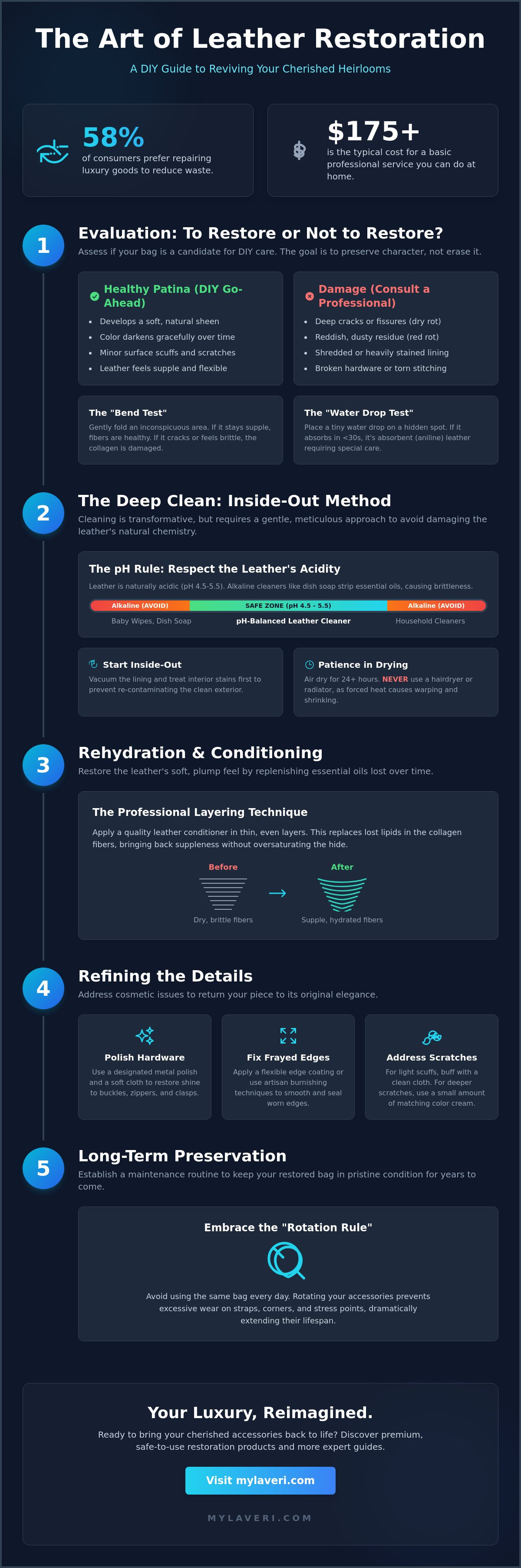
Did you know that 58% of consumers now prefer repairing their luxury leather goods rather than buying new to reduce environmental waste? It’s a sentiment we share at Laveri because a well-loved bag carries a history that a store-bought replacement simply cannot match. You likely have a vintage heirloom or a lucky thrift find that feels a bit too stiff or dull to carry. It's natural to feel hesitant about restoring an old leather bag yourself, especially when you fear permanently darkening the hide or using chemicals that don't meet the strict June 2026 OEKO-TEX safety standards.
We believe that luxury should be practical and lasting. You don't always need to spend $175 on a basic professional restoration service to see remarkable results. This guide provides the expert knowledge you need to safely clean, condition, and revive your premium pieces at home without the risk of damage. We'll walk you through identifying safe, pH-balanced products and the meticulous steps required to bring back a supple feel and timeless shine to your most cherished accessories.
Key Takeaways
- Determine if your heirloom is a candidate for home care by distinguishing between a beautiful aged patina and damage that requires professional intervention.
- Master the "inside-out" cleaning method when restoring an old leather bag to avoid re-contaminating the exterior with dust and grime from the lining.
- Learn the professional layering technique to replace lost lipids in the leather's collagen fibers, bringing back a soft and plump feel to stiff hides.
- Fix frayed edges with artisan burnishing methods and address surface scratches to return your vintage piece to its original elegance.
- Establish a long-term preservation strategy using the "Rotation Rule" to prevent excessive wear and keep your luxury accessories in pristine condition.
Evaluating Your Heirloom: Is Restoring an Old Leather Bag Possible?
Before you begin the process of restoring an old leather bag, you must determine if the piece is a candidate for revival or a relic destined for the archives. True luxury lies in the story the leather tells. At Laveri, we don't aim for a "factory new" look that erases history. Instead, we honor the patina, the natural darkening and soft sheen that develops over decades of use. A successful restoration preserves this character while returning suppleness to the hide. However, you must know when to stop. Over-restoring can strip away the very qualities that make a vintage piece valuable.
Perform the "bend test" to assess the structural core of your bag. Gently fold a small, inconspicuous area of the leather. If it remains supple and returns to its shape, the fibers are healthy. If you hear a faint cracking sound or see tiny fissures opening in the grain, the internal collagen fibers have likely snapped. This condition is often a sign of advanced dry rot. While 58% of consumers prefer repairing luxury goods to reduce waste, some structural damage requires a professional's intervention to avoid total disintegration.
Handcrafted bags are often more resilient during this evaluation phase. Their superior initial construction and use of premium, full-grain hides mean they can withstand deep cleaning better than mass-produced alternatives. Because these pieces were built with longevity in mind, they respond more predictably to high-quality conditioners and artisan techniques.
Identifying Your Leather Type
Understanding your material is the first rule of the conservation and restoration of leather objects. Full-grain leather is the most durable, while top-grain has been sanded and is more delicate. Perform the "water drop test" by placing a tiny droplet on a hidden area. If it absorbs within 30 seconds, you're likely dealing with an absorbent aniline or semi-aniline leather. These require specialized care. Suede and nubuck are entirely different; they don't tolerate liquid conditioners and need a dedicated brush and dry-cleaning approach to maintain their nap.
Structural Integrity vs. Cosmetic Wear
Look beyond the surface scuffs. Cosmetic wear, like faded color or light scratches, is easily managed at home. Structural failure is different. If the leather feels "dusty" or leaves a reddish residue on your fingers, it has reached the "point of no return" known as red rot. Check the stitching and hardware for fatigue. Loose threads are a simple fix, but a cracked D-ring or a frozen zipper might complicate your efforts. Finally, inspect the lining. If it's shredded or carries a deep, musty odor, you might need to have it replaced professionally before you focus on restoring an old leather bag and its exterior finish.
The Deep Clean: Safely Removing Decades of Grime
Cleaning is the most transformative stage of restoring an old leather bag, but it's also where most enthusiasts make critical errors. You must adopt an "inside-out" philosophy. If you clean the exterior first, you risk re-contaminating the fresh surface with dust and debris when you eventually turn your attention to the lining. Success begins with a meticulous approach that respects the delicate chemistry of the hide. Genuine leather is naturally slightly acidic, typically sitting between a pH of 4.5 and 5.5. Using household shortcuts like dish soap or baby wipes, which are often highly alkaline, can strip away essential oils and cause the fibers to become brittle over time.
Artisans always use pH-balanced cleaners designed specifically for premium materials. These solutions lift dirt without disrupting the leather's structural integrity. Once the cleaning is complete, patience is your greatest tool. Drying time is the most frequently rushed step in the restoration process. You should never use a hairdryer or place a bag near a radiator to speed things up. Forced heat causes the leather to shrink and warp. Instead, allow the piece to air dry in a cool, well-ventilated space for at least 24 hours before moving to the conditioning phase.
Sanitizing the Interior
Start by emptying every pocket and turning the lining outward if possible. Use a vacuum with a soft brush attachment to clear the seams where decades of dust and lint accumulate. For stubborn ink or makeup stains, a cotton swab dipped in a specialized fabric cleaner is effective, but always test a small area first. To eliminate that "old closet" odor, avoid heavy perfumes that only mask the scent. Instead, place a small breathable bag of activated charcoal or baking soda inside the bag for 48 hours. This scientific approach to Caring for leather, skin and fur ensures the interior is as pristine as the exterior.
Exterior Surface Cleaning
When you move to the exterior, use a soft horsehair brush to gently lift surface dust from the grain. Apply your cleaner to a lint-free cloth rather than directly onto the bag. Use the "Circular Motion" technique to work the solution into the hide. This method prevents the streaking often caused by linear strokes. Pay close attention to the handles and corners, as these areas collect the highest concentration of body oils and salt from your hands. If you are working with handcrafted leather bags, you'll notice how the superior construction allows the cleaner to penetrate evenly, revealing the original beauty of the grain. This careful preparation is the only way to ensure your bag is ready to absorb the vital nutrients it has lost over the years.
Rehydration and Conditioning: Bringing Back the Plumpness
Once the surface is clean and dry, the true artisanal work begins. Think of this stage as feeding the hide. Leather is a porous material composed of a dense network of collagen fibers. Over time, these fibers lose their natural lipids, which are the essential oils that keep the material flexible and resilient. When you are restoring an old leather bag, your goal is to penetrate the grain and replenish these lipids without suffocating the material. This process returns the "plump" feel to the leather, making it feel substantial and luxurious rather than thin and papery.
Avoid the common mistake often seen in viral videos where heavy oils are slathered onto dry bags. This heavy-handed approach can clog pores and lead to mold growth or permanent structural sagging. Instead, utilize the "Layering Method." Apply a very thin, even layer of conditioner and allow the leather to "drink" it for approximately 60 minutes. If the surface feels dry to the touch afterward, apply another thin layer. This gradual approach ensures the fibers absorb the moisture deeply without the risk of oversaturation, which is critical for maintaining the bag's original silhouette.
Choosing the Right Conditioner
Selecting the correct product is a matter of practical luxury. Creams are generally superior to pure oils for maintaining the structure of a luxury bag. They offer a balanced blend of moisture and protection without the high risk of over-darkening the hide. Look for wax-free conditioners if you want a natural, matte-to-satin finish. While ingredients like beeswax and lanolin are excellent for creating a protective barrier against the elements, the primary conditioner must be light enough to reach the inner collagen fibers. We recommend avoiding "all-in-one" cleaner-conditioners; these products are often too alkaline for aged pieces and lack the lipid density required for true restoration. For a deeper dive into professional product selection, consult our comprehensive guide on genuine leather care.
The Application and Buffing Process
Use a clean, lint-free microfiber cloth or a premium applicator sponge. Work in small sections using light, circular motions to ensure even distribution. After applying the final layer, wait at least 20 minutes before buffing. Buffing with a soft horsehair brush or a fresh cloth is what creates that sophisticated, healthy glow by evening out any excess product. Finally, observe the 24-hour rule. Let the bag rest in a temperature-controlled environment for a full day before use. This allows the lipids to stabilize within the fibers and ensures the conditioner won't transfer to your silk scarves or wool coats. This patience is what separates a DIY attempt from a professional-grade restoration.
Refining the Details: Scratches, Edges, and Hardware
The process of restoring an old leather bag reaches its most meticulous phase when you address the fine details that define luxury craftsmanship. While cleaning and conditioning provide the foundation, the treatment of scratches, edges, and hardware truly elevates the piece. You must first distinguish between a light surface scratch and a deep gouge. Surface scratches usually only affect the pigment or the wax coating. Deep gouges, however, have severed the internal collagen fibers. While professional re-edging of straps can cost $145 as of 2026, you can achieve significant improvements at home using burnishing techniques to seal frayed edges and restore a smooth, finished look to the leather’s perimeter.
Hardware serves as the jewelry of your accessory. Premium bags often feature solid brass or silver-plated components that oxidize over time. Protecting the surrounding leather is essential during this stage. We recommend consulting our Definitive Guide to Leather Bags to understand the specific quality markers of the hardware on your piece. This knowledge helps you choose the right polishing compound without risking damage to the metallic finish or the hide. Proper attention to these small elements ensures the bag looks curated rather than merely "used."
Buffing Out Surface Scratches
For light marks on full-grain leather, you don't always need specialized chemicals. The natural oils in your skin, combined with gentle friction from your thumb, can often redistribute the wax and oils in the hide to "heal" the scratch. If the mark persists, a clear leather balm is usually safer than a color-matched cream. Clear balms enhance the existing patina; poorly matched pigments can look muddy or artificial. Pay close attention to the bottom corners. These areas often suffer from scuffing that exposes the lighter fibers beneath the surface. A light application of a high-quality cream can mask these signs of wear and return a uniform elegance to the bag.
Hardware Restoration
Oxidation on brass or silver-tone buckles can make even the finest leather look neglected. To remove this safely, apply a small amount of metal polish to a cotton swab. Use masking tape to cover the leather immediately surrounding the metal. This barrier prevents the polish from leaving permanent white or grey stains on the hide, a common mistake that is nearly impossible to reverse. If your zippers have become stiff over the years, avoid the urge to pull harder. A tiny amount of beeswax or a specialized zipper lubricant applied to the teeth will restore smooth functionality. If you appreciate this level of detail in every component, explore our collection of handcrafted premium leather bags designed with durable, high-spec hardware.
Long-term Preservation: Maintaining Your Restored Luxury Bag
Completing the process of restoring an old leather bag is a rewarding achievement, but the work of an artisan doesn't end when the buffing cloth is put away. To ensure your vintage piece remains a staple of your wardrobe for another decade, you must transition from restoration to preservation. Leather is an organic material that continues to react to its environment long after it leaves the workshop. Establishing a routine care schedule is the most effective way to protect your investment. For bags used weekly, a light conditioning treatment every three to four months is ideal. If the piece is reserved for special occasions, a bi-annual check-up is sufficient to prevent the fibers from becoming brittle.
Adopting the "Rotation Rule" is another essential strategy for longevity. Even the most durable handcrafted bags benefit from a rest period. Using the same accessory every day puts continuous stress on the handles and structural seams. By rotating your bags every two to three days, you allow the leather to "breathe" and return to its natural shape. Be mindful of environmental factors as well. Prolonged exposure to direct UV light can fade pigments in as little as six months, while high humidity levels above 60% create the perfect breeding ground for mold. A controlled, temperate environment is the best friend of a luxury leather collection.
Proper Storage Techniques
Storage is where many well-intentioned owners inadvertently damage their goods. You should never store leather in plastic bags or airtight bins. Plastic traps moisture, which can lead to mildew or cause the leather to become "tacky" as the finish reacts to the lack of airflow. Instead, use a breathable cotton dust bag to prevent dust accumulation and light damage. To maintain the original silhouette and prevent permanent creasing, stuff the interior with acid-free tissue paper or a clean cotton scarf. Avoid using newspaper, as the ink can transfer to the lining and cause permanent staining.
Preventative Maintenance
Small, consistent actions prevent the need for another round of restoring an old leather bag in the future. Perform a quick monthly wipe-down with a dry, lint-free cloth to remove surface oils and environmental pollutants. If you encounter an emergency, such as a sudden rainstorm, pat the bag dry immediately with a soft towel and allow it to air dry at room temperature. Never rub a wet spill, as this pushes the liquid deeper into the pores. If you're looking to elevate your entire accessory game, consider pairing your revived piece with our handcrafted leather wallets. These items are built with the same commitment to timeless craftsmanship and quality materials. View your leather goods as functional investments; with the right care, they'll continue to tell your story for years to come.
Preserving the Legacy of Exceptional Craftsmanship
Mastering the art of restoring an old leather bag is a commitment to sustainable luxury and personal history. By following the meticulous steps of deep cleaning, lipid rehydration, and detail refinement, you ensure your heirloom remains a sophisticated companion. This artisanal approach aligns with the 58% of consumers who now prioritize repair over replacement to reduce waste. It’s a practical way to honor timeless quality while adhering to the latest June 2026 safety standards for material care.
While you preserve the past, you may also be ready to build a new legacy. Our pieces are handcrafted by skilled artisans using only 100% Full-Grain Genuine Leather, ensuring they possess the same durability you've worked so hard to restore. We provide international delivery to bring our vision of quality to your doorstep. Explore our collection of timeless, handcrafted leather bags and discover your next smart investment. Your journey into the world of premium leather is just beginning; carry it with confidence.
Frequently Asked Questions
Can I use olive oil or coconut oil to condition my leather bag?
No, you should never use olive or coconut oil on premium leather goods. These organic oils are prone to going rancid over time, which leads to unpleasant odors and potential bacterial growth within the hide. Food-grade oils have a molecular structure that is often too heavy to penetrate the collagen fibers correctly. This leaves a greasy residue that attracts dust and can cause permanent staining. Stick to pH-balanced conditioners formulated specifically for luxury accessories.
How do I remove the musty "vintage" smell from an old leather bag?
To eliminate a musty odor, use an effective absorbent like activated charcoal or baking soda. Place the bag in a breathable container or a large pillowcase with the absorbent for 48 to 72 hours. Avoid using heavy perfumes or fabric sprays, as these only mask the scent and can react poorly with the leather's finish. A thorough cleaning of the interior lining is also essential since bacteria trapped in the fabric are often the primary source of the smell.
Will restoring my bag change its color?
Restoring an old leather bag usually results in a temporary deepening of the color during the conditioning phase. As the dry fibers absorb the moisture, the leather will appear darker, but it should return to its natural shade once the product fully stabilizes. However, if the hide was severely dehydrated, it may retain a richer, more saturated tone than before. Always perform a patch test on a hidden area to ensure you are satisfied with the final aesthetic result.
How often should I condition a restored leather bag?
For a restored bag used on a weekly basis, apply a light conditioner every three to four months. If you only carry the piece for special events, a bi-annual treatment is sufficient to prevent the material from becoming brittle. Over-conditioning is just as harmful as neglect, as it can make the leather feel mushy and attract grime. Only apply product when the leather begins to feel slightly stiff or dry to the touch to maintain its sophisticated feel.
Can I fix deep cracks in the leather surface at home?
Deep cracks cannot be fully reversed at home because they represent a permanent failure of the internal collagen fibers. While high-quality conditioners can soften the surrounding area and prevent further tearing, the physical gap in the grain requires professional fillers and pigment matching. If your bag shows significant structural cracking, it is best to consult an artisan who can perform a specialized restoration to ensure the bag remains functional and aesthetically pleasing for years to come.
What is the best way to clean the metal hardware without ruining the leather?
The safest method involves using masking tape to cover the leather immediately surrounding the metal components. Apply a small amount of specialized metal polish to a cotton swab and work in small, controlled sections to remove oxidation from brass or silver-tone buckles. This barrier prevents the polish from leaving permanent white or grey stains on the hide. Once the metal is bright, remove the tape and buff the hardware with a fresh, dry microfiber cloth.
Is it possible to restore a bag that has mold on it?
Yes, it is possible to revive a bag with mold if the infestation hasn't compromised the internal structural integrity. When restoring an old leather bag with mold, work outdoors while wearing a mask to avoid inhaling spores. Use a solution of equal parts distilled water and white vinegar to wipe down the surface, followed by a thorough cleaning with a pH-balanced leather soap. Ensure the bag is completely dry before applying an antimicrobial conditioner to prevent future regrowth.
