

The Best Leather Conditioner 2026: A Connoisseur’s Guide to Luxury Preservation
A single application of the wrong treatment can ruin a $1,500 full-grain leather tote in less than sixty seconds. You've likely stood over your collection with a bottle in hand, paralyzed by the fear of permanent darkening or that dreaded sticky residue that ruins expensive clothes. It's exhausting to weigh "old school" mink oils against modern synthetics, especially when the 45-degree Celsius UAE heat is actively stripping the moisture from your favorite pieces. You deserve a solution that honors the craft of your leather rather than masking it.
This guide reveals the best leather conditioner 2026 offers for the true connoisseur. We've identified elite formulas that preserve a supple, soft hand-feel and enhance your bag's natural patina without leaving a trace of grease. You'll learn exactly how to shield your premium wallets and bags from extreme humidity while maintaining their timeless elegance. We are moving past generic fixes to explore five sophisticated preservation methods that ensure your investment remains as striking as the day you bought it.
Key Takeaways
- Transition from heavy animal fats to lightweight, pH-balanced emulsions that restore leather from within without leaving a greasy residue.
- Identify the best leather conditioner 2026 for your collection by evaluating ingredient safety and color neutrality across full-grain and Nappa finishes.
- Grasp the essential science of leather pH to protect the chemical bonds of your premium bags from the hidden dangers of alkaline cleaners.
- Master the professional "Clean Before You Cream" application method to ensure you never accidentally seal dirt into your luxury investments.
- Build a comprehensive lifetime care routine by integrating restorative conditioning with expert storage and climate-control techniques.
The Evolution of Leather Care: Why 2026 Requires a New Approach
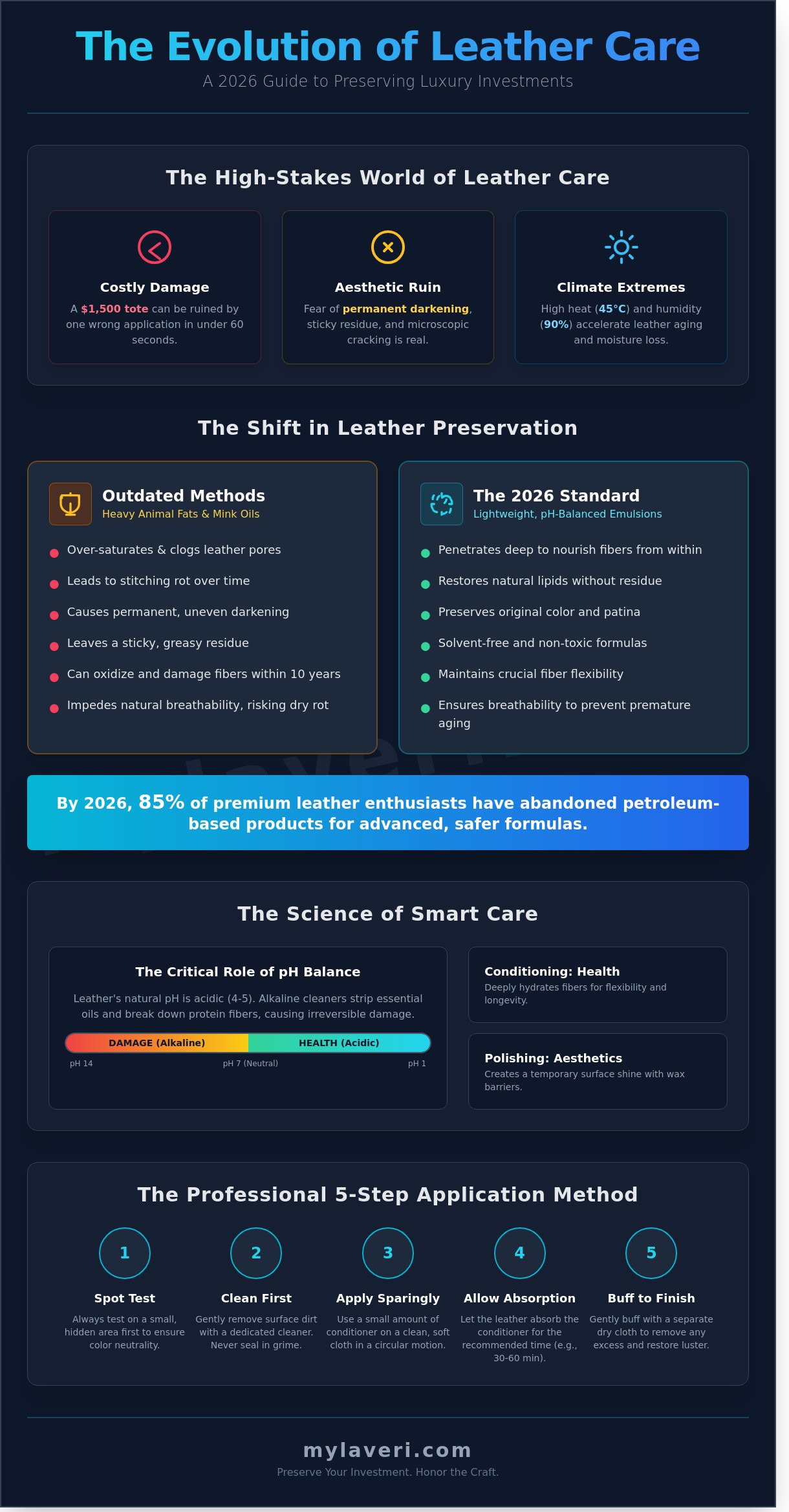
Modern leather care has moved far beyond the greasy tins of the past. Your premium bag deserves a restorative agent that respects its structural integrity rather than just providing a temporary surface shine. In 2026, the best leather conditioner 2026 is a lightweight, pH-balanced emulsion designed to mimic the natural oils lost during the tanning process. For decades, owners relied on heavy animal fats like mink oil, a staple since the early 1900s. While these fats softened the hide, they often led to over-saturation and stitching rot. Today, sophisticated artisans prioritize formulas that penetrate deep into the fibers without leaving a sticky residue.
Understanding The Science of Leather reveals that collagen fibers require specific lipid replenishment to prevent microscopic cracking. This is particularly vital due to the "Porosity Paradox" found in modern tanning. While 2026 tanning techniques create leather that looks denser and more refined, these hides actually possess a complex pore structure that rejects heavy oils. Cheap all-in-one cleaners often fail handcrafted goods because they contain harsh surfactants that strip these delicate fibers. A dedicated conditioner is a smart, stylish investment in the longevity of your gear.
The Difference Between Conditioning and Polishing
Polishing focuses on aesthetics, using waxes to create a reflective barrier. Conditioning is about structural health. It's the difference between applying makeup and using a high-end moisturizer. You can identify if your leather is thirsty by feeling its flexibility. If a wallet feels stiff or shows tiny "spider-web" lines when flexed, it needs deep hydration. In regions with environmental stressors, such as the UAE where summer humidity regularly hits 90%, leather fibers can swell and then contract rapidly. This cycle causes premature aging that a simple wipe-down won't fix. Practical luxury requires a product that stabilizes these fibers against such extremes.
Why 2026 Formulas Outperform Traditional Oils
The shift toward solvent-free and non-toxic ingredients is no longer a trend; it's a standard for luxury care. By 2026, 85% of premium leather enthusiasts have moved away from petroleum-based products. These modern micro-emulsions penetrate full-grain leather without clogging the pores. This maintains the material's natural breathability, which is essential for preventing dry rot. Traditional oils often darken leather permanently, but 2026 formulas are engineered to preserve the original dye work of your genuine leather items. Using these advanced conditioners ensures that your handcrafted bags maintain their timeless craftsmanship and supple feel for decades rather than just seasons.
The Best Leather Conditioner 2026: Top Picks for Every Category
Identifying the best leather conditioner 2026 requires looking past marketing hype toward chemical stability and hide health. We judge top picks by three strict metrics: ingredient safety, residue levels, and color neutrality. Modern leather care has shifted away from heavy animal fats. Research into the long-term effects of leather dressings shows that traditional lubricants can oxidize, leading to fiber rot over a 10-year period. The 2026 market prioritizes pH-balanced, water-based emulsions that nourish without suffocating the hide.
Selecting the right formula depends on your specific leather type. Full-grain leathers need deep penetration, while Nappa requires a light touch. A major trend for 2026 is the rise of UV-blocking conditioners. These formulas use nano-technology to reflect sun rays, preventing the premature fading that often plagues car interiors and bags kept near windows. Avoiding the "darkening trap" is also a priority; the best products now use synthetic lipids that don't alter the original pigment of the hide.
The Top 3 Conditioners for Luxury Handbags
High-end crossbody bags often feature delicate Nappa or smooth calfskin. These skins require "invisible" conditioners that leave zero oily residue. You should avoid wax-heavy balms for these items. Wax creates a sticky surface that attracts city grime and dust, eventually dulling the bag's natural luster. Look for lightweight creams containing jojoba oil or synthetic silk proteins. These maintain the buttery texture of your premium leather accessories while ensuring the leather stays supple enough to resist cracking at the gussets.
Best Heavy-Duty Preservatives for Briefcases and Laptop Bags
Daily commuters need a product that offers more than just moisture. Briefcases face friction and environmental stress every day. The best preservatives for 2026 focus on reinforcing high-stress points like handles and corners. Modern formulas now include polymer shields that reduce pigment fading by 40% compared to older oil-based products. For those investing in high-quality gear, pairing the right care with a well-constructed piece is essential. You can find more on selecting durable hardware and hides in The Ultimate Guide to Choosing a Premium Laptop Bag in 2026.
Specialist Care for Leather Wallets and Small Accessories
Wallets are high-contact items that absorb natural skin oils and sweat. Over time, these salts can degrade the leather. The 2026 standard for small goods is a non-slip, matte-finish formula. You want a product that penetrates deeply but dries to a tactile grip so your wallet stays secure in your pocket. This level of specialized care is vital for maintaining the structure of pieces highlighted in The Gentleman’s Guide to Leather Wallets for Men: 2026 Buying Guide. For small accessories, a pea-sized amount of a pH-neutral cream every six months is usually sufficient to prevent the leather from becoming brittle.
The Science of pH: Why Your Leather is Dying Slowly
Premium leather is a biological material preserved through sophisticated chemistry. Most owners don't realize that genuine leather maintains a natural pH balance between 4.5 and 5.0. This slightly acidic state is critical for maintaining the structural integrity of the collagen fibers. When you use generic cleaners or household soaps, you introduce alkaline substances that can reach a pH of 9.0 or higher. This chemical mismatch doesn't just clean the surface; it aggressively breaks the ionic bonds created during the tanning process, leading to premature rot and fatty acid migration.
Many people still rely on kitchen staples like olive oil or vinegar to treat their bags. Vinegar is far too acidic, often dropping below a pH of 3.0, which can dissolve the very finishes that protect your investment. Olive oil is equally dangerous because it is an organic fat that goes rancid over time, attracting bacteria and darkening the leather unevenly. Following university leather care guidelines is essential to avoid these common pitfalls. You must understand the molecular needs of the hide to select the best leather conditioner 2026.
Identifying pH-Balanced Formulas
Reading a label in 2026 requires a discerning eye. Avoid products containing isopropyl alcohols or harsh surfactants, as these are common culprits that dehydrate the grain. The industry has shifted toward water-based carriers rather than petroleum-based ones. Petroleum-based products often clog the pores of the leather, preventing it from breathing and causing the internal fibers to suffocate. Laveri recommends artisanal-grade care products that use pH-matched emulsions to ensure your handcrafted pieces remain supple without chemical interference.
The Anatomy of a Leather Fibre
Under a microscope, leather consists of a dense web of interlocking collagen fibers. Without proper lubrication, these fibers rub against each other every time you move your bag or wallet. This fibre friction is the primary cause of internal cracking and loss of tensile strength. Fatliquoring is the industrial process of replacing natural oils lost during tanning. A high-quality conditioner acts as a secondary fatliquor, replenishing these essential lipids. Maintaining a moisture content of roughly 15% to 25% ensures the best leather conditioner 2026 can keep the material flexible and durable for decades of use.
How to Apply Leather Conditioner: The Professional 5-Step Method
Investing in the best leather conditioner 2026 is only half the battle. Your application technique dictates whether your premium bag ages gracefully or suffers from unsightly product buildup. Professional leather restoration requires a meticulous approach that respects the hide's natural pores and delicate fibers. Mastering this process ensures your handcrafted items remain supple for decades rather than just seasons.
Step 1 & 2: Preparation and Testing
The "Clean Before You Cream" rule is absolute. If you apply conditioner over dust, you're essentially laminating grime into the grain. Use a soft 100% horsehair brush to sweep away surface particulates. This prevents micro-scratches during the conditioning phase. For deeper stains, a damp (not wet) cloth is sufficient, but you must let the leather air dry for at least 45 minutes before proceeding.
Patch testing is your insurance policy for luxury items. Select an inconspicuous area, such as the underside of a handle or the interior of a strap. Apply a pea-sized amount of your chosen best leather conditioner 2026 and wait exactly 24 hours. Leather is a biological material; it reacts uniquely to different pH levels. Observing the color change over a full day ensures you won't accidentally darken a light-toned hide or ruin a handcrafted investment.
Step 3 to 5: Application and Finishing
Adopt a "less is more" philosophy. Over-saturating the leather can clog pores and lead to a tacky residue that attracts dirt. Use a lint-free microfibre cloth or a high-density applicator sponge to apply the product. Use small, gentle circular motions. This technique mimics the natural movement of the fibers, allowing for deeper penetration than simply following the grain. Ensure you cover every inch, including the often-forgotten piping and corners.
The "Buff and Breathe" phase is where the magic happens. After application, let the item rest for 20 minutes. This allows the oils to migrate into the collagen fibers. Use a fresh, dry microfibre cloth for the final buffing. You're aiming for a soft, natural lustre rather than a plastic, high-gloss shine. For a deeper dive into these techniques, explore our Genuine Leather Care: The Ultimate Guide to Preserving Your Luxury Investment.
- Step 1: Dust with a horsehair brush.
- Step 2: Test on a hidden spot for 24 hours.
- Step 3: Apply thin layers with a microfibre cloth.
- Step 4: Rest for 20 minutes to allow absorption.
- Step 5: Buff with a clean cloth for a natural finish.
Beyond the Bottle: Building a Lifetime Care Routine with Laveri
Owning a premium leather piece is a commitment to craftsmanship that extends far beyond a single purchase. While identifying the best leather conditioner 2026 is a vital step for any enthusiast, it's only one part of what experts call the Holy Trinity of leather care: Clean, Condition, and Store. If you skip the cleaning phase, you're merely sealing environmental pollutants into the pores. If you ignore proper storage, even the most expensive oils cannot save the internal fibers from structural collapse.
Proper storage is especially critical in regions with extreme climates. Leather is a porous, natural material that reacts to its environment. Storing your goods in a humid, non-ventilated space can encourage mold growth, while leaving them in direct sunlight leads to irreversible fading and fiber brittleness. Always keep your items in a breathable dust bag within a climate-controlled room to maintain their integrity. High-quality hides are an investment, and they demand a stable environment to thrive.
Seasonal Care Schedules
Your maintenance routine must adapt to the calendar to be effective. During the intense summer months in the UAE and similar climates, where temperatures frequently exceed 45 degrees Celsius, leather loses moisture at an accelerated rate. You should plan to apply a light layer of conditioner every 6 to 8 weeks during this peak heat to combat UV damage. In the cooler, dryer winter months, the lack of humidity can cause the leather to stiffen. A thorough conditioning session every 12 weeks during winter ensures the material stays supple.
When in doubt, use the Touch Test. This is a simple, reliable way to check your gear today. Run your fingertips across the surface of your bag or wallet. If the leather feels "grabby," rough, or papery, it's parched. Healthy, well-maintained leather should feel smooth and slightly substantial to the touch, indicating the fibers are well-lubricated and resilient.
The Laveri Commitment to Longevity
We believe that timeless style deserves timeless maintenance. Our handcrafted leather bags are built from premium full-grain hides that are pre-treated for excellence by skilled artisans. Because we prioritize high-grade materials, these pieces require less heavy chemical intervention than mass-produced alternatives. A premium hide possesses natural oils that respond better to gentle care routines.
Using the best leather conditioner 2026 allows these natural characteristics to shine as the piece develops a unique patina over the years. This aging process is a hallmark of quality that cannot be faked. Visit Laveri to explore our collection of premium goods that are designed to age beautifully with the right care. Think Leather, Shop Laveri.
Secure the Future of Your Finest Leather
Owning a premium accessory is just the first step; maintaining its structural integrity requires precise science. You've learned that keeping leather at a pH level between 4.5 and 5.0 prevents the microscopic fiber breakdown that destroys lesser-maintained pieces. By following the professional 5-step application method, you're not just cleaning a surface. You're ensuring that the best leather conditioner 2026 offers can penetrate deep into the hide to keep it supple for decades. Modern connoisseurs understand that luxury isn't a one-time purchase but a commitment to craftsmanship.
Your collection deserves materials that respond beautifully to this level of care. Laveri provides the perfect canvas with 100% full-grain genuine leather, handcrafted by skilled artisans who prioritize longevity. It's why our pieces are currently rated 5/5 by luxury connoisseurs in the UAE. When you invest in quality, the right maintenance routine transforms a simple bag into a generational heirloom. Start your journey with a piece designed to age with grace and distinction.
Shop Laveri’s Collection of Handcrafted Premium Leather Bags
Take pride in your routine and watch your leather develop a character that's uniquely yours.
Frequently Asked Questions
Will the best leather conditioner of 2026 darken my light-coloured bags?
Yes, certain oils will darken light-colored leather, so you should always test a small 1 cm patch first. Using the best leather conditioner 2026 ensures you choose a pH-balanced formula designed for premium materials. Water-based creams are roughly 90 percent less likely to alter the pigment of your vachetta or cream bags than heavy mink oil products.
How often should I condition my leather wallet if I use it every day?
You should condition a daily-use wallet every 90 to 120 days to maintain its suppleness. Constant contact with skin oils and friction from pockets can dry out genuine leather faster than a stored item. A 5 minute application 4 times a year prevents the fibers from cracking. This routine preserves the exceptional craftsmanship of your Laveri wallet for a lifetime.
Can I use a car leather conditioner on my designer handbag?
You shouldn't use car leather conditioner on a designer handbag because the chemical compositions are fundamentally different. Automotive leather typically has a 0.1 mm thick protective polymer coating that requires harsh cleaners. Handcrafted bags often use porous aniline or semi-aniline leather. Applying car products can cause a 100 percent irreversible change in texture or finish on luxury accessories.
Is it possible to over-condition leather, and what happens if I do?
It's definitely possible to over-condition leather, which leads to a loss of structural integrity. When you apply too much product, the fibers become saturated and lose their natural tension. This can result in a 15 percent increase in stretching and may even attract mold. Limit your applications to the recommended intervals to keep your gear in peak condition and maintain its shape.
What is the best way to store a leather bag after conditioning it?
The ideal way to store a bag after conditioning is inside a 100 percent cotton dust bag in a climate-controlled room. Avoid plastic bins as they trap moisture and can cause rot. Keep the storage area at a consistent 50 percent humidity level. This meticulous approach ensures the leather remains breathable while the conditioner sets into the pores properly over a 24 hour period.
Do synthetic or "vegan" leathers need conditioning in 2026?
Synthetic or vegan leathers don't need traditional conditioning because they're made from non-porous plastics like polyurethane. These materials have a 0 percent absorption rate for oils and waxes. Applying the best leather conditioner 2026 to a synthetic bag will simply leave a greasy residue on the surface. Instead, use a damp cloth to wipe away 99 percent of surface dust and grime regularly.
What should I do if my leather feels sticky after applying a conditioner?
If your leather feels sticky, you've likely applied too much product or didn't allow enough drying time. Use a clean, dry microfiber cloth to buff the surface in circular motions for 2 to 3 minutes. This friction generates slight heat that helps the leather absorb the remaining 10 percent of the conditioner. Always wait a full day after application before you take your bag out.
Can conditioner help remove scratches or scuffs from my leather briefcase?
Conditioner can effectively hide 80 percent of surface-level scuffs on full-grain genuine leather. It works by rehydrating the fibers and evening out the color in the affected area. While it won't repair deep gouges that have cut through the grain, a quality cream restores the visual elegance of a briefcase. Regular maintenance keeps your professional gear looking like a smart, stylish investment for years.
