

What is Vegetable-Tanned Leather? The Ultimate Guide to Artisanal Quality
That "Genuine Leather" stamp on your favorite wallet might actually be a warning sign rather than a mark of quality. While 90% of global leather production relies on harsh chromium chemicals to speed up the tanning process to just 24 hours, these mass-produced items often crack and peel before their first anniversary. You likely want an investment that reflects your sophistication without compromising on environmental ethics, yet understanding what is vegetable-tanned leather amidst a sea of confusing industry jargon can feel overwhelming. It's frustrating to spend your hard-earned money on a bag that looks tired after just 12 months of use.
We agree that luxury should be synonymous with longevity and artisanal skill. This guide dives into the heritage and science of organic tanning to show you why this 5,000-year-old method remains the gold standard for luxury artisans in 2026. You'll learn to identify premium quality by sight and touch, understand the value of the natural patina process, and discover how to make a sustainable investment in handcrafted goods. We're going to explore exactly how these hides are transformed using tree bark and plant extracts to create pieces that truly last a lifetime.
Key Takeaways
- Uncover the "Slow Leather" philosophy and why this traditional 5,000-year-old artisanal process remains the gold standard for luxury goods.
- Understand exactly what is vegetable-tanned leather and how natural plant tannins create a superior, organic alternative to chemical-heavy production.
- Compare the structural integrity of vegetable tanning against mass-market chrome tanning to ensure your next investment maintains its shape and durability.
- Discover the science behind the patina effect, learning how your handcrafted pieces will evolve and darken into a unique reflection of your lifestyle.
- Learn why choosing vegetable-tanned leather is a commitment to timeless craftsmanship and sophisticated, sustainable luxury that outlasts fast-fashion trends.
Understanding Vegetable-Tanned Leather: The Gold Standard of Craftsmanship
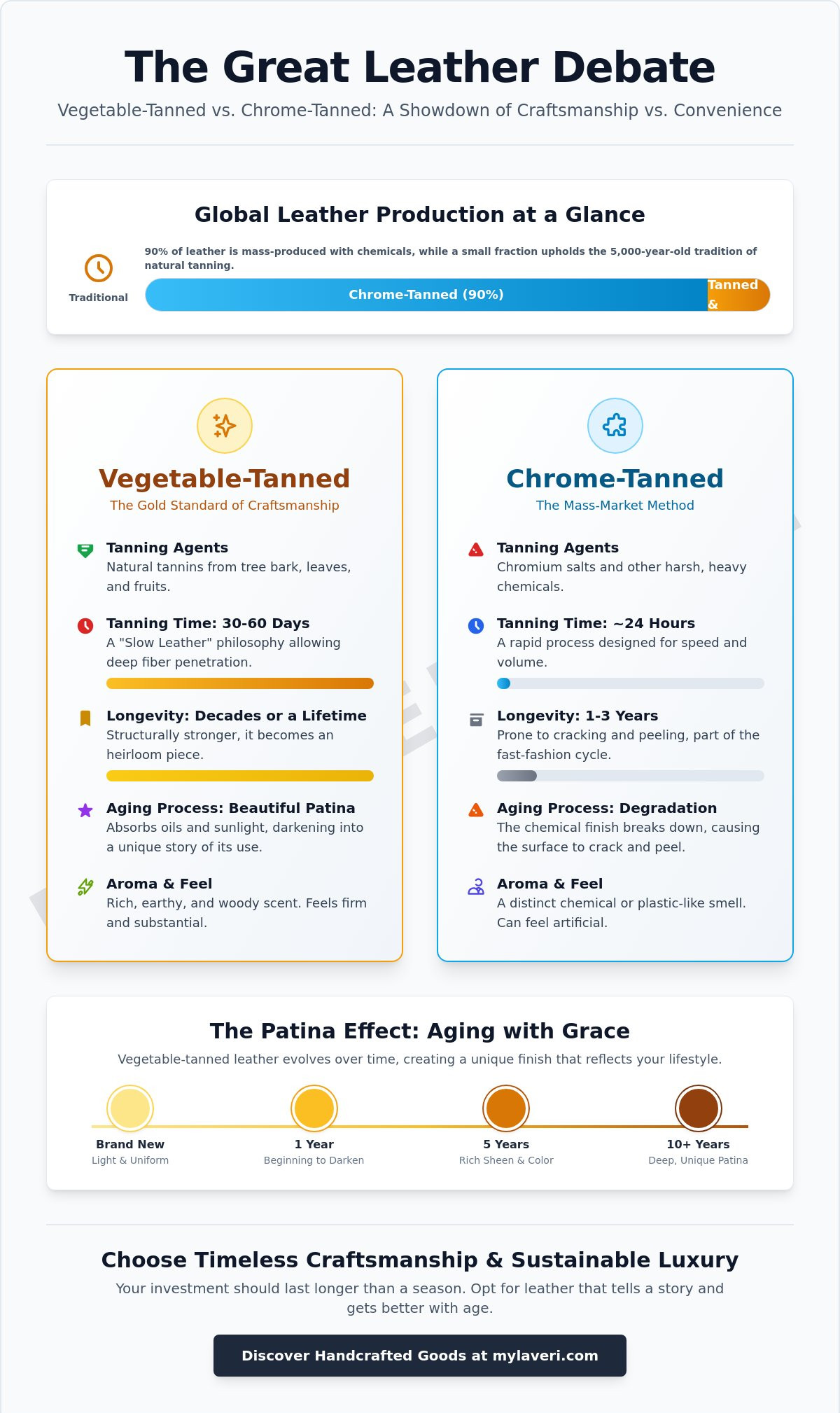
To truly grasp what is vegetable-tanned leather, you must look past the surface of a product and into its biological roots. This isn't just a material; it's a result of a 5,000-year-old tradition that uses natural organic matter to transform raw hides into durable art. While 90 percent of the world's leather is mass-produced in 24 hours using heavy chemicals, vegetable tanning follows a "Slow Leather" philosophy. This artisanal Vegetable Tanning Process requires between 30 and 60 days of patient soaking in concentrated tannins derived from tree bark, leaves, and fruits.
Identifying this premium material requires a sensory approach. Unlike synthetic alternatives, vegetable-tanned hides possess a distinct personality that evolves over time. Use this checklist to verify the quality of your investment:
- The Scent: It carries a rich, woody, and earthy aroma. It never smells like chemicals or plastic.
- The Handle: The leather feels firm and substantial. It offers resistance when flexed but softens beautifully with use.
- The Edges: Artisans can burnish the edges to a smooth, glass-like finish because the fibers are dense and natural.
- The Patina: It absorbs the oils from your hands and exposure to sunlight, developing a unique sheen and darkening over time.
It's vital to distinguish this heritage material from "vegan leather." Most vegan options are actually synthetic polymers like polyurethane or PVC. These are essentially plastics that crack within 2 to 3 years. In contrast, vegetable-tanned leather is a biodegradable, organic byproduct of the food industry that can last for several decades if maintained correctly.
The Heritage of Vegetable Tanning
The history of this craft stretches from ancient Egyptian tombs to the prestigious tanneries of Tuscany. For centuries, every piece of leather was tanned this way. The Industrial Revolution in 1858 introduced chrome tanning, a chemical shortcut that almost erased traditional skills to favor speed and low costs. Today, we're seeing a massive resurgence in heritage-grade materials. Discerning consumers now prioritize the timeless craftsmanship of vegetable-tanned goods because they represent a smart, stylish investment in a world of disposable fashion.
Why "Genuine Leather" Isn’t Enough
Many shoppers fall into the "Genuine Leather" trap. This label is often used by manufacturers to mask lower-grade hides that have been heavily corrected or bonded together. When you ask what is vegetable-tanned leather, you're asking about a premium process, not just a grade. It's often applied to full-grain hides, which are the strongest part of the skin. To avoid low-quality traps, you should learn how to identify genuine leather and understand why the tanning method is just as important as the hide itself. High-end leather goods aren't just about the name; they're about the structural integrity that only slow, natural tanning provides.
The Artisanal Journey: How Vegetable-Tanned Leather is Made
Understanding what is vegetable-tanned leather requires looking at a process that hasn't changed much in 200 years. It begins in the beam-house, where raw hides are cleaned and prepared. From there, they move to the tanning pits. Unlike chrome tanning which takes 24 hours, this traditional method lasts between 30 and 60 days. This slow immersion allows tannins to penetrate deep into the hide, stabilizing the animal proteins without the use of harsh chemicals.
The Master Tanner oversees every stage, adjusting the concentration of the tanning liquors with meticulous care. Their expertise ensures every batch achieves a consistent texture and rich hue, reflecting a sense of timeless craftsmanship. This patience results in superior fiber density. The leather doesn't just look better; it's structurally stronger and more durable than mass-produced alternatives.
The Power of Plant-Based Tannins
Tannins are the natural preservative of the leather world. Artisans extract these organic compounds from specific plant sources to achieve different results. For instance, oak bark produces a firm leather often used for soles, while mimosa flowers create a softer, pinkish tone. Chestnut wood offers a rich brown shade and adds significant weight to the hide. Quebracho wood is prized for its high tannin content, ensuring a deep and lasting bond that creates a rugged, premium finish.
From Tanning Vats to Finished Goods
Once the hides leave the pits, they undergo fat-liquoring. This step replaces lost moisture with natural oils to ensure the leather remains flexible and resilient. Next comes drying and staking, where artisans soften the fibers to achieve a premium hand feel. This meticulous preparation is why vegetable-tanned leather is the gold standard for handcrafted bags that offer both sophistication and practical luxury.
One of the most distinct benefits of this process is the ability to create burnished edges. Because the fibers are so dense and the tanning agents are organic, craftsmen can buff the edges of a bag to a smooth, glass-like finish using only friction and wax. This level of detail defines what is vegetable-tanned leather in the world of high-end, artisanal goods. It's a smart investment for anyone who values products that grow more beautiful with every year of use.
Vegetable-Tanned vs. Chrome-Tanned Leather: A Comparative Analysis
Chrome tanning dominates the modern market, accounting for roughly 90% of global leather production. This method relies on chromium salts and heavy chemicals to turn hides into leather in less than 24 hours. It produces a soft, uniform product that accepts bright dyes easily. However, the speed of mass production comes with a trade-off in character and longevity. When you ask what is vegetable-tanned leather, you're looking at an artisanal process that takes up to 60 days to complete. This slow method uses organic tannins from bark and leaves to stabilize the hide, preserving the natural strength of the fibers.
The structural difference between these two types is significant. Vegetable-tanned leather is dense and robust. It retains its shape even under heavy use, whereas chrome-tanned leather tends to sag or stretch permanently over time. While the upfront cost of vegetable-tanned goods is higher, the value lies in their lifespan. A well-crafted piece can last decades, making it a smarter investment than cheap, mass-produced alternatives that require frequent replacement.
Performance in Daily Use
The way a material handles stress defines its quality. In premium leather bags, vegetable-tanned hides provide a distinct advantage. They start their life firm, requiring a brief "break-in" period. Much like a pair of high-end boots, the leather eventually becomes comfortably supple while maintaining its internal memory. Chrome leather feels soft immediately but lacks this evolution. It's also prone to cracking if the chemical finish fails. In contrast, the dense fibers of veg-tan leather allow for easy restoration; most scuffs can be buffed out with natural oils and heat.
Eco-Consciousness and Sustainability
The environmental footprint of leather production is a growing concern for the modern consumer. Chrome tanning generates wastewater containing trivalent chromium, which requires intensive filtration to prevent soil and water contamination. Vegetable tanning is inherently cleaner. It uses biodegradable plant extracts, ensuring the leather itself is biodegradable at the end of its life cycle.
Choosing handcrafted, vegetable-tanned products is a commitment to the "buy less but better" philosophy. This approach reduces waste by prioritizing items that age gracefully rather than ending up in a landfill. It's a sophisticated choice for those who value both timeless craftsmanship and the health of the planet. By investing in these pieces, you support a tradition of excellence that respects natural resources.
The Patina Effect: Why Your Leather Should Age With You
The most rewarding answer to the question of what is vegetable-tanned leather lies in its ability to evolve. Unlike chrome-tanned alternatives that look their best the day you buy them, vegetable-tanned hides begin a lifelong journey the moment they leave the workshop. This transformation is known as the patina. It's a rich, lustrous sheen and a gradual deepening of color that develops through daily use. A light tan wallet might shift into a deep, honeyed mahogany after 12 months of handling, reflecting a history that synthetic materials simply cannot mimic.
The science behind this aging process is a mix of environmental exposure and human interaction. UV light acts as a natural catalyst, darkening the tannins within the hide much like a tan on skin. Simultaneously, the leather absorbs natural oils from your hands, known as sebum, along with moisture from the air. This organic absorption softens the fibers and creates a protective, glossy layer. Because every person has different skin chemistry and lives in a different climate, no two bags will ever look identical after a year of wear. Your bag becomes a unique fingerprint of your lifestyle.
Collectors and leather enthusiasts prize this aged look over "factory-new" conditions. In the world of high-end artisanal goods, a well-developed patina is the ultimate hallmark of quality. It proves the material is genuine, full-grain, and free from heavy plastic coatings that stifle a leather's ability to breathe. Investing in this material means you aren't just buying a product; you're cultivating an heirloom.
Caring for Your Investment in 2026
Modern leather care focuses on hydration. By 2026, the standard for luxury maintenance involves bi-annual conditioning to keep natural fibers supple. For owners in the UAE, environmental factors are particularly aggressive. The 40°C summer heat combined with 24-hour air conditioning can strip moisture from the hide faster than in temperate climates. To prevent the fibers from becoming brittle, apply a wax-based conditioner every three months. You can find a complete maintenance routine in our guide to genuine leather care to ensure your luxury pieces last for decades.
Common Misconceptions About Veg-Tan Care
- "It can’t get wet": While you shouldn't carry it in a downpour, small water spots usually disappear. As the leather ages and the patina darkens, these marks blend into the texture, adding to the "character leather" aesthetic.
- "It scratches easily": The surface is indeed more sensitive than plastic-coated leather, but it's also more forgiving. You can buff out 90% of light surface scuffs by simply rubbing them firmly with your thumb; the heat and natural oils from your skin help redistribute the fibers.
- Dirty vs. Character: There's a clear distinction between a bag that needs cleaning and one that has developed character. Dirt feels gritty or sticky, while character is a smooth, structural change in the leather's soul.
Ready to start your own patina journey? Explore our collection of handcrafted leather goods and choose a piece that grows with you.
Why Laveri Chooses Vegetable-Tanned Leather for Handcrafted Luxury
At Laveri, we reject the disposable nature of modern fashion. Our brand is built on the pillar of timeless craftsmanship, a philosophy that prioritizes longevity over fleeting trends. We don't believe in products that wear out after a single season. Instead, we focus on materials that improve with age. When customers ask us what is vegetable-tanned leather, we explain it as a commitment to a slow, deliberate tanning process that honors the hide's natural integrity. While roughly 90% of the world's leather is mass-produced using harsh chemicals, we stay within the elite 10% that utilizes organic plant tannins.
This traditional method perfectly complements our minimalist design philosophy. We let the leather's natural texture and character take center stage rather than hiding it under heavy pigments. This marriage of durability and sophistication is most evident in our leather wallets for men. These pieces are designed to be daily companions. They're resilient enough to handle constant use while maintaining an air of professional elegance. Choosing this material is a smart investment for the professional who values substance as much as style.
The Laveri Difference: Handcrafted in the UAE
Our workshop in the UAE serves as the heart of our production. Here, skilled artisans meticulously select the finest hides for our bags and accessories. They look for specific grain patterns that will respond best to the vegetable-tanning process. You'll notice the Laveri difference the moment you touch our products. It's a tactile experience that begins with a firm, premium feel and evolves into a soft, supple texture over time. As you carry your bag, it develops a unique patina. This rich sheen is a hallmark of quality that synthetic materials can't replicate. We invite you to step into sophistication with a lifetime piece that tells your unique story.
Finding Your Perfect Piece
Selecting the right leather accessory depends entirely on your lifestyle and professional needs. Our collection offers a variety of structures to suit different environments:
- Laptop Bags: These require the rigid, protective qualities of thick vegetable-tanned hides to keep your tech safe in the boardroom.
- Evening Clutches: These pieces highlight the leather's ability to hold deep, organic colors for a refined aesthetic.
- Travel Accessories: The natural durability of our leather ensures your gear survives the rigors of frequent flights.
Understanding what is vegetable-tanned leather helps you appreciate why these items last for 20 years or more with proper care. It's a versatile material that fits seamlessly into a high-stakes meeting or a casual weekend getaway. If you're ready to move away from fast fashion and toward artisanal quality, explore our collection of handcrafted leather bags today and find a piece that grows with you.
Invest in a Legacy of Craftsmanship
Choosing a premium accessory means looking far beyond the surface. Understanding what is vegetable-tanned leather helps you appreciate why this 5,000-year-old tradition remains the gold standard for luxury. While 90% of global leather production relies on quick chemical baths, our artisanal process takes up to 60 days to complete using natural plant tannins. This patience results in 100% Full-Grain Vegetable-Tanned Leather that develops a rich, organic patina unique to your lifestyle. Every Laveri piece is handcrafted by skilled artisans to ensure your investment stands the test of time and travel. We provide international delivery available to collectors worldwide, bringing sophisticated craftsmanship directly to your doorstep. It's time to choose a bag that tells a story as deep and enduring as the materials used to create it.
Shop the Laveri Collection of Handcrafted Vegetable-Tanned Leather Bags
Your journey toward timeless elegance starts with a single, well-made choice.
Frequently Asked Questions
Is vegetable-tanned leather waterproof?
Vegetable-tanned leather isn't waterproof, though it offers natural water resistance. Because it lacks the synthetic plastic coatings found on cheaper alternatives, it's porous and can absorb liquids. If your premium bag gets wet, you should wipe it with a dry cloth immediately. Applying a high-quality leather wax every 3 to 4 months creates a protective barrier that helps repel moisture effectively.
How can I tell if my leather is vegetable-tanned or chrome-tanned?
You can identify the tanning method by inspecting the edges or performing a simple water test. Vegetable-tanned hides usually show a solid brownish core at the cut edge, while chrome-tanned versions often reveal a telltale bluish-grey tint. If you place a small drop of water on the surface, it'll soak into vegetable-tanned leather within 30 seconds. Chrome leather typically beads the water off due to its chemical finish.
Does vegetable-tanned leather smell?
It carries a distinct, sweet, and woody aroma that defines high-end artisanal goods. Unlike the sharp, acrid chemical scent of mass-produced items, this material smells of the organic tannins found in oak and chestnut bark. This rich fragrance is a hallmark of what is vegetable-tanned leather, often persisting for the product's entire lifespan. It's a sensory reminder of the timeless craftsmanship involved in its creation.
Why is vegetable-tanned leather more expensive than other types?
The price reflects a complex production process that requires 40 to 60 days to finish. While modern chrome tanning takes less than 24 hours in a factory, true vegetable tanning relies on slow-acting plant extracts and skilled artisans. Only 10% of the world's leather is produced using this traditional method. You're investing in a durable, luxury material that's built to last for decades rather than seasons.
Will vegetable-tanned leather stretch over time?
Yes, this leather will naturally stretch and mold to your specific usage patterns. Since it's a dense, full-grain material, it possesses a unique structural memory. A handcrafted wallet might feel quite tight for the first 14 days of use, but it'll eventually expand to accommodate your cards perfectly. This organic flexibility is exactly why master shoemakers and belt crafters prefer it for products that require a custom fit.
Is vegetable-tanned leather better for the environment?
It's a much more sustainable choice because it uses biodegradable organic tannins instead of toxic heavy metals. Industry data shows that chrome tanning accounts for 90% of global production and often creates hazardous waste. In contrast, the vegetable process utilizes renewable resources like mimosa or quebracho wood. This traditional approach produces a natural product that's safer for the environment and the artisans who handle it.
How long does it take for a patina to develop on vegetable-tanned leather?
A visible patina usually begins to emerge within 3 to 6 months of regular handling. This transformation is driven by exposure to sunlight and the natural oils from your skin. By the 12-month mark, a light tan surface will have matured into a deep, sophisticated mahogany shade. This aging process is a core benefit of what is vegetable-tanned leather, ensuring your accessory gains character and elegance over time.
Can you dye vegetable-tanned leather at home?
You can definitely dye this material at home because its open pores absorb pigments with incredible consistency. It acts as a blank canvas for DIY enthusiasts and professional artisans alike. Using a spirit-based or oil-based dye allows you to achieve vibrant, lasting colors that won't flake off. Just remember to apply a natural leather conditioner afterward to keep the fibers supple and lock in your new custom shade.
