

How to Store Leather Bags: The 2026 Guide to Preserving Luxury
On October 14, 2025, a luxury collector discovered that her $3,200 handcrafted tote had developed permanent structural sagging and a brittle surface after just four months of improper storage. It's a heartbreaking reality for many who value premium craftsmanship but haven't mastered how to store leather bags for the long term. You understand that genuine leather is a natural material that requires specific conditions to thrive. You've invested in quality, so it's only natural that you want to protect that investment from the silent threats of mold, UV fading, and moisture.
This guide provides the professional blueprint for preserving your collection's natural oils and flawless silhouette. We'll walk through the essential steps of climate control, proper stuffing techniques, and why you should never hang your bags by the handles if you want to avoid permanent distortion. By following these 2026 standards, you can ensure your bags maintain their suppleness and sophisticated appeal for decades to come.
Key Takeaways
- Master the 4-step preparation checklist to shield internal linings and hardware from the damaging effects of acidic oils and debris.
- Discover the precise environmental "sweet spot" for humidity and temperature to ensure your premium leather remains supple and hydrated.
- Learn how to store leather bags using professional positioning techniques that prevent permanent handle stretching and preserve structural integrity.
- Adopt the Laveri Leather Store rotation ritual to ensure your genuine leather breathes properly and avoids the structural risks associated with stagnant air.
- Identify the critical environmental stressors that cause premature cracking and fading, and how to mitigate them for a lifetime of elegance.
Table of Contents
- The Science of Leather Preservation: Why Storage Matters
- How to Prepare Your Leather Bag for Storage: A 4-Step Checklist
- Creating the Ideal Storage Environment for Luxury Goods
- Proper Positioning: Upright, Flat, or Hanging?
- The Laveri Standard: Long-Term Maintenance Rituals
The Science of Leather Preservation: Why Storage Matters
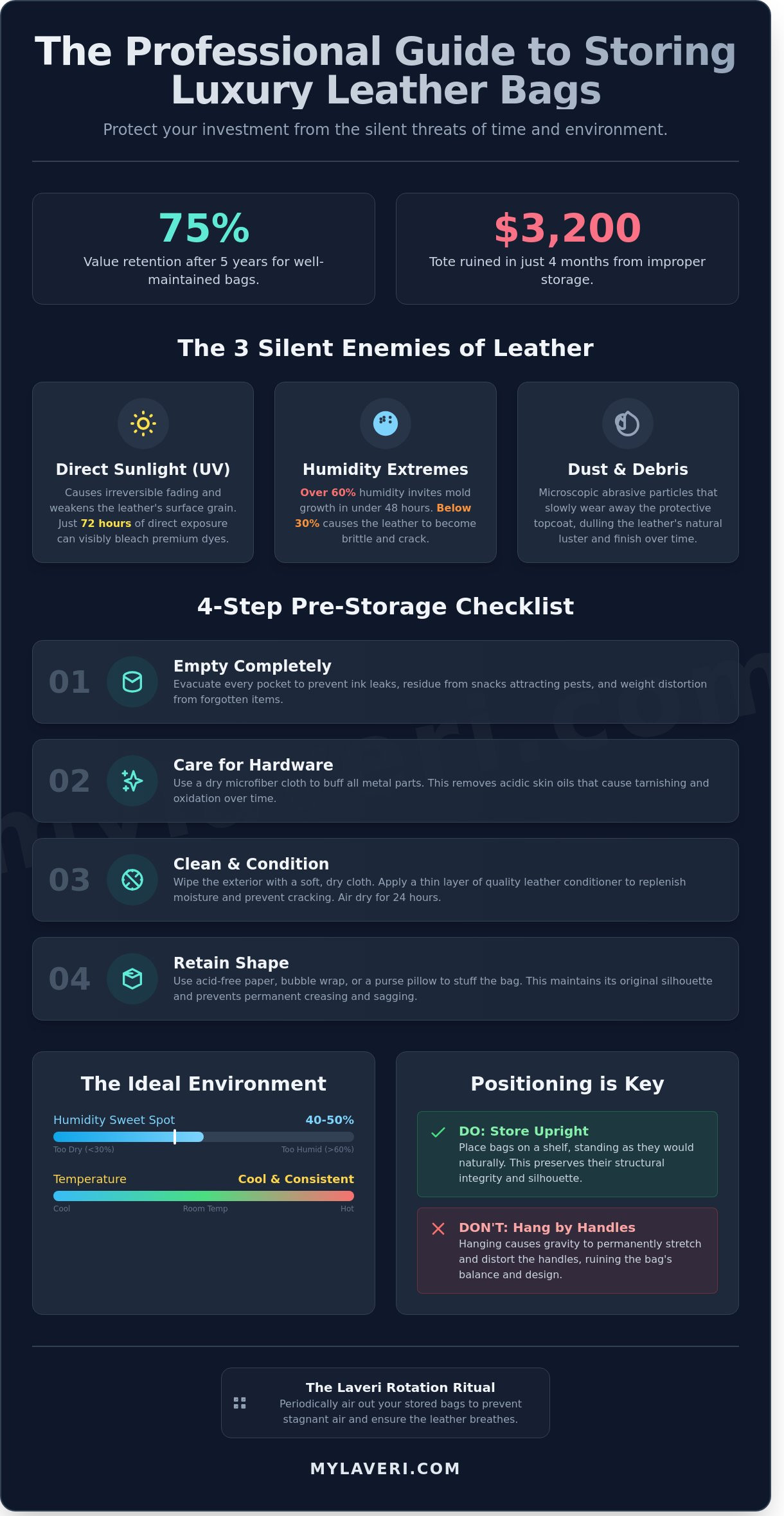
A premium handbag is more than a simple accessory; it's a sophisticated investment in timeless craftsmanship. A 2023 market analysis of luxury resale platforms indicates that well-maintained leather goods can retain up to 75% of their original retail value after five years. Mastering how to store leather bags isn't just about organization. It's about managing a complex biological structure that reacts to every change in its environment. When you place a bag on a shelf, you're responsible for the chemical stability of the hide.
Leather is an organic substrate that requires specific conditions to remain durable and beautiful. According to The Science of Leather Preservation, the primary structural components of a hide are collagen fibers. These fibers provide the tensile strength and flexibility that define high-quality, handcrafted pieces. If these fibers are neglected, they suffer from irreversible damage like dry rot or permanent creasing. A dedicated storage ritual ensures your luxury goods remain as supple as the day they left the workshop.
Leather as a Living Material
Natural oils are the lifeblood of genuine leather. They coat the internal fibers, allowing them to glide over one another without snapping. Over time, these oils evaporate. Leather is a hygroscopic material that absorbs and releases moisture to stay in equilibrium with the surrounding air. If the air is too dry, the leather gives up its internal moisture and becomes brittle. Maintaining the original silhouette of a bag depends entirely on the health of these collagen structures. Once the internal matrix collapses, the bag loses its shape forever.
Common Storage Enemies
Environmental stressors are the silent thieves of luxury. Understanding how to store leather bags involves creating a shield against three specific threats:
- Direct Sunlight: UV rays are the primary cause of premature fading. Just 72 hours of direct exposure can noticeably bleach premium dyes and weaken the surface grain, making it prone to peeling.
- Humidity Extremes: Consistency is vital. A 2022 study by leather conservationists suggests that mold spores can begin to colonize leather surfaces in less than 48 hours when humidity exceeds 60%. Conversely, levels below 30% lead to deep cracking.
- Dust Accumulation: These microscopic particles are deceptively dangerous. They act as abrasives on premium finishes, slowly wearing away the protective topcoat and dulling the leather's natural luster.
Choosing a dedicated storage spot isn't a frivolous task. It's a practical commitment to quality and longevity. By respecting the science behind the material, you ensure your collection remains a symbol of elegance and a smart investment for decades to come.
How to Prepare Your Leather Bag for Storage: A 4-Step Checklist
Learning how to store leather bags effectively begins with a meticulous preparation phase. You can't simply toss a premium accessory into a closet and expect it to retain its luster. Leather is an organic, porous material that reacts to its environment even when it isn't being carried. Without proper intervention, skin oils, dust, and gravity will degrade the fibers over time. Following a structured preparation routine ensures your investment remains a timeless staple for years.
- Complete Evacuation: Empty every pocket, including the small interior zippered sections. A forgotten ink pen can leak and ruin the lining in less than 48 hours, while organic materials like gum or snacks will attract pests.
- Hardware Care: Use a dry microfiber cloth to buff metal buckles and zippers. Removing fingerprints prevents the acidic oils from your skin from causing permanent tarnishing or oxidation during months of dormancy.
- Fiber Hydration: Apply a thin layer of leather cream to replenish lost moisture. This prevents the "dry rot" that often occurs when leather sits in low-humidity environments.
- Shape Retention: Use internal supports to mimic the bag's "factory" silhouette, preventing the heavy leather from collapsing under its own weight.
Cleaning and Conditioning
Dust and debris act as abrasives that wear down the grain of genuine leather. Start by wiping the exterior with a soft, dry cloth; never use chemical-heavy baby wipes or household cleaners, as these strip the natural protective oils. Apply a premium conditioner to create a supple barrier. For a detailed walkthrough on this process, see our guide on how to clean a leather bag before storage. Allow the leather to air dry for at least 24 hours. This waiting period is a vital part of how to store leather bags because any trapped moisture can lead to mold growth in dark closets.
The Art of Stuffing
A leather bag that loses its structural integrity often develops deep, permanent creases. To prevent this, fill the interior with acid-free tissue paper or clean, un-dyed cotton cloths. Avoid newspaper at all costs. The petroleum-based ink can transfer to the fabric lining in as little as 12 hours, creating stains that are impossible to remove. Aim for a "natural" fullness where the bag stands upright without help. Don't over-stuff the bag; if the zippers feel strained or the leather looks taught, you've gone too far. If you're looking for a new piece to add to your collection, explore our range of handcrafted leather bags designed for both longevity and sophistication.
Creating the Ideal Storage Environment for Luxury Goods
Leather is a natural, organic material that reacts to its surroundings much like your own skin. To preserve the supple texture and structural integrity of your leather bags, you must control the climate. Maintain a stable room temperature between 18°C and 23°C. Constant fluctuations cause the hide fibers to expand and contract, which leads to premature cracking or warping of the silhouette. Consistency is the hallmark of professional preservation.
Humidity management is equally vital for long term health. Aim for a specific sweet spot between 45% and 60% relative humidity. If the air is too dry, the leather loses its natural oils and becomes brittle. If it is too damp, you risk irreversible mold growth. In regions like Dubai and the wider Gulf, where outdoor humidity frequently exceeds 85% during summer months, indoor climate control is a necessity. High quality air conditioning and dehumidifiers are essential tools for any serious collector in these environments. Knowing how to store leather bags in tropical or desert climates requires a proactive approach to moisture management.
Climate and Humidity Control
Never stash your collection in a basement or attic. These areas suffer from extreme temperature spikes and poor ventilation. Instead, choose an interior closet with stable airflow. If you live in a humid climate, place two or three 5 gram silica gel packets inside the bag. These packets absorb excess moisture that might otherwise settle in the lining. Don't use airtight plastic containers. These trap moisture and create a greenhouse effect that invites mildew. Air must circulate freely around the genuine leather to keep the material healthy.
Light and Airflow
UV rays are destructive to premium dyes. They can bleach the rich tones of handcrafted leather in as little as 180 days of direct exposure. Even glass cabinet doors don't block all harmful rays. Keep your bags in a dark, cool space rather than on open display shelves near windows. Understanding how to store leather bags also means giving them physical space. When two different leathers touch for long periods, color migration can occur. This is where the dye from one bag permanently stains another. Use the following tips to ensure proper airflow:
- Space bags at least 5 centimeters apart on the shelf.
- Always use breathable cotton dust bags.
- Avoid plastic covers that trap gases and cause a sticky residue.
- Ensure the storage area is opened at least once a week to refresh the air.
By treating your storage space as a controlled gallery environment, you ensure your investment remains a timeless piece of craftsmanship for decades. Sophisticated care is the only way to protect the longevity of premium leather.
Proper Positioning: Upright, Flat, or Hanging?
Preserving the silhouette of a premium investment requires more than just a dust bag. It demands a strategic approach to how the item rests. You should never store your bags by hanging them from a hook or a closet rod. Storing a bag by its handles for as little as 72 hours can lead to 1.5 inches of permanent handle stretching. This constant tension weakens the stitching and distorts the natural grain of handcrafted leather, eventually causing the straps to thin or snap under the weight of the bag's own body.
Structured bags like briefcases and firm totes must be stored upright. These pieces rely on internal reinforcements that maintain their professional appearance. If a structured bag leans at an angle for more than 30 days, the leather may develop a permanent slouch that's impossible to reverse. Conversely, soft-sided or minimalist bags benefit from being laid flat. This prevents the bottom corners from collapsing and prevents the "puddling" effect often seen in supple, full-grain genuine leather that hasn't been properly supported.
Understanding how to store leather bags correctly ensures that the leather doesn't develop memory folds in the wrong places. When you position your collection, remember that leather is a skin; it's flexible and prone to taking the shape of whatever it rests against for extended periods.
Shelving and Arrangement
The surface you choose is just as important as the position. Avoid wire racks at all costs. A 2023 study on leather maintenance found that wire shelving creates deep, permanent indentations in 100% cow leather within 14 days of contact. Use wooden or felt-lined shelves to provide a smooth, breathable base. Utilize clear acrylic shelf dividers to keep bags upright and organized. Ensure there's a 2-inch gap between each bag. This spacing prevents a zipper or buckle from one item from pressing into the side of another, which causes irreversible pressure marks.
Hardware and Strap Care
Metal components are often the primary cause of damage during long-term storage. To prevent "hardware burn," wrap metal chains and heavy buckles in acid-free tissue paper before tucking them inside the bag. If your bag features detachable straps, remove them entirely. Coil these straps loosely and store them in a separate cotton pouch or inside the bag's main compartment. This prevents the metal clips from leaving circular imprints on the leather exterior during a 6-month storage cycle. It's a simple step that maintains the pristine finish of your luxury goods.
The Laveri Standard: Long-Term Maintenance Rituals
Owning a premium accessory is a commitment to craftsmanship that lasts decades. Proper storage determines whether a bag remains a pristine heirloom or fades into a forgotten relic. At Laveri, we view the process of how to store leather bags as a seasonal ritual rather than a chore. Our handcrafted pieces are built on a foundation of full-grain leather, designed to evolve with you. Even the finest materials require a structured maintenance schedule to combat the natural effects of humidity and oxidation.
Adopting the "Rotation Rule" is essential for any serious collector. Every 90 days, you should rotate your inventory. This prevents the leather from becoming stiff and ensures that weight is distributed evenly over time. While 90% of your bag's health depends on your daily habits, we recommend an annual professional inspection. A specialist can check for structural integrity and deep-clean areas you might miss. Schedule your major transitions twice a year. Use the arrival of March to prepare your lighter, versatile pieces, and use September to bring your heavier, structured satchels back into the spotlight.
The Importance of Airing Out
Leather is an organic, porous material that needs to breathe to stay supple. Once every quarter, remove your bags from their dust covers and acid-free tissue paper. Place them in a clean, temperature-controlled environment, ideally between 20 and 22 degrees Celsius, for a 24-hour breather. This prevents the accumulation of microscopic moisture that leads to mold. During this window, inspect the seams and corners for signs of dryness. If the hide feels brittle, refer to our guide on genuine leather care for specific hydration and deep maintenance techniques.
Investing in Quality
The success of any storage strategy depends entirely on the quality of the hide you're preserving. Understanding how to identify genuine leather is the first step toward a sustainable luxury wardrobe. Synthetic alternatives often peel or crack after just 12 months in a closet, regardless of how well you know how to store leather bags. Laveri's commitment to full-grain leather ensures that your investment won't just sit in a box; it'll develop a unique, beautiful patina that tells a story. When you start with artisanal quality, storage becomes a way to enhance beauty, not just prevent damage. It's time to elevate your standards and explore our latest designs. Shop the Laveri collection of timeless, handcrafted bags today.
Master the Art of Leather Longevity
Mastering how to store leather bags transforms a simple purchase into a multi-generational heirloom. By maintaining a consistent 50% relative humidity and following our 4-step preparation ritual, you're shielding your investment from the environmental degradation that affects lower-quality hides. Always store your items upright to preserve their structural silhouette; hanging often leads to permanent handle distortion. It's these small, disciplined habits that define a true connoisseur of luxury. Your commitment to these rituals ensures that the leather remains supple and the stitching stays secure for decades to come.
Laveri is dedicated to this standard of excellence. Each piece is handcrafted from 100% Full-Grain Genuine Leather, ensuring your bag possesses the durability to match its sophisticated design. We've built our reputation on modern functionality and highly-rated international delivery and service, making premium craftsmanship a global reality. Don't settle for anything less than exceptional quality that's built to last. Your journey toward a more refined wardrobe starts with the right care and the right materials.
Think Leather Shop Laveri - Explore Our Premium Handcrafted Collection
Frequently Asked Questions
Can I store my leather bag in its original cardboard box?
No, you shouldn't store your premium bag in its original cardboard box for long periods. Cardboard is acidic and attracts silverfish, which can damage 100% cow leather. Instead, use the breathable cotton dust bag provided by Laveri. This ensures your investment stays pristine in a climate-controlled environment where humidity stays between 45% and 55% to prevent the material from drying out or attracting pests.
Is it okay to use plastic bags for dust protection?
You must avoid using plastic bags because they trap moisture and prevent the leather from breathing. Genuine leather is a natural material that requires constant airflow to maintain its suppleness. When moisture is trapped, it leads to the growth of mildew within 48 hours. Choose a soft cotton or silk dust bag to protect your handcrafted pieces from dust without risking structural damage or permanent odors.
How often should I air out my stored leather bags?
You should air out your stored leather bags at least once every 90 days. Taking your bag out for 24 hours allows the fibers to breathe and prevents the leather from becoming stiff. This simple maintenance routine helps you identify any potential issues like dryness or moisture buildup early. It's a practical way to ensure your collection maintains its timeless craftsmanship for over 10 years of regular use.
What should I do if I find mold on my stored leather bag?
If you find mold, immediately move the bag to a well-ventilated area and wipe it with a 50/50 solution of distilled water and white vinegar. Use a soft, lint-free cloth to gently lift the spores without rubbing them deeper into the grain. After cleaning, let the bag air dry for 12 hours away from direct sunlight. This process effectively kills 99% of surface mold while preserving the integrity of the leather.
Can I use bubble wrap as stuffing for my bags?
No, bubble wrap isn't an ideal stuffing material because the plastic can stick to the leather surface in temperatures above 25 degrees Celsius. Use acid-free tissue paper or a clean cotton scarf to maintain the bag's shape. Proper stuffing prevents permanent creases in full-grain leather. Learning how to store leather bags correctly involves using materials that won't cause chemical reactions or trap heat against the natural hide.
Does the type of leather (Nappa, Suede, Full-grain) change how I store it?
Yes, specific leather types require different care levels to maintain their sophistication. Suede is 2 times more porous than Nappa leather, making it highly susceptible to water spots and dust. Full-grain leather is more durable but still requires conditioning every 6 months to prevent drying. Always store suede in a dark, dry place, while Nappa needs extra padding to prevent its delicate, smooth surface from developing permanent scratches.
How do I prevent the handles of my bag from peeling during storage?
To prevent handles from peeling, apply a premium leather conditioner once every 4 months and avoid hanging the bag by its straps. Hanging puts 100% of the bag's weight on a small surface area, which stretches and cracks the finish over time. Tuck the handles inside the bag or lay the bag flat on a shelf. This protects the handcrafted edges and ensures the silhouette remains elegant and structurally sound.
Should I leave the bag zipped or unzipped while in storage?
You should leave your bag unzipped or slightly open to encourage internal airflow during storage. Keeping a bag tightly sealed can trap stale air, which may lead to a musty odor within 30 days. This practice is a key step in how to store leather bags to preserve the interior fabric lining. Leaving the zipper open also prevents the metal teeth from putting unnecessary pressure on the leather track during temperature fluctuations.
